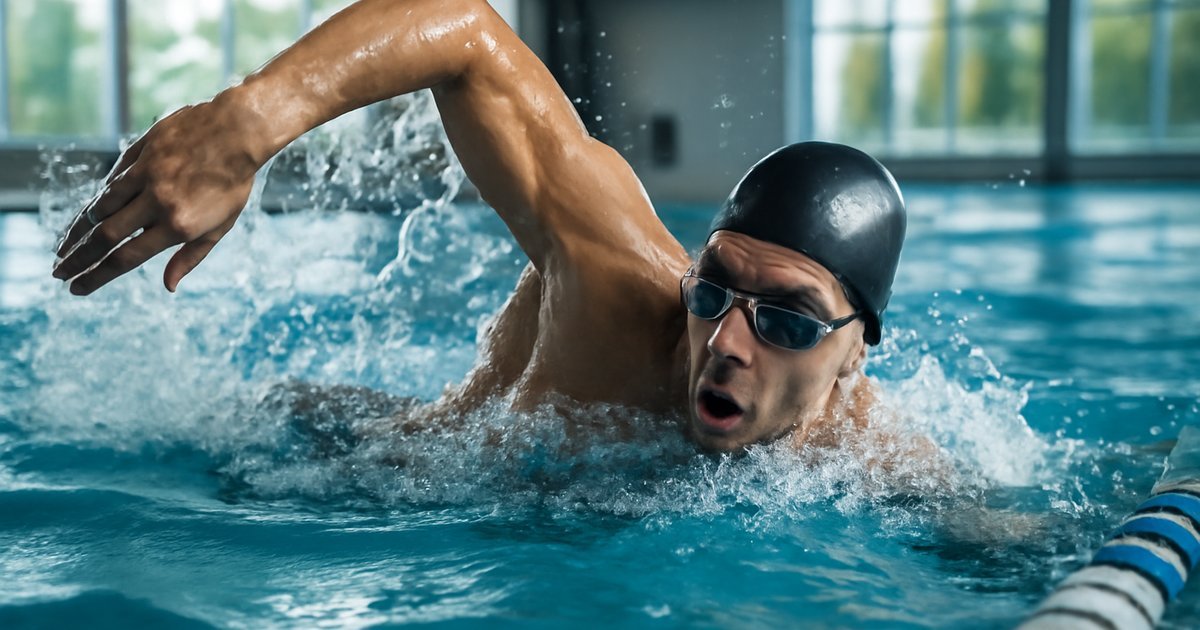
If you’ve ever stepped out of the pool feeling completely worked — lungs burning, muscles humming — you already know swimming is no ordinary workout.
Here’s a number worth pausing on: according to the Centers for Disease Control and Prevention (CDC), swimming is the fourth most popular physical activity in the United States, yet most adults who swim regularly don’t follow a structured training plan. They splash around for a few laps, call it done, and wonder why their fitness isn’t improving.
That’s the gap this guide closes. Whether you’re returning to the pool after years away or you want to finally turn casual laps into a real fitness strategy, swim training for adults is one of the most complete, joint-friendly, and effective ways to build cardiovascular endurance, muscular strength, and full-body conditioning — all at once.
In the next few minutes, you’ll learn exactly how structured swim training works, how to get started regardless of your current fitness level, what mistakes to avoid, and what realistic results look like. No fluff, no guesswork — just a clear, evidence-backed roadmap.
Why Swim Training Matters More Than You Think
Swimming doesn’t get the same marketing spotlight as running or weightlifting, but the science tells a different story. A study published in the International Journal of Aquatic Research and Education found that regular swim training significantly improves cardiovascular fitness, muscular endurance, and body composition in adults across all age groups.
What makes it uniquely powerful is the combination of resistance and cardio in a single session. Water is approximately 800 times denser than air, meaning every stroke, kick, and turn challenges your muscles far more than the equivalent movement on land. At the same time, your heart rate elevates and stays elevated — making swimming a true cardiovascular workout.
For adults aged 25 to 60, there’s another critical benefit: impact. Unlike running, swimming places almost zero compressive force on your joints. The American College of Sports Medicine (ACSM) recommends aquatic exercise as one of the safest forms of aerobic training for adults managing joint discomfort, early-stage arthritis, or injuries that limit land-based activity.
And it’s not just physical. Harvard Health Publishing notes that rhythmic aerobic exercise like swimming is associated with reduced symptoms of anxiety and depression, likely due to its meditative, breath-focused nature. You literally cannot scroll your phone in the pool — and that forced disconnection may be part of the benefit.
How Swim Training Actually Works
A common misconception is that swimming is easy — something you do to cool off, not to get fit. The truth is that effective swim training is intensely structured and physiologically demanding when done correctly.
Like all aerobic training, swimming works through progressive cardiovascular adaptation. Your heart learns to pump more blood per beat (increased stroke volume), your muscles develop more mitochondria to use oxygen efficiently, and your lung capacity improves over weeks of consistent effort.
What’s unique to swimming is the technique dependency. Unlike cycling or walking, poor form in the pool dramatically increases energy expenditure without improving fitness outcomes. A study in the Journal of Strength and Conditioning Research confirmed that stroke efficiency — not just effort — is a primary predictor of swim performance and training benefit in recreational adult swimmers.
This matters for your training plan. Spending a few sessions working on technique before ramping up volume pays off significantly over time. The four competitive strokes — freestyle (front crawl), backstroke, breaststroke, and butterfly — each target different muscle groups. Freestyle is the most efficient and beginner-accessible. Breaststroke offers lower intensity with high lower-body engagement. Butterfly is the most demanding and is best saved for intermediate to advanced swimmers.
Most adult fitness swimmers focus primarily on freestyle and breaststroke, rotating strokes to avoid repetitive strain and keep workouts engaging. This is a smart, evidence-consistent approach.
How to Get Started: From Casual Swimmer to Trained Athlete
The good news: you don’t need to swim like Michael Phelps to get real results. Here’s a tiered approach based on your current level.
Beginner (0-6 weeks):
- Start with 2-3 sessions per week, 20-30 minutes each
- Focus on freestyle technique: head position, hip rotation, bilateral breathing
- Use a kickboard or pull buoy to isolate legs or arms while you build stamina
- Rest 30-60 seconds between laps — endurance will come with consistency
- Aim to complete 400-600 meters (roughly 16-24 laps in a standard 25m pool) per session by week 6
Intermediate (6-16 weeks):
- Increase to 3-4 sessions per week, 35-50 minutes each
- Introduce interval sets: swim 4x50m at moderate effort with 20 seconds rest between each
- Add a second stroke (breaststroke or backstroke) for variety and cross-training
- Include a warm-up (200m easy) and cool-down (100m slow) in every session
- Target 1,000-1,500 meters per session
Advanced (16+ weeks):
- 4-5 sessions per week with varied intensity (easy days, hard days)
- Use structured sets: 10x100m at threshold pace with 15 seconds rest
- Incorporate open turns, flip turns, and butterfly drills
- Target 2,000-3,000 meters per session and track weekly yardage
- Consider joining a Masters Swimming program — these are adult swim clubs with coached sessions available across the US
If you’re combining swim training with other workouts, pairing it with a well-structured weekly workout routine helps prevent overtraining and ensures balanced recovery.
Common Mistakes That Sabotage Your Results
Even motivated swimmers stall out — and it’s almost always for the same predictable reasons.
1. Swimming the same pace every session. If every lap feels the same, your body adapts quickly and stops improving. This is the most common plateau in adult swim training. Fix it by adding interval training — alternating fast and easy efforts within a single session. Just like progressive overload in strength training, your swims need to progressively challenge your system.
2. Ignoring breathing mechanics. Many adults hold their breath or breathe too infrequently, which spikes perceived effort and limits endurance. Practice bilateral breathing (alternating sides every 3 strokes) from day one. It balances your stroke and improves oxygen efficiency significantly.
3. Skipping the warm-up. Jumping into hard laps without easing in elevates injury risk, especially in shoulders and knees — the most common swim-related problem areas in adults. A 200-meter easy warm-up primes circulation and loosens connective tissue. Don’t skip it.
4. Never tracking distance or time. Without data, it’s impossible to know if you’re improving. Even a simple waterproof fitness tracker or a basic lap counter gives you accountability. Progress in swimming is often invisible without measurement.
5. Neglecting recovery. The pool is low-impact, but that doesn’t mean it’s low-demand. Your cardiovascular system and muscles still need 48 hours of recovery between intense sessions. Overtraining in the pool is real — and it shows up as persistent fatigue, stalled performance, and shoulder soreness.
What to Eat to Support Swim Training
Nutrition strategy around swim training is slightly different from land-based exercise — and most swimmers underestimate this.
Because water temperature suppresses appetite post-swim, many adult swimmers accidentally under-fuel, which slows recovery and blunts adaptation. The Academy of Nutrition and Dietetics recommends that endurance athletes consume 1.2 to 1.6 grams of protein per kilogram of body weight daily to support muscle repair and performance.
Pre-swim (1-2 hours before): A moderate-carbohydrate meal or snack supports energy availability without causing gastrointestinal discomfort in the water. Think: oatmeal with banana, whole grain toast with peanut butter, or a small smoothie with fruit and Greek yogurt.
Post-swim (within 45 minutes): This is your recovery window. Prioritize protein and carbohydrates. Good options include: eggs with whole grain toast, a protein shake with fruit, cottage cheese with berries, or a turkey and avocado wrap.
Hydration: This is where swimmers frequently get it wrong. You sweat in the water — you just don’t feel it. The USDA Dietary Guidelines recommend drinking water consistently throughout the day, and swimmers should aim for at least 16-20 oz of water in the hour before a session and replace fluids afterward. Electrolyte replenishment matters after sessions longer than 60 minutes.
Avoid heavy, high-fat meals within 90 minutes of swimming. The combination of a full stomach and horizontal body position in the water is a recipe for discomfort and reduced performance.
How Long Until You See Results and What to Track
This is the question every adult swimmer wants answered honestly — so here it is.
Cardiovascular improvements typically begin within 2-4 weeks of consistent training (3+ sessions per week). You’ll notice this as reduced breathlessness, lower resting heart rate, and the ability to complete more laps without stopping. These are real, measurable signs of aerobic adaptation.
Body composition changes take longer — typically 6-12 weeks of consistent training paired with appropriate nutrition. Research published in the Journal of Exercise Rehabilitation found that adults who swam 3-4 times per week for 12 weeks showed meaningful reductions in body fat percentage and improvements in lean muscle mass, particularly in the upper body and core.
What to track:
- Laps or meters completed per session
- Time to complete a set distance (e.g., 200m freestyle)
- Resting heart rate (measured weekly upon waking)
- Perceived exertion during benchmark sets
- Rest intervals needed between sets
Results vary significantly based on your baseline fitness, frequency of training, sleep quality, and nutrition. If after 8 weeks of consistent effort you’re not noticing any improvements, reassess your intensity, consider consulting a swim coach, or speak with a healthcare provider to rule out underlying factors. For adults combining swimming with strength work, compound strength exercises can significantly complement your pool gains by building the foundational power that translates directly to faster, more efficient strokes.
Frequently Asked Questions
Is swimming enough exercise on its own, or do I need to strength train too?
Swimming provides substantial cardiovascular and muscular endurance benefits, and for many adults it’s an excellent primary workout. However, because it doesn’t create bone-loading stress, it doesn’t improve bone density the way weight-bearing exercise does. The ACSM recommends combining swimming with at least some resistance training for comprehensive long-term health, especially for adults over 40.
How many laps should I swim to lose weight?
There’s no single answer — it depends on your intensity, stroke, and current weight. Generally, a 155-pound adult burns approximately 400-500 calories per hour of moderate freestyle swimming. Consistency and progressive intensity matter more than a specific lap count. Focus on building duration and effort over time rather than fixating on a single session metric.
Can I swim if I have shoulder pain?
It depends on the cause and severity. Swimming can actually rehabilitate certain shoulder issues, but it can also aggravate rotator cuff problems if done with poor mechanics or excessive volume. Breaststroke or backstroke may be more comfortable than freestyle for some shoulder conditions. Always consult a physical therapist or sports medicine professional before returning to the pool with active shoulder pain.
What’s the best time of day to swim?
Research suggests that athletic performance tends to peak in the late afternoon due to higher core body temperature and muscle pliability, but the honest answer is: the best time is the time you’ll actually do it consistently. Morning swimmers often report better habit adherence. Evening swimmers may find performance peaks but sleep disruption if training too close to bedtime.
Do I need to know all four strokes?
No. Most adult fitness swimmers build their entire program around freestyle, and that’s completely valid. Learning backstroke as a second stroke is helpful for shoulder rest and variety. Butterfly is optional and best approached after months of freestyle training. Breaststroke is accessible and popular but requires attention to knee mechanics to avoid strain.
Start Simple, Stay Consistent
Swim training for adults is one of the most rewarding fitness decisions you can make — but only if you approach it with a plan. The pool rewards consistency over intensity, technique over effort, and patience over urgency.
You don’t need to swim fast. You don’t need to swim far. You need to show up, follow a structured approach, and trust that your body will adapt week by week.
Start with three sessions this week. Pick a distance that’s slightly uncomfortable but doable. Track it. Come back. That’s the entire formula in the beginning — and it’s enough to build something real.
The water is patient. So can you be.
This article is for informational and educational purposes only. The content is not intended to replace professional medical, nutritional, or fitness advice. Always consult a qualified healthcare provider, registered dietitian, or certified fitness professional before starting a new health program or making significant changes to your lifestyle.
Content reviewed by our wellness editorial team, with references to peer-reviewed research and guidelines from leading health organizations.