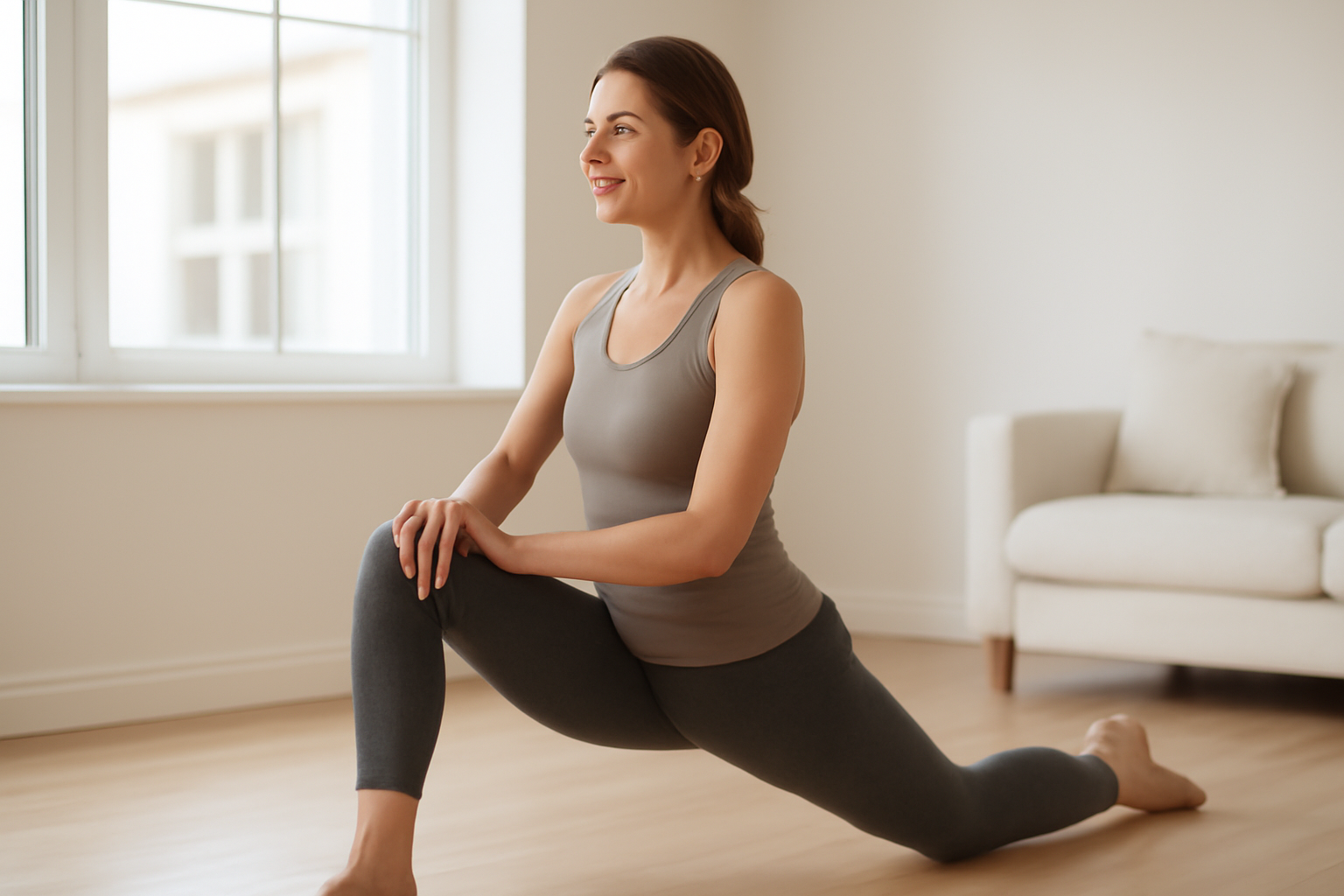
Unlock Your Movement: The Complete Guide to Mobility Training
Feeling stiff, achy, or like your body just doesn’t move as freely as it used to? You’re not alone, and mobility training might be your game-changer.
It’s a common scenario: you wake up feeling a bit creaky, find yourself compensating when reaching for something on a high shelf, or perhaps notice that everyday movements like bending down or tying your shoes aren’t as effortless as they once were. For many adults aged 25-60, this feeling of restriction isn’t necessarily a sign of serious health issues, but rather a subtle indicator that your body’s ability to move through its full range of motion is diminishing.
Often, we confuse “flexibility” with “mobility,” assuming that simply stretching more is the answer. While stretching has its place, true mobility training goes deeper, addressing not just how far your joints can move, but how well your muscles can control those movements. It’s the difference between passively letting a limb move and actively commanding its journey through space.
In this comprehensive guide, we’ll cut through the misconceptions and dive into the practical, science-backed world of mobility training. You’ll learn why cultivating robust mobility is essential for your long-term health, how it actually works, and most importantly, actionable steps to integrate it into your busy life. Prepare to reclaim your freedom of movement and enhance your overall well-being with functional fitness.
Why Mobility Training Matters More Than You Think
Think about how often you move throughout your day. From lifting a child to reaching for groceries, or even just getting in and out of a car, your body performs countless movements. When your joints lack adequate mobility, these simple tasks can become challenging, leading to compensatory movements, increased strain, and eventually, discomfort or even injury.
Mobility is the unsung hero of overall fitness and daily function. It’s your body’s ability to move through its full, healthy range of motion without pain or restriction. This isn’t just about being able to touch your toes; it’s about having stable, strong joints that can perform their intended functions effectively and safely.
For instance, restricted hip mobility can impact your lower back, knees, and even how efficiently you walk or run. Limited shoulder mobility can lead to neck pain or hinder your ability to lift objects overhead. The American College of Sports Medicine (ACSM) consistently highlights the importance of maintaining and improving joint range of motion as a fundamental component of physical fitness, crucial for injury prevention and enhancing daily functional capacity. When your joints are mobile, they’re also more resilient.
Beyond preventing aches and pains, good mobility improves your quality of life. Imagine being able to play sports with your kids without worrying about tweaking something, reaching for that top shelf with ease, or simply sitting and standing without stiffness. It improves your posture, allows for more effective workouts if you engage in strength training, and can even contribute to better balance as you age. It’s an investment in your body’s longevity and capability.
The Science Behind Mobility: More Than Just Stretching
Let’s clear up a common misconception: mobility is not simply another word for flexibility. While the two are related, they describe different aspects of movement. Flexibility refers to the passive range of motion of a joint or series of joints, often achieved through static stretching. Mobility, on the other hand, is the active, controlled movement of a joint through its full range of motion, requiring both flexibility and strength within that range.
Consider a gymnastic split. Someone who can achieve a full split with assistance demonstrates passive flexibility. However, if they can lift their leg high into a split position and hold it there using their own muscle strength, they have excellent mobility. Mobility involves the nervous system, muscle strength, and joint health all working in harmony.
The magic happens when your muscles can actively engage and stabilize a joint throughout its entire available range. This active control protects the joint, makes movements more efficient, and reduces the risk of injury. When you stretch a muscle, you might increase its length, but without the corresponding strength to control that new range, the joint can actually become less stable. This is why just “stretching more” often falls short for lasting relief from stiffness or improved movement.
Research published in journals like the Journal of Strength and Conditioning Research has frequently demonstrated that dynamic mobility exercises, which actively move joints through their full range, can significantly improve performance and reduce injury risk compared to static stretching alone prior to activity. These exercises enhance neuromuscular control — the communication between your brain and muscles — teaching your body to effectively use its newfound range.
Ultimately, mobility training builds robust joints and resilient movement patterns, equipping your body to handle the demands of daily life and physical activity with greater ease and safety.
How to Start Your Mobility Journey: Practical Steps
Starting a mobility routine doesn’t require hours at the gym or expensive equipment. Consistency and mindful movement are key. Here’s how to begin, with options for various experience levels:
Beginner-Friendly Entry Points (5-10 minutes daily)
- Gentle Joint Rotations: Start with simple, slow circles for major joints. Think neck circles (gentle!), shoulder rolls, wrist circles, ankle rotations, and small hip circles. Focus on moving each joint independently and smoothly.
- Cat-Cow Stretch: On hands and knees, arch your back as you inhale (cow) and round it as you exhale (cat). This gently mobilizes your spine.
- Thoracic Rotations: Lie on your side with knees bent and stacked. Extend your arms forward. Keep your bottom knee grounded and rotate your top arm up and over to the other side, allowing your upper back to twist.
- Hip Flexor Stretch: Kneel on one knee, with the other foot flat on the floor in front of you. Gently push your hips forward to feel a stretch in the front of your back hip. Hold for 30 seconds per side.
Intermediate Progressions (10-20 minutes, 3-5 times per week)
Once you’re comfortable with the basics, introduce “Controlled Articular Rotations” (CARs). These are slow, deliberate movements that take a joint through its largest possible pain-free range of motion, activating muscles at every point of the movement.
- Hip CARs: From all fours or standing, slowly lift one knee and rotate your hip through its full circle, focusing on control. Imagine painting the largest circle possible with your knee.
- Shoulder CARs: Stand tall, arm extended. Slowly rotate your arm in a large circle, focusing on isolating the shoulder joint from the torso.
- Spine CARs: In a seated position, gently articulate your spine through flexion, extension, lateral flexion, and rotation. Think of moving one vertebra at a time.
- Deep Squat Holds: Descend into the deepest squat you can comfortably hold with good form (heels down, chest up). Hold for 30-60 seconds, using a support if needed.
For more specific routines, consider exploring stretching routines as a complementary practice to maintain muscle length and support your mobility work.
Advanced Options (As part of a regular fitness routine)
- Loaded Mobility: Incorporate light weights or resistance bands into CARs to build strength at end ranges.
- P.A.I.L.s & P.R.O.A.I.L.s: (Progressive and Regressive Angular Isometrics) — These advanced techniques, often taught by mobility specialists, involve contracting muscles within a stretched range to rapidly increase both flexibility and strength.
- Complex Multi-Joint Flows: Combine several mobility movements into a fluid sequence, such as “shinbox switches” or “flow” routines that move the entire body through various planes.
Remember, the goal is to improve your active range of motion, not to push into pain. If you’re unsure about a movement or experience discomfort, consult a certified fitness professional or physical therapist. Integrating these movements will also enhance your performance in strength training and other exercises.
Common Mistakes That Sabotage Your Mobility Gains
While mobility training is incredibly beneficial, it’s also easy to fall into habits that prevent you from seeing the best results. Being aware of these common pitfalls can help you adjust your approach and maximize your efforts.
1. Rushing Through Movements
Why it happens: In our fast-paced world, it’s tempting to speed through exercises. We might treat mobility like another item on a checklist, rather than a mindful practice.
How to fix it: Mobility training is about control and precision, not speed. Slow down each movement significantly. Focus on feeling every degree of motion in the joint. Imagine moving through thick honey. This deliberate pace allows your nervous system to better communicate with your muscles, improving motor control and making lasting changes.
2. Only Stretching, Not Activating
Why it happens: As discussed, many people confuse flexibility with mobility. They focus solely on static stretches, passively extending muscles without engaging the surrounding musculature.
How to fix it: Integrate active components. When you reach the end of a range of motion (during a CAR, for example), actively try to pull yourself deeper into that range using the muscles on the opposite side of the joint. Then, try to push out of the stretch using the muscles being stretched. This teaches your body to “own” the new range, making it stable and usable.
3. Pushing Into Pain or “No Pain, No Gain” Mentality
Why it happens: We’re often taught that discomfort is part of progress, but with mobility, pain is a warning sign, not a goalpost. Pushing into sharp pain can lead to injury and reinforce protective guarding patterns in your body.
How to fix it: Always work within a pain-free range. You might feel a gentle stretch or tension, but never sharp, stabbing, or pinching pain. If a movement causes pain, reduce the range or stop altogether and consult a professional. Listen to your body’s signals; they are there to protect you.
4. Inconsistency and Lack of Structure
Why it happens: It’s easy to treat mobility as an “add-on” when you have time, rather than a fundamental part of your routine. This inconsistent approach yields inconsistent results.
How to fix it: Make mobility a non-negotiable part of your day, even if it’s just 5-10 minutes. Integrate it into your warm-up before a workout, as a cool-down, or as a dedicated “movement break” during your workday. Having a simple, structured routine you follow regularly is far more effective than sporadic, intense sessions.
Fueling Your Flexibility: Nutrition for Joint Health
While mobility training directly addresses joint mechanics and muscle control, what you put into your body plays a significant supporting role in the health and function of your joints, connective tissues, and muscles. Optimizing your nutrition can enhance your body’s ability to recover, reduce inflammation, and maintain the integrity of your musculoskeletal system.
Stay Hydrated
Water is essential for nearly every bodily function, including the health of your joints. Synovial fluid, which lubricates your joints and nourishes cartilage, is primarily water. Dehydration can lead to stiffer joints and reduced shock absorption. Aim for at least 8 glasses (around 2 liters) of water daily, and more if you’re active or in a warm climate.
Prioritize Omega-3 Fatty Acids
These essential fatty acids are well-known for their powerful anti-inflammatory properties, which can be particularly beneficial for joint comfort and recovery. Research published in the Journal of Nutrition and consistently supported by Harvard Health Publishing highlights Omega-3s’ role in reducing systemic inflammation. Incorporate fatty fish like salmon, mackerel, and sardines into your diet a few times a week, or consider plant-based sources like flaxseeds, chia seeds, and walnuts.
Embrace Anti-Inflammatory Foods
A diet rich in whole, unprocessed foods can naturally help combat inflammation that may contribute to joint stiffness and pain. Focus on a wide variety of fruits and vegetables (berries, leafy greens, broccoli), whole grains, legumes, and lean proteins. Spices like turmeric and ginger also have well-documented anti-inflammatory benefits.
Limit Processed Foods and Added Sugars
Conversely, a diet high in processed foods, unhealthy fats, and added sugars can promote chronic inflammation throughout the body. Reducing your intake of these items can create a more hospitable environment for joint health and overall well-being. This doesn’t mean complete avoidance, but rather mindful consumption.
Ensure Adequate Micronutrient Intake
Vitamins and minerals like Vitamin C (for collagen production), Vitamin D (for bone health and immune function), and Calcium (for bone strength) are vital for musculoskeletal integrity. Ensure your diet includes a diverse array of nutrient-dense foods to cover these needs, and consult with a registered dietitian if you have concerns about deficiencies.
Realistic Expectations: When to See Results and What to Track
Mobility training is a marathon, not a sprint. While you might feel immediate improvements in fluidity and reduced stiffness after a single session, significant, lasting changes take time and consistent effort. Patience is crucial.
Realistic Timelines
- Immediate: You’ll likely feel more fluid and less stiff right after a session, especially dynamic movements.
- Weeks 2-4: You might notice slight improvements in your range of motion and a general reduction in everyday stiffness. Movements that felt awkward might start to feel a bit smoother.
- Months 2-3: This is often when more noticeable and consistent gains begin to appear. You’ll likely experience significant improvements in specific movements, better posture, and a reduction in minor aches. Your body will start to “own” the new ranges of motion.
- Beyond 3 Months: Mobility becomes a foundational habit, and you’ll continue to build on your progress. It’s about ongoing maintenance and gradual expansion, rather than dramatic leaps.
What to Track and Monitor
Seeing progress helps with motivation. Here are some metrics and signals to monitor:
- Subjective Feelings: Pay attention to how your body feels. Is that morning stiffness less pronounced? Do daily tasks like reaching, bending, or squatting feel easier and more comfortable? Note these small wins.
- Specific Movement Tests: Choose 2-3 specific movements that are currently challenging for you (e.g., reaching overhead, squatting deep, internal hip rotation). Periodically re-test them and note any improvements in depth, ease, or pain-free range.
- Consistency: Track how often you engage in your mobility routine. Consistency is the most reliable predictor of success.
- Workout Performance: If you exercise, observe if your mobility work is improving your form in lifts, reducing compensatory movements, or allowing you to move through a fuller range in your exercises.
If you experience persistent pain, lack of progress after several weeks of consistent effort, or a sudden decrease in range of motion, it’s time to seek professional guidance. A physical therapist, certified athletic trainer, or experienced mobility specialist can provide a personalized assessment and tailored plan.
Frequently Asked Questions About Mobility Training
Q1: Is mobility training the same as stretching?
No, they are distinct but related. Stretching primarily focuses on lengthening muscles and increasing passive range of motion. Mobility training focuses on active control and strength within the full range of motion of a joint, making the range usable and stable.
Q2: How often should I do mobility training?
Consistency is key. Even 5-10 minutes of dedicated mobility work daily can be highly effective. Integrating short mobility drills into your warm-up or cool-down, or taking movement breaks throughout the day, is more beneficial than one long, infrequent session.
Q3: Can mobility training help with pain?
Often, yes. Many common aches and pains (like lower back or knee pain) are rooted in poor movement patterns or restricted joint mobility elsewhere in the body. By improving how a joint moves, mobility training can alleviate strain and reduce pain. However, always consult a healthcare professional for persistent or severe pain.
Q4: Do I need special equipment for mobility training?
For most fundamental mobility work, no. Your body weight is often sufficient. Tools like foam rollers, lacrosse balls, or resistance bands can be beneficial for specific areas or for adding resistance, but they are not necessary to start.
Q5: Is it too late to start mobility training?
It’s never too late! While maintaining mobility throughout life is ideal, adults of any age can improve their joint health, range of motion, and overall movement quality with consistent and appropriate mobility training. Start gently and listen to your body.
Reclaim Your Movement Freedom
Mobility training isn’t just another fitness fad; it’s a fundamental practice for anyone looking to live a healthier, more active life with less pain and greater ease. By understanding the science and consistently applying practical, controlled movements, you’re investing in the longevity and capability of your body.
Remember, perfection isn’t the goal — consistent, mindful effort is. Start small, focus on quality over quantity, and celebrate every incremental improvement. Your body is designed to move freely, and with dedicated mobility training, you can reclaim that inherent freedom. Why not try a few gentle joint rotations or a cat-cow stretch today and begin your journey toward unlocking your full movement potential?
This article is for informational and educational purposes only. The content is not intended to replace professional medical, nutritional, or fitness advice. Always consult a qualified healthcare provider, registered dietitian, or certified fitness professional before starting a new health program or making significant changes to your lifestyle.
Content reviewed by our wellness editorial team, with references to peer-reviewed research and guidelines from leading health organizations.