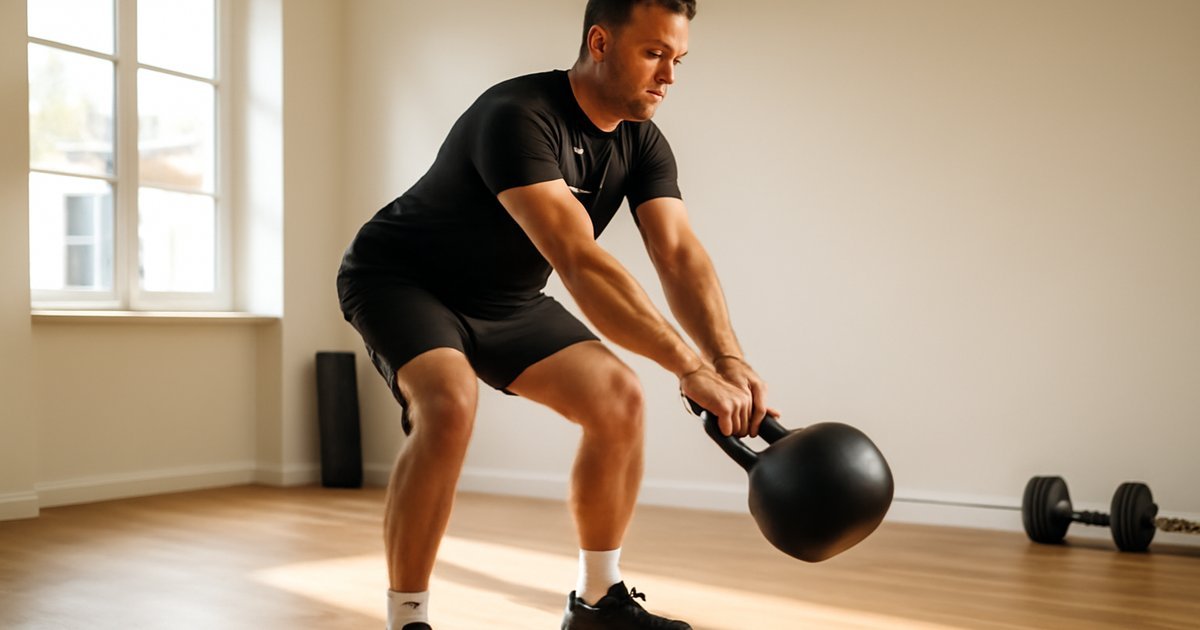
Tag: full body workout

  • Kettlebell Training for Adults: Strength, Power & Results

    Kettlebell Training for Adults: Strength, Power & Results

    Kettlebell Training for Adults: Strength, Power & Results

    One piece of equipment, a few feet of space, and a training method that builds real-world strength from head to toe — kettlebells might be the most underrated tool in the gym.

    If you’ve walked past those cannonball-shaped weights at your gym and never picked one up, you’re not alone. Most adults either gravitate toward machines or dumbbells, leaving the kettlebell rack untouched. But here’s what the research and decades of athletic training have confirmed: kettlebell training delivers a unique combination of strength, cardiovascular conditioning, and functional movement that very few training methods can match.

    According to research published in the Journal of Strength and Conditioning Research, kettlebell training significantly improves aerobic capacity, muscular strength, and dynamic balance simultaneously — making it one of the most efficient training tools available for time-pressed adults. Whether you’re 28 and building your first real fitness routine or 55 and looking for a joint-friendly way to stay strong and energized, kettlebells can meet you where you are.

    In this guide, you’ll learn exactly how kettlebell training works, why it’s different from conventional weight training, how to start safely, and what realistic results look like over time.

    Why Kettlebell Training Matters More Than You Think

    Here’s a surprising fact: most traditional gym routines train your body in isolated, linear patterns — a bicep curl moves in one direction, a leg press pushes straight forward. Real life doesn’t work that way. You twist, hinge, rotate, and carry things at odd angles every single day.

    Kettlebell training is built around multi-planar, full-body movements — swings, cleans, presses, and Turkish get-ups that mirror the way your body actually moves. This functional approach means every rep is building strength you’ll actually use, not just in the gym but in daily life.

    A landmark study conducted at the University of Wisconsin-La Crosse found that a 20-minute kettlebell workout burned an average of 400 calories — equivalent to running at a 6-minute-per-mile pace. That’s exceptional caloric expenditure in a short window, and it doesn’t require a treadmill, a track, or even leaving your living room.

    Beyond calorie burn, the American Council on Exercise (ACE) has highlighted kettlebell training as an effective method for improving core strength, grip strength, and posterior chain development — areas that are chronically underdeveloped in most sedentary adults. This matters because a strong posterior chain (glutes, hamstrings, lower back) is one of the most reliable predictors of injury prevention and long-term mobility.

    For adults over 40 especially, the hip-hinge patterns central to kettlebell training can help counteract the muscle loss and postural decline that come with prolonged sitting and aging.

    How Kettlebell Training Actually Works

    One common misconception is that kettlebells are just dumbbells with handles in awkward places. They’re not. The offset center of gravity — the weight sits below the handle rather than being evenly distributed — fundamentally changes how your muscles recruit and stabilize during each movement.

    When you swing a kettlebell, your body can’t cheat. Your core, hips, and shoulder stabilizers have to fire continuously to control the momentum. This creates what exercise scientists call reactive neuromuscular demand — your nervous system has to work harder, which translates to better motor control, coordination, and muscular endurance over time.

    The two primary movement categories in kettlebell training are:

    • Ballistic movements — swings, cleans, snatches. These are explosive, high-velocity movements that train power, cardiovascular conditioning, and posterior chain strength simultaneously.
    • Grind movements — presses, squats, Turkish get-ups. These are slow, controlled movements that build raw strength, stability, and neuromuscular coordination.

    A well-designed kettlebell program uses both categories. Research published in PLOS ONE found that combining ballistic and grind movements in the same training session produced greater improvements in both strength and aerobic endurance compared to programs using only one type.

    Myth to bust: Many beginners assume they need heavy kettlebells to see results. In reality, most adults benefit far more from mastering technique with a moderate weight than from swinging heavy bells with poor form. The American College of Sports Medicine (ACSM) consistently emphasizes that form integrity is the primary driver of safe, effective strength adaptation — not load.

    How to Get Started With Kettlebell Training

    Starting with kettlebells requires less equipment and space than almost any other training system — but it does require attention to movement quality. Here’s how to build a solid foundation.

    Step 1 — Choose the Right Starting Weight

    For most beginners, the Academy of Nutrition and Dietetics and fitness professionals recommend:

    • Women: Start with a 8–12 kg (18–26 lb) kettlebell
    • Men: Start with a 12–16 kg (26–35 lb) kettlebell

    These are general starting points. If you’re coming off a period of inactivity or have joint concerns, start lighter. If you have a strong lifting background, you may start heavier — but resist the urge to rush progression.

    Step 2 — Master the Foundational Movements First

    Before any program, nail these three basics:

    1. The Hip Hinge — Bend at the hips with a neutral spine, pushing your hips back rather than squatting down. This is the foundation of every swing, clean, and deadlift.
    2. The Goblet Squat — Hold the kettlebell at chest height and squat with a tall chest and knees tracking over toes. A forgiving, joint-friendly squat pattern for all fitness levels.
    3. The Two-Handed Swing — Drive your hips explosively forward while swinging the bell to shoulder height. Power comes from the hips, not the arms.

    Beginner Starter Routine (3 days/week):

    • Goblet Squat — 3 sets of 10 reps
    • Two-Handed Swing — 3 sets of 15 reps
    • Romanian Deadlift — 3 sets of 10 reps
    • Kettlebell Halo — 3 sets of 8 reps each direction
    • Dead Bug (bodyweight) — 3 sets of 8 reps

    Intermediate Progression: Add single-arm swings, kettlebell presses, and Turkish get-ups once you can complete the beginner routine with controlled, pain-free form for four consecutive weeks.

    Advanced Options: Kettlebell complexes (performing multiple exercises back-to-back without setting the bell down), double kettlebell training, and kettlebell sport (timed sets for maximum reps) are all high-intensity options for experienced practitioners.

    If you’re building a broader fitness program, pairing kettlebell training with compound exercises for full-body strength can accelerate your results significantly.

    Common Mistakes That Sabotage Results

    Kettlebell training has a relatively steep learning curve compared to machines. These are the mistakes most beginners make — and exactly how to fix them.

    Mistake 1 — Using Your Arms to Swing, Not Your Hips
    This is the most universal beginner error. The swing is a hip-driven movement, and your arms are just along for the ride. If your shoulders and biceps are sore after swings, you’re arm-pulling the bell. Fix: Practice the hip hinge pattern in slow motion before adding the swing. Think "snap hips forward" rather than "lift the bell."

    Mistake 2 — Going Too Heavy Too Soon
    More weight doesn’t mean more results — especially early on. Excessive load before you’ve developed proper movement patterns leads to compensations, poor form, and eventual injury. Fix: Spend at least four weeks at a moderate weight, prioritizing clean reps and full range of motion before adding load.

    Mistake 3 — Skipping the Warm-Up
    Kettlebell movements are ballistic and dynamic. Starting cold dramatically increases injury risk, particularly at the lower back, shoulders, and wrists. Fix: Spend 8–10 minutes warming up with hip circles, thoracic rotations, band pull-aparts, and bodyweight hip hinges before touching any kettlebell.

    Mistake 4 — Neglecting Recovery
    Because kettlebell sessions are intense and full-body, many beginners train too frequently and don’t allow adequate recovery time. Mayo Clinic research on resistance training recommends at least 48 hours of recovery between sessions targeting the same muscle groups. Fix: Limit kettlebell sessions to 3–4 days per week, especially during your first 8 weeks.

    Mistake 5 — Ignoring Grip and Wrist Positioning
    Dropping the bell or spraining a wrist because of poor grip technique is a common and entirely avoidable issue. Fix: The handle should sit diagonally across the palm (not in the fingers) with a firm but not white-knuckle grip. For overhead movements, the bell should rest on your forearm, not your wrist.

    What to Eat to Support Kettlebell Training

    Kettlebell training is intense and metabolically demanding. Your nutrition needs to reflect that — especially if your goal is building strength, losing body fat, or improving endurance.

    Protein — The Non-Negotiable
    The Academy of Nutrition and Dietetics recommends 1.2–2.0 grams of protein per kilogram of body weight for adults engaged in regular resistance and endurance training. For a 160-lb adult, that translates to roughly 87–145 grams of protein daily. Prioritize lean sources: chicken breast, Greek yogurt, eggs, cottage cheese, tofu, and legumes.

    Carbohydrates — Your Training Fuel
    The ballistic nature of kettlebell training draws significantly on glycolytic energy systems, meaning carbohydrates are essential. The USDA Dietary Guidelines recommend that 45–65% of total calories come from carbohydrates for active adults. Opt for quality sources: oats, sweet potatoes, quinoa, whole grain bread, and fruit.

    Pre-Workout Nutrition: A small mixed meal 60–90 minutes before training — something like a banana with peanut butter or oatmeal with berries — provides sustained energy without causing digestive discomfort during intense swings and presses.

    Post-Workout Recovery: Within 30–60 minutes after your session, aim for a protein-carbohydrate combination to support muscle repair. A protein shake with fruit, eggs on toast, or Greek yogurt with granola all work well.

    Hydration: Even modest dehydration (1–2% body weight) significantly impairs strength and power output, according to NIH research. Aim for at least half your body weight in ounces of water daily, and add electrolytes if sessions exceed 60 minutes.

    For further reading on building a strong foundation for your movements, check out our guide on building a strong core beyond just abs — core stability is critical for safe, effective kettlebell training.

    How Long Until You See Results — and What to Track

    Results depend significantly on your starting fitness level, training frequency, nutrition, and sleep quality. That said, here are realistic timelines based on current exercise science research.

    Weeks 1–3: Neural Adaptation Phase
    You’ll feel soreness, improve coordination, and notice that movements become smoother. Don’t expect major visual changes yet — your nervous system is learning, not your muscles growing. Strength gains may appear faster than expected during this phase due to improved motor unit recruitment.

    Weeks 4–8: Early Strength and Conditioning Gains
    Most beginners report noticeable improvements in stamina, grip strength, and overall energy. Research published in the Journal of Human Kinetics found significant strength and aerobic capacity improvements in untrained adults after just 6 weeks of twice-weekly kettlebell training.

    Weeks 8–16: Visible Body Composition Changes
    With consistent training and appropriate nutrition, you can expect measurable changes in muscle tone and body fat distribution. These results vary significantly depending on your diet and recovery practices.

    What to Track:

    • Swing reps at a given weight before form breaks down
    • Resting heart rate (a declining trend signals improving cardiovascular fitness)
    • How quickly your heart rate recovers after a hard set
    • Energy levels and sleep quality — both typically improve within the first 3–4 weeks
    • Body measurements (waist, hips, arms) rather than scale weight alone

    When to Reassess: If you’ve been training consistently for 12 weeks without any measurable progress, it may be time to adjust your program, consult a certified strength and conditioning specialist (CSCS), or evaluate recovery and nutrition factors. Plateaus are normal — they’re a signal to change variables, not to quit.

    You can further accelerate your results by understanding how progressive overload works — a principle that applies directly to kettlebell training and is essential for continued strength gains.

    Frequently Asked Questions

    Is kettlebell training safe for people with lower back pain?
    It depends on the cause and severity of your back pain. When performed with proper hip hinge mechanics, kettlebell swings can actually strengthen the posterior chain and reduce chronic lower back discomfort over time. However, starting with poor form can aggravate existing issues. Always consult your healthcare provider or a certified physical therapist before beginning kettlebell training if you have a history of back problems.

    How many days a week should I train with kettlebells?
    For most beginners, 3 days per week with at least one rest day between sessions is the evidence-backed sweet spot. As you advance and your recovery capacity improves, you can increase to 4 sessions per week. Daily training is generally not recommended unless sessions are short, low-intensity, and specifically programmed for recovery.

    Can I lose weight with kettlebell training alone?
    Kettlebell training is an effective tool for body composition improvement, but sustainable fat loss requires a calorie deficit supported by consistent nutrition habits. Training creates the stimulus; diet primarily drives the energy balance. Combined with a modest calorie deficit and adequate protein, kettlebell training can support meaningful fat loss over time — but it’s not a standalone solution.

    Do I need more than one kettlebell?
    Not to start. A single kettlebell in the appropriate weight range is enough to build a comprehensive beginner-to-intermediate program. As you advance, adding a second kettlebell (same or different weight) unlocks double-bell movements that significantly increase training options and intensity.

    Is kettlebell training appropriate for older adults?
    Absolutely — with appropriate modifications. Research published in Aging Clinical and Experimental Research found that kettlebell training improved grip strength, balance, and functional movement in adults over 60. The key is starting lighter, prioritizing movement quality, and progressing more gradually than younger trainees.

    Start Where You Are — One Swing at a Time

    Kettlebell training isn’t a trend. It’s a time-tested, research-backed approach to building functional strength, improving cardiovascular fitness, and moving better in everyday life — all with one piece of equipment and minimal space. It rewards consistency and punishes shortcuts, which means the people who stick with it tend to build the kind of durable, practical strength that machines simply can’t replicate.

    You don’t need to be an athlete to start. You don’t need a gym membership. You just need the right starting weight, a willingness to learn the movements, and the patience to build your foundation before pushing intensity.

    Start with the goblet squat and the two-handed swing. Practice them until they feel natural. Then build from there. Small, consistent steps — not heroic effort followed by burnout — are what create lasting results.

    Your action for today: Look up one beginner kettlebell tutorial from a certified strength coach, choose your starting weight, and schedule your first three sessions of the week. That’s it. Start there.


    This article is for informational and educational purposes only. The content is not intended to replace professional medical, nutritional, or fitness advice. Always consult a qualified healthcare provider, registered dietitian, or certified fitness professional before starting a new health program or making significant changes to your lifestyle.

    Content reviewed by our wellness editorial team, with references to peer-reviewed research and guidelines from leading health organizations.

  • Compound Exercises: Your Full-Body Strength Shortcut

    Compound Exercises: Your Full-Body Strength Shortcut

    Many people walk into the gym with a desire to get stronger, feel fitter, and look better. Often, they gravitate towards machines or exercises that target one muscle at a time – bicep curls today, triceps extensions tomorrow, followed by leg extensions. It’s a common approach, but it can leave you feeling like you’re spending endless hours working out with minimal returns on your overall strength and functional ability. You might be building individual muscles, but are you building a truly strong, coordinated body?

    The truth is, while isolation exercises have their place, they often miss the bigger picture of how your body moves in the real world. Think about it: when do you ever use just one muscle group in isolation outside of a gym? Lifting groceries, playing with kids, climbing stairs, or simply moving through your day – these all demand multiple muscles working together. This is where the profound power of compound exercises comes into play.

    This comprehensive guide will revolutionize your approach to fitness. We’ll dive deep into what compound exercises are, why they are a cornerstone of any effective training program, and how you can seamlessly integrate them into your routine. Prepare to discover how to build maximal strength, boost calorie burn, and cultivate real-world functional fitness, all while making your workouts more efficient and rewarding. Forget endless isolated movements; it’s time to train smarter, not just harder.

    Why Compound Exercises Matter More Than You Think

    When you boil down human movement, it’s almost always a symphony of muscles and joints working in concert. Compound exercises are the conductors of this symphony. They are movements that involve the coordinated action of multiple joints and engage several major muscle groups simultaneously. Think about iconic movements like squats, deadlifts, overhead presses, or pull-ups.

    These aren’t just exercises; they’re fundamental human movement patterns. By training them, you’re not just strengthening individual muscles; you’re teaching your body to move as an integrated, powerful unit. This functional strength is what truly translates to improved performance in daily life, whether you’re carrying heavy bags, moving furniture, or engaging in sports.

    The American College of Sports Medicine (ACSM) consistently emphasizes the importance of multi-joint exercises for comprehensive strength development. They highlight that these movements are superior for improving athletic performance, enhancing daily functional capacity, and promoting overall fitness compared to single-joint movements. This isn’t just theory; it’s a principle backed by decades of exercise science.

    Beyond the gym, this integrated strength impacts your longevity and independence. As we age, maintaining the ability to stand from a chair (a squat pattern), lift objects off the floor (a deadlift pattern), or reach overhead (an overhead press pattern) becomes crucial for quality of life. Compound exercises are your proactive investment in a strong, capable future, helping to train your body for real life.

    The Science Behind How Compound Exercises Actually Work

    The magic of compound exercises lies in their efficiency and the unique physiological response they elicit. When you perform a movement like a barbell squat, your hip, knee, and ankle joints all articulate. This simultaneous movement engages your quadriceps, hamstrings, glutes, core, and even your back muscles as stabilizers. Compare this to a leg extension, which only moves the knee joint and isolates the quads.

    This extensive muscle activation during compound movements demands significantly more energy from your body. More muscles working means a higher caloric expenditure during the workout itself. But the benefits extend far beyond the session. The metabolic stress and muscle damage (the good kind, that leads to growth) from compound lifts are greater, leading to an elevated post-exercise oxygen consumption (EPOC), often called the “afterburn effect.” This means you continue to burn more calories even after your workout is over.

    A common misconception is that you need separate workout days for every single muscle group to achieve a balanced physique. While body part splits can be effective for advanced bodybuilders, for most people, this approach is often inefficient and unnecessary. Compound exercises bust this myth by hitting multiple muscles effectively and synergistically, allowing for highly efficient full-body workouts that can deliver superior results in less time.

    Furthermore, research published in the Journal of Strength and Conditioning Research has demonstrated that multi-joint exercises, like the squat and deadlift, can elicit a greater acute hormonal response compared to single-joint exercises. This includes higher levels of anabolic hormones such as testosterone and growth hormone. While the direct impact of these acute spikes on long-term muscle growth is still debated, it underscores the intense systemic demand and adaptational potential that compound movements place on the body, contributing to greater overall muscle growth and strength adaptations over time.

    How to Get Started: Practical Steps for Incorporating Compound Exercises

    Ready to unlock the power of compound movements? Here’s a progressive guide to integrating them into your routine:

    Beginner-Friendly Entry Points:

    1. Master Bodyweight Basics: Before adding external load, become proficient with your own body weight. Start with exercises like bodyweight squats, lunges (forward and reverse), push-ups (on your knees or incline if needed), and planks. Focus intently on proper form and control. This builds a crucial foundation of stability and movement patterns.
    2. Learn Proper Form: This is non-negotiable. Watch high-quality instructional videos from certified personal trainers. Consider investing in a few sessions with a qualified coach to learn the fundamental movement patterns safely and effectively. Good form is your best insurance against injury and your most direct path to maximizing results.
    3. Start Light, Stay Safe: When you’re ready to introduce weights, always begin with very light dumbbells, kettlebells, or even just an empty barbell. The goal initially is to groove the movement pattern under light resistance, not to lift heavy. Focus on feeling the right muscles work and maintaining impeccable form throughout the entire range of motion.

    Intermediate Options:

    1. Embrace Progressive Overload: Once you’ve mastered the basic forms with light weights, it’s time to systematically challenge your body. This is the principle of progressive overload – gradually increasing the weight, reps, or sets over time. Without it, your body has no reason to adapt and get stronger. Track your progress to ensure you’re consistently challenging yourself. This is a critical component of any sustainable workout routine.
    2. Incorporate Key Lifts: Build your workouts around the classic compound lifts: barbell squats (back or front), deadlifts (conventional or Romanian), overhead presses, bench presses, and bent-over rows. These movements form the backbone of a comprehensive strength program.
    3. Full-Body Split: A highly effective way to structure your training is through a 2-3 day per week full-body split. This allows you to hit all major muscle groups with compound exercises, followed by adequate recovery days. For example, Monday, Wednesday, Friday workouts with Tuesday, Thursday, Saturday, Sunday for rest or active recovery.

    Advanced Options:

    1. Vary Intensity and Rep Ranges: To continue making progress, manipulate your training variables. Utilize lower rep ranges (e.g., 3-5 reps) for pure strength development, and higher rep ranges (e.g., 8-12 reps) for muscle hypertrophy (growth). Periodically change your rep schemes to keep your body adapting.
    2. Explore Advanced Variations: With a solid foundation, you can explore more complex compound movements like power cleans, snatches, or plyometric variations. However, these require significant technical proficiency and are best learned under the direct supervision of an experienced coach.
    3. Implement Periodization: Advanced lifters often benefit from periodization, which involves structuring training into specific blocks with varying intensity and volume goals. This helps prevent plateaus, optimizes recovery, and prepares the body for peak performance.

    Common Mistakes That Sabotage Results

    While compound exercises are incredibly effective, they also require attention to detail. Many enthusiastic lifters make common errors that can derail progress or even lead to injury. Acknowledging these pitfalls is the first step toward correcting them.

    1. Sacrificing Form for Weight: This is arguably the most prevalent and damaging mistake. The allure of lifting heavier can be strong, but attempting weights you can’t control with proper technique is counterproductive. Poor form reduces the effectiveness of the exercise by shifting tension away from the target muscles and dramatically increases your risk of injury.
    2. Fix: Leave your ego at the door. Drop the weight to a level where you can perform every repetition with perfect form, maintaining control throughout the entire movement. Focus on the muscle connection and the quality of each rep, not just the number on the barbell.

    3. Skipping Warm-ups and Cool-downs: Many individuals jump straight into heavy lifting or abruptly finish their workout, neglecting the crucial bookends of a training session. A proper warm-up prepares your body for the demands of the workout, increasing blood flow, raising core temperature, and improving joint mobility. A cool-down aids in recovery and flexibility.
    4. Fix: Dedicate 5-10 minutes to dynamic stretches (e.g., leg swings, arm circles, torso twists) before your workout. After your session, spend another 5-10 minutes on static stretches, holding each stretch for 20-30 seconds, focusing on the muscles you’ve worked.

    5. Lack of Progressive Overload: Your body is an incredible adapter. If you consistently perform the same exercises with the same weight and the same number of reps, your body will eventually stop seeing a reason to get stronger or grow. This leads to frustrating plateaus.
    6. Fix: Implement systematic progressive overload. This means periodically increasing the weight, performing more repetitions with the same weight, adding an extra set, or even reducing rest times. Small, consistent increases over time are more effective and sustainable than trying to make huge leaps.

    7. Neglecting Core Engagement: For virtually all compound movements, a strong and stable core is paramount. It acts as the bridge between your upper and lower body, transferring force and protecting your spine. A weak or disengaged core can compromise your form, reduce your power output, and significantly increase your risk of back injury, particularly in lifts like squats and deadlifts.

      Fix: Consciously brace your core before and throughout each repetition. Imagine preparing for a punch to your stomach – this creates intra-abdominal pressure that stabilizes your torso. Supplement your compound lifts with specific core work like planks, dead bugs, and bird-dogs to build foundational core strength.

    Fueling Your Compound Exercise Progress

    Training effectively with compound exercises is only half the battle; your nutrition plays an equally critical role in supporting muscle growth, recovery, and energy levels. You can’t out-train a poor diet, especially when demanding multi-joint movements. Here’s what to focus on:

    • Adequate Protein Intake: Protein is the building block of muscle. To repair muscle fibers broken down during intense training and to synthesize new ones, you need sufficient protein. Aim for approximately 0.7 to 1 gram of protein per pound of body weight per day, distributing your intake across all your meals. Excellent sources include lean meats (chicken, turkey, beef), fish, eggs, dairy products (Greek yogurt, cottage cheese), legumes, and tofu.
    • Complex Carbohydrates: These are your primary energy source. Complex carbohydrates provide sustained energy for your demanding workouts and are crucial for replenishing muscle glycogen stores afterward, aiding in recovery. Prioritize whole grains (oats, brown rice, quinoa), sweet potatoes, fruits, and vegetables. The USDA Dietary Guidelines for Americans typically recommend that carbohydrates make up 45-65% of your daily caloric intake, a range that active individuals often find beneficial for performance.
    • Healthy Fats: Don’t shy away from fats; they are essential for hormone production, nutrient absorption, and overall health. Focus on unsaturated fats found in avocados, nuts, seeds, olive oil, and fatty fish (like salmon, rich in Omega-3s). These healthy fats contribute to satiety and provide a concentrated energy source.
    • Hydration is Key: Often overlooked, water is absolutely critical for performance, recovery, and preventing fatigue and cramps. Even mild dehydration can significantly impair your strength and endurance. The National Academies of Sciences, Engineering, and Medicine suggest about 15.5 cups (3.7 liters) of fluids a day for men and about 11.5 cups (2.7 liters) of fluids a day for women. However, your individual needs will vary based on activity level, climate, and overall health. Keep a water bottle handy and sip throughout the day, not just during workouts.

    Conversely, minimize your intake of processed foods, excessive added sugars, and unhealthy trans fats. These offer little nutritional value, can contribute to inflammation, and ultimately hinder your progress and recovery from the rigorous demands of compound training.

    How Long Until You See Results & What to Track

    One of the most common questions in fitness is, “How long until I see results?” The answer, while not always straightforward, can be broken down into realistic timelines based on scientific understanding.

    Realistic Timelines:

    • Initial Strength Gains (Neurological Adaptations): Within the first 2-4 weeks of consistent compound training, you’ll likely notice a significant increase in your ability to lift more weight or perform more repetitions. This initial surge in strength is largely due to your nervous system becoming more efficient at recruiting and coordinating muscle fibers. You’re essentially getting better at using the strength you already have.
    • Muscle Hypertrophy (Visible Growth): While strength gains can appear quickly, visible changes in muscle size (hypertrophy) typically take a bit longer. Expect to see noticeable changes after 6-12 weeks of consistent, challenging training, coupled with proper nutrition and adequate recovery. It’s important to remember that results vary significantly among individuals due to genetics, training history, age, and adherence to the program.

    Specific Metrics to Monitor:

    • Workout Log: This is your most powerful tool. Keep a detailed log of every workout, recording the exercises performed, the weight lifted, the number of sets, and repetitions for each set. This allows you to track your progress, ensure you’re applying progressive overload, and identify areas for improvement.
    • Perceived Exertion (RPE): Use a simple scale of 1-10 (1 being no effort, 10 being maximal effort) to rate how challenging each set feels. This helps you gauge your effort level and fatigue, ensuring you’re working hard enough but not overdoing it.
    • Form Check-ins: Regularly film yourself performing key lifts or ask a knowledgeable spotter/trainer to observe your form. Small deviations can creep in over time, and regular checks help maintain proper technique.
    • Body Composition (Optional but Informative): If specific goals like weight loss or muscle gain are central to your journey, tracking body measurements (e.g., waist, hips, arms) or periodically assessing body fat percentage (via methods like DEXA scans, bioelectrical impedance analysis, or calipers) every 4-8 weeks can provide objective feedback on your physical changes.
    • How You Feel: Don’t underestimate subjective markers. Pay attention to your energy levels, sleep quality, mood, and recovery between sessions. These are excellent indicators of whether your training and recovery are balanced. Persistent fatigue, poor sleep, or chronic soreness might signal overtraining or inadequate recovery.

    When to Seek Professional Guidance: If you encounter persistent pain that isn’t typical muscle soreness, hit a prolonged plateau despite consistent effort and adjustments, or simply feel uncertain about your form or programming, do not hesitate to consult a certified personal trainer, physical therapist, or other qualified healthcare provider. Their expertise can provide invaluable insights and corrective strategies.

    Frequently Asked Questions

    1. Are compound exercises enough for a complete workout?
      Yes, for most individuals aiming for general strength, fitness, and muscle development, a well-rounded program built primarily on compound exercises is highly effective. They challenge your body holistically. While isolation exercises can be added to address specific muscle weaknesses or aesthetic preferences, they are not strictly necessary for overall fitness.
    2. Can beginners do compound exercises?
      Absolutely! In fact, beginners should prioritize learning compound movements. Starting with bodyweight variations (like squats and push-ups) or very light resistance, focusing intently on proper form, builds a strong foundational movement pattern. This approach teaches your body efficient movement from the outset, serving you well as you progress to heavier loads.
    3. How often should I do compound exercises?
      For optimal results and adequate recovery, aim for 2-4 full-body compound exercise sessions per week. It’s crucial to allow at least one rest day between demanding full-body workouts to enable muscle repair and growth. Listen to your body and adjust frequency based on your recovery capacity and energy levels.
    4. Do compound exercises help with weight loss?
      Yes, significantly. Because they engage multiple large muscle groups and demand more energy, compound exercises lead to a higher calorie expenditure during your workout compared to isolation movements. Furthermore, building muscle through compound training increases your resting metabolic rate, meaning your body burns more calories even when at rest, which is a powerful advantage for sustainable weight management.
    5. What’s the difference between compound and isolation exercises?
      Compound exercises involve movement at multiple joints and engage several major muscle groups simultaneously (e.g., squat, deadlift). Isolation exercises, in contrast, target a single joint and primarily work one muscle group (e.g., bicep curl, leg extension). Both types have their place in a comprehensive fitness plan, but compound exercises offer greater efficiency and functional carryover.

    Conclusion

    Integrating compound exercises into your fitness routine is one of the most powerful and efficient shifts you can make for comprehensive strength, efficiency, and overall well-being. They challenge your body in a way that directly translates to real-world demands, building not just muscle and physical strength, but also coordination, resilience, and confidence in your body’s capabilities.

    Remember, the journey to greater strength and fitness isn’t about perfection; it’s about consistency, commitment to proper form, and the willingness to progressively challenge yourself. Start with the foundational movements, focus on mastering their technique, and trust the process.

    Choose one compound exercise from this guide – perhaps a bodyweight squat or a push-up – and incorporate it thoughtfully into your next workout. Feel the power of your body working as one, and take the first step towards a stronger, more functional you today.

    WELLNESS DISCLAIMER:

    This article is for informational and educational purposes only. The content is not intended to replace professional medical, nutritional, or fitness advice. Always consult a qualified healthcare provider, registered dietitian, or certified fitness professional before starting a new health program or making significant changes to your lifestyle.

    AUTHOR LINE:

    Content reviewed by our wellness editorial team, with references to peer-reviewed research and guidelines from leading health organizations.