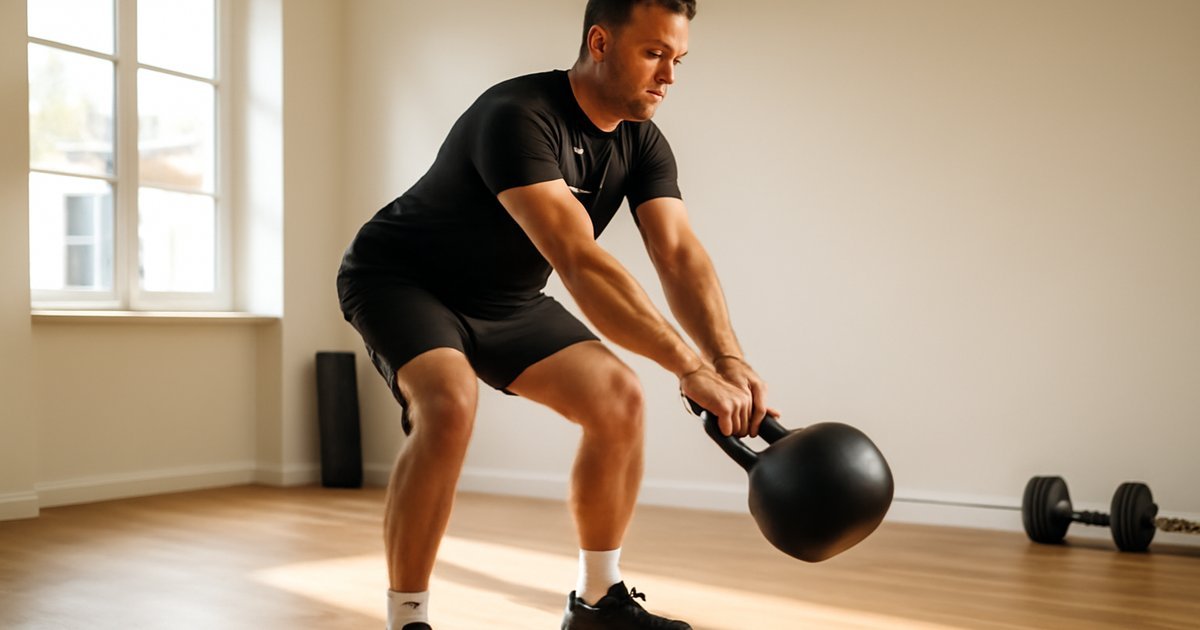
Kettlebell Training for Adults: Strength, Power & Results
One piece of equipment, a few feet of space, and a training method that builds real-world strength from head to toe — kettlebells might be the most underrated tool in the gym.
If you’ve walked past those cannonball-shaped weights at your gym and never picked one up, you’re not alone. Most adults either gravitate toward machines or dumbbells, leaving the kettlebell rack untouched. But here’s what the research and decades of athletic training have confirmed: kettlebell training delivers a unique combination of strength, cardiovascular conditioning, and functional movement that very few training methods can match.
According to research published in the Journal of Strength and Conditioning Research, kettlebell training significantly improves aerobic capacity, muscular strength, and dynamic balance simultaneously — making it one of the most efficient training tools available for time-pressed adults. Whether you’re 28 and building your first real fitness routine or 55 and looking for a joint-friendly way to stay strong and energized, kettlebells can meet you where you are.
In this guide, you’ll learn exactly how kettlebell training works, why it’s different from conventional weight training, how to start safely, and what realistic results look like over time.
Why Kettlebell Training Matters More Than You Think
Here’s a surprising fact: most traditional gym routines train your body in isolated, linear patterns — a bicep curl moves in one direction, a leg press pushes straight forward. Real life doesn’t work that way. You twist, hinge, rotate, and carry things at odd angles every single day.
Kettlebell training is built around multi-planar, full-body movements — swings, cleans, presses, and Turkish get-ups that mirror the way your body actually moves. This functional approach means every rep is building strength you’ll actually use, not just in the gym but in daily life.
A landmark study conducted at the University of Wisconsin-La Crosse found that a 20-minute kettlebell workout burned an average of 400 calories — equivalent to running at a 6-minute-per-mile pace. That’s exceptional caloric expenditure in a short window, and it doesn’t require a treadmill, a track, or even leaving your living room.
Beyond calorie burn, the American Council on Exercise (ACE) has highlighted kettlebell training as an effective method for improving core strength, grip strength, and posterior chain development — areas that are chronically underdeveloped in most sedentary adults. This matters because a strong posterior chain (glutes, hamstrings, lower back) is one of the most reliable predictors of injury prevention and long-term mobility.
For adults over 40 especially, the hip-hinge patterns central to kettlebell training can help counteract the muscle loss and postural decline that come with prolonged sitting and aging.
How Kettlebell Training Actually Works
One common misconception is that kettlebells are just dumbbells with handles in awkward places. They’re not. The offset center of gravity — the weight sits below the handle rather than being evenly distributed — fundamentally changes how your muscles recruit and stabilize during each movement.
When you swing a kettlebell, your body can’t cheat. Your core, hips, and shoulder stabilizers have to fire continuously to control the momentum. This creates what exercise scientists call reactive neuromuscular demand — your nervous system has to work harder, which translates to better motor control, coordination, and muscular endurance over time.
The two primary movement categories in kettlebell training are:
- Ballistic movements — swings, cleans, snatches. These are explosive, high-velocity movements that train power, cardiovascular conditioning, and posterior chain strength simultaneously.
- Grind movements — presses, squats, Turkish get-ups. These are slow, controlled movements that build raw strength, stability, and neuromuscular coordination.
A well-designed kettlebell program uses both categories. Research published in PLOS ONE found that combining ballistic and grind movements in the same training session produced greater improvements in both strength and aerobic endurance compared to programs using only one type.
Myth to bust: Many beginners assume they need heavy kettlebells to see results. In reality, most adults benefit far more from mastering technique with a moderate weight than from swinging heavy bells with poor form. The American College of Sports Medicine (ACSM) consistently emphasizes that form integrity is the primary driver of safe, effective strength adaptation — not load.
How to Get Started With Kettlebell Training
Starting with kettlebells requires less equipment and space than almost any other training system — but it does require attention to movement quality. Here’s how to build a solid foundation.
Step 1 — Choose the Right Starting Weight
For most beginners, the Academy of Nutrition and Dietetics and fitness professionals recommend:
- Women: Start with a 8–12 kg (18–26 lb) kettlebell
- Men: Start with a 12–16 kg (26–35 lb) kettlebell
These are general starting points. If you’re coming off a period of inactivity or have joint concerns, start lighter. If you have a strong lifting background, you may start heavier — but resist the urge to rush progression.
Step 2 — Master the Foundational Movements First
Before any program, nail these three basics:
- The Hip Hinge — Bend at the hips with a neutral spine, pushing your hips back rather than squatting down. This is the foundation of every swing, clean, and deadlift.
- The Goblet Squat — Hold the kettlebell at chest height and squat with a tall chest and knees tracking over toes. A forgiving, joint-friendly squat pattern for all fitness levels.
- The Two-Handed Swing — Drive your hips explosively forward while swinging the bell to shoulder height. Power comes from the hips, not the arms.
Beginner Starter Routine (3 days/week):
- Goblet Squat — 3 sets of 10 reps
- Two-Handed Swing — 3 sets of 15 reps
- Romanian Deadlift — 3 sets of 10 reps
- Kettlebell Halo — 3 sets of 8 reps each direction
- Dead Bug (bodyweight) — 3 sets of 8 reps
Intermediate Progression: Add single-arm swings, kettlebell presses, and Turkish get-ups once you can complete the beginner routine with controlled, pain-free form for four consecutive weeks.
Advanced Options: Kettlebell complexes (performing multiple exercises back-to-back without setting the bell down), double kettlebell training, and kettlebell sport (timed sets for maximum reps) are all high-intensity options for experienced practitioners.
If you’re building a broader fitness program, pairing kettlebell training with compound exercises for full-body strength can accelerate your results significantly.
Common Mistakes That Sabotage Results
Kettlebell training has a relatively steep learning curve compared to machines. These are the mistakes most beginners make — and exactly how to fix them.
Mistake 1 — Using Your Arms to Swing, Not Your Hips
This is the most universal beginner error. The swing is a hip-driven movement, and your arms are just along for the ride. If your shoulders and biceps are sore after swings, you’re arm-pulling the bell. Fix: Practice the hip hinge pattern in slow motion before adding the swing. Think "snap hips forward" rather than "lift the bell."
Mistake 2 — Going Too Heavy Too Soon
More weight doesn’t mean more results — especially early on. Excessive load before you’ve developed proper movement patterns leads to compensations, poor form, and eventual injury. Fix: Spend at least four weeks at a moderate weight, prioritizing clean reps and full range of motion before adding load.
Mistake 3 — Skipping the Warm-Up
Kettlebell movements are ballistic and dynamic. Starting cold dramatically increases injury risk, particularly at the lower back, shoulders, and wrists. Fix: Spend 8–10 minutes warming up with hip circles, thoracic rotations, band pull-aparts, and bodyweight hip hinges before touching any kettlebell.
Mistake 4 — Neglecting Recovery
Because kettlebell sessions are intense and full-body, many beginners train too frequently and don’t allow adequate recovery time. Mayo Clinic research on resistance training recommends at least 48 hours of recovery between sessions targeting the same muscle groups. Fix: Limit kettlebell sessions to 3–4 days per week, especially during your first 8 weeks.
Mistake 5 — Ignoring Grip and Wrist Positioning
Dropping the bell or spraining a wrist because of poor grip technique is a common and entirely avoidable issue. Fix: The handle should sit diagonally across the palm (not in the fingers) with a firm but not white-knuckle grip. For overhead movements, the bell should rest on your forearm, not your wrist.
What to Eat to Support Kettlebell Training
Kettlebell training is intense and metabolically demanding. Your nutrition needs to reflect that — especially if your goal is building strength, losing body fat, or improving endurance.
Protein — The Non-Negotiable
The Academy of Nutrition and Dietetics recommends 1.2–2.0 grams of protein per kilogram of body weight for adults engaged in regular resistance and endurance training. For a 160-lb adult, that translates to roughly 87–145 grams of protein daily. Prioritize lean sources: chicken breast, Greek yogurt, eggs, cottage cheese, tofu, and legumes.
Carbohydrates — Your Training Fuel
The ballistic nature of kettlebell training draws significantly on glycolytic energy systems, meaning carbohydrates are essential. The USDA Dietary Guidelines recommend that 45–65% of total calories come from carbohydrates for active adults. Opt for quality sources: oats, sweet potatoes, quinoa, whole grain bread, and fruit.
Pre-Workout Nutrition: A small mixed meal 60–90 minutes before training — something like a banana with peanut butter or oatmeal with berries — provides sustained energy without causing digestive discomfort during intense swings and presses.
Post-Workout Recovery: Within 30–60 minutes after your session, aim for a protein-carbohydrate combination to support muscle repair. A protein shake with fruit, eggs on toast, or Greek yogurt with granola all work well.
Hydration: Even modest dehydration (1–2% body weight) significantly impairs strength and power output, according to NIH research. Aim for at least half your body weight in ounces of water daily, and add electrolytes if sessions exceed 60 minutes.
For further reading on building a strong foundation for your movements, check out our guide on building a strong core beyond just abs — core stability is critical for safe, effective kettlebell training.
How Long Until You See Results — and What to Track
Results depend significantly on your starting fitness level, training frequency, nutrition, and sleep quality. That said, here are realistic timelines based on current exercise science research.
Weeks 1–3: Neural Adaptation Phase
You’ll feel soreness, improve coordination, and notice that movements become smoother. Don’t expect major visual changes yet — your nervous system is learning, not your muscles growing. Strength gains may appear faster than expected during this phase due to improved motor unit recruitment.
Weeks 4–8: Early Strength and Conditioning Gains
Most beginners report noticeable improvements in stamina, grip strength, and overall energy. Research published in the Journal of Human Kinetics found significant strength and aerobic capacity improvements in untrained adults after just 6 weeks of twice-weekly kettlebell training.
Weeks 8–16: Visible Body Composition Changes
With consistent training and appropriate nutrition, you can expect measurable changes in muscle tone and body fat distribution. These results vary significantly depending on your diet and recovery practices.
What to Track:
- Swing reps at a given weight before form breaks down
- Resting heart rate (a declining trend signals improving cardiovascular fitness)
- How quickly your heart rate recovers after a hard set
- Energy levels and sleep quality — both typically improve within the first 3–4 weeks
- Body measurements (waist, hips, arms) rather than scale weight alone
When to Reassess: If you’ve been training consistently for 12 weeks without any measurable progress, it may be time to adjust your program, consult a certified strength and conditioning specialist (CSCS), or evaluate recovery and nutrition factors. Plateaus are normal — they’re a signal to change variables, not to quit.
You can further accelerate your results by understanding how progressive overload works — a principle that applies directly to kettlebell training and is essential for continued strength gains.
Frequently Asked Questions
Is kettlebell training safe for people with lower back pain?
It depends on the cause and severity of your back pain. When performed with proper hip hinge mechanics, kettlebell swings can actually strengthen the posterior chain and reduce chronic lower back discomfort over time. However, starting with poor form can aggravate existing issues. Always consult your healthcare provider or a certified physical therapist before beginning kettlebell training if you have a history of back problems.
How many days a week should I train with kettlebells?
For most beginners, 3 days per week with at least one rest day between sessions is the evidence-backed sweet spot. As you advance and your recovery capacity improves, you can increase to 4 sessions per week. Daily training is generally not recommended unless sessions are short, low-intensity, and specifically programmed for recovery.
Can I lose weight with kettlebell training alone?
Kettlebell training is an effective tool for body composition improvement, but sustainable fat loss requires a calorie deficit supported by consistent nutrition habits. Training creates the stimulus; diet primarily drives the energy balance. Combined with a modest calorie deficit and adequate protein, kettlebell training can support meaningful fat loss over time — but it’s not a standalone solution.
Do I need more than one kettlebell?
Not to start. A single kettlebell in the appropriate weight range is enough to build a comprehensive beginner-to-intermediate program. As you advance, adding a second kettlebell (same or different weight) unlocks double-bell movements that significantly increase training options and intensity.
Is kettlebell training appropriate for older adults?
Absolutely — with appropriate modifications. Research published in Aging Clinical and Experimental Research found that kettlebell training improved grip strength, balance, and functional movement in adults over 60. The key is starting lighter, prioritizing movement quality, and progressing more gradually than younger trainees.
Start Where You Are — One Swing at a Time
Kettlebell training isn’t a trend. It’s a time-tested, research-backed approach to building functional strength, improving cardiovascular fitness, and moving better in everyday life — all with one piece of equipment and minimal space. It rewards consistency and punishes shortcuts, which means the people who stick with it tend to build the kind of durable, practical strength that machines simply can’t replicate.
You don’t need to be an athlete to start. You don’t need a gym membership. You just need the right starting weight, a willingness to learn the movements, and the patience to build your foundation before pushing intensity.
Start with the goblet squat and the two-handed swing. Practice them until they feel natural. Then build from there. Small, consistent steps — not heroic effort followed by burnout — are what create lasting results.
Your action for today: Look up one beginner kettlebell tutorial from a certified strength coach, choose your starting weight, and schedule your first three sessions of the week. That’s it. Start there.
This article is for informational and educational purposes only. The content is not intended to replace professional medical, nutritional, or fitness advice. Always consult a qualified healthcare provider, registered dietitian, or certified fitness professional before starting a new health program or making significant changes to your lifestyle.
Content reviewed by our wellness editorial team, with references to peer-reviewed research and guidelines from leading health organizations.
Leave a Reply