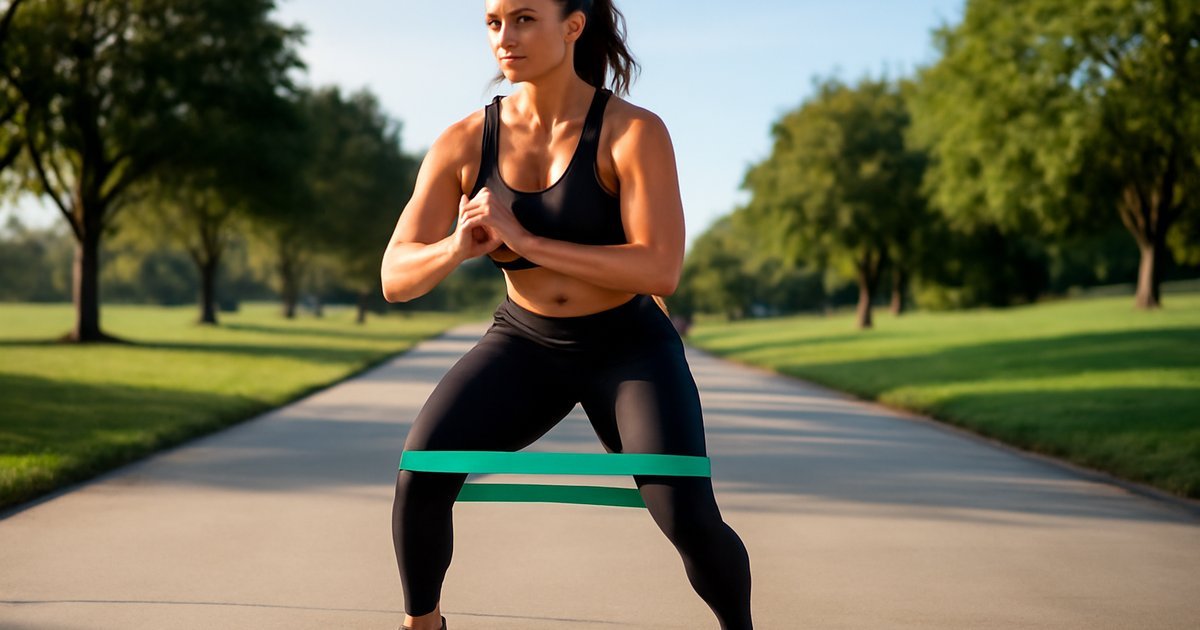
Mini-Band Training for Adults: Small Band, Big Results
You might be surprised how much a two-dollar loop of rubber can expose the weaknesses holding your whole body back.
Picture this: you’ve been lifting consistently for months, eating well, staying active — yet your lower back still aches after long runs, your knees track awkwardly during squats, and your hips feel tight no matter how much you stretch. The culprit? Often, it’s not effort. It’s the small stabilizing muscles that never get properly trained. And that’s exactly where mini-band training quietly outperforms nearly every other tool in the gym.
Mini-bands — also called resistance loops or loop bands — are flat, circular bands typically made from latex or fabric. They’re inexpensive, portable, and deceivingly simple. But according to research and certified fitness professionals, they are one of the most effective tools for activating the glutes, hip abductors, and stabilizing muscles that traditional weightlifting tends to skip. If you’ve overlooked mini-bands, this guide will show you exactly why that’s worth changing — and how to do it right.
Why Mini-Band Training Matters More Than You Think
Most adults spend the majority of their day sitting. According to the American College of Sports Medicine (ACSM), prolonged sitting is directly associated with inhibited gluteal activation — a pattern sometimes called "gluteal amnesia," where the glutes become underactive and surrounding muscles compensate. This compensation leads to poor movement mechanics, knee and hip dysfunction, and chronic lower back discomfort.
Mini-bands target the exact muscles that sitting shuts down. Exercises like banded clamshells, lateral walks, and hip abduction drills specifically activate the gluteus medius, gluteus minimus, and hip external rotators — muscle groups that many people never deliberately train. Research published in the Journal of Strength and Conditioning Research found that resistance band exercises placed around the knees significantly increased gluteus medius activation compared to unresisted movements alone.
Beyond glute activation, mini-bands create what trainers call "irradiation tension" — the low-grade resistance forces your stabilizers to stay engaged throughout an entire movement, reinforcing better alignment in compound lifts like squats and deadlifts. This makes mini-bands valuable not just as a standalone workout but as a corrective and performance-enhancing tool that complements everything else you do in the gym or at home.
The Science Behind Mini-Band Training and How It Actually Works
Mini-bands operate on the principle of constant tension. Unlike free weights, which have gravity-dependent resistance that decreases at certain joint angles, a resistance loop maintains tension throughout the entire range of motion. This sustained tension increases time under tension (TUT) for the target muscle, a well-established driver of muscle adaptation and endurance-based hypertrophy.
One common misconception is that mini-bands are only useful for warm-ups or rehab. That’s a significant underestimation. When used strategically — for example, placing a band just above the knees during squats or around the wrists during push-up variations — they can add a genuine strength stimulus to bodyweight and loaded movements. A study referenced by the National Strength and Conditioning Association (NSCA) showed that adding band resistance to squat patterns increased muscular activation in the hip abductors and external rotators by up to 30% compared to squats without resistance.
Another myth worth busting: mini-bands are only for beginners or recovery. Elite athletes and strength coaches regularly program them for high-performance clients. Many professional sports teams use resistance loop work as a staple in their movement preparation and injury prevention protocols. Results vary based on your baseline strength and how consistently you train, but the neuromuscular benefits are relevant at every fitness level.
How to Get Started With Mini-Band Training
One of the biggest advantages of mini-bands is their accessibility. You can start today, in your living room, with a band that costs under $15.
Choosing the Right Resistance
Mini-bands typically come in light, medium, heavy, and extra-heavy resistance levels. Beginners should start with light to medium bands. If you can easily complete 15 reps of a lateral band walk without feeling burn in the outer hip, move to the next level.
Beginner Starter Routine (3 days per week, 2-3 sets each)
- Banded Clamshells: Lie on your side, band just above the knees, feet together. Rotate the top knee toward the ceiling while keeping feet stacked. 15 reps per side. This is the gold standard for gluteus medius activation.
- Lateral Band Walk: Band just above knees, squat position, step sideways 10-12 steps each direction. Maintain a slight bend in the knees throughout.
- Glute Bridge with Band: Lying on your back, band above knees, push knees outward as you drive hips up. Hold at the top for 2 seconds. 12-15 reps.
- Standing Hip Abduction: Band just above ankles, hold a wall for balance, lift one leg directly out to the side. 12 reps per side.
Intermediate Additions
- Banded squats (band above knees, focus on pushing knees out against resistance throughout the descent)
- Monster walks (forward and backward in squat position with band above knees)
- Banded push-ups (band across the upper back, hands through each end — challenges chest and triceps significantly)
Advanced Applications
- Banded Romanian deadlifts
- Single-leg banded hip hinges
- Banded pull-aparts (above the head, pulling band wide to activate rear deltoids and upper back)
- Combining mini-bands with barbell squats or hip thrusts for layered resistance
This works best if you treat mini-band work as both a warm-up tool and a standalone training option. Pair it with your existing routine at Circuit Training for Adults or use it after sessions that involve heavy compound lifts to reinforce proper movement patterns.
Common Mistakes That Sabotage Mini-Band Results
Mini-band training is forgiving, but a few consistent errors will significantly blunt your progress. Here’s what to watch for:
1. Letting the Band Collapse Inward During Squats
The entire point of banded squats is to keep the knees tracking over the toes against resistance. If your knees cave in despite the band, you’re not getting the activation benefit — and you may be reinforcing poor mechanics. Fix it: reduce the weight or use a lighter band, focus on pushing your knees outward actively, and consider performing the movement in front of a mirror initially.
2. Placing the Band in the Wrong Position
Band placement changes the entire exercise. Band above the knees during clamshells creates strong hip abductor demand. Band at the ankles shifts the load and increases the lever arm — more advanced. Many beginners place the band too low too soon. Start above the knee until you’ve built foundational activation.
3. Rushing Through Reps
Because mini-band exercises don’t feel as intense as heavy barbell work, it’s tempting to move quickly. This is a mistake. Slow, controlled reps with a deliberate pause at peak contraction dramatically increase muscle activation. The goal is to feel the target muscle working — quality of contraction, not speed of repetition.
4. Skipping Progressive Overload
Many people use the same light mini-band for months and then wonder why they’ve stopped progressing. Mini-band training still follows the principle of progressive overload. Increase resistance, slow the tempo, add reps, or progress to more challenging movement patterns to keep adapting.
5. Treating It as Optional
Mini-band work is easy to skip when time is short. But consistency is where the benefit accumulates. Even 10-15 minutes of targeted banded activation work three times per week can produce meaningful improvements in hip stability and movement quality over 6-8 weeks. If you need a full-body complement, explore how Calisthenics Training for Adults can pair seamlessly with mini-band routines.
What to Eat to Support Mini-Band Training Results
Mini-band training, while lower in intensity than barbell lifting, still demands muscular effort and recovery support. Your nutrition strategy should reflect that.
Protein for Muscle Activation and Recovery
The Academy of Nutrition and Dietetics recommends that active adults consume between 1.2 and 1.7 grams of protein per kilogram of body weight per day. This range supports muscle repair even in moderate-intensity resistance training. Practical sources include eggs, Greek yogurt, cottage cheese, chicken, fish, legumes, and tofu.
Anti-Inflammatory Foods
If mini-band training is part of a rehabilitation or injury-prevention context, reducing systemic inflammation supports faster muscular recovery. The USDA Dietary Guidelines emphasize a diet rich in colorful vegetables, berries, fatty fish like salmon and sardines, and olive oil as a primary fat source. These aren’t magic solutions, but consistent inclusion of anti-inflammatory foods has been associated with better musculoskeletal recovery outcomes according to Harvard Health Publishing.
Hydration
Even low-intensity sessions reduce hydration. Aim for at least 8 cups (64 oz) of water daily, and more on active days. Dehydration impairs muscle contraction efficiency — even mild dehydration of 1-2% body weight has been shown to reduce physical performance.
What to Limit
Highly processed foods high in refined sugars and saturated fats increase systemic inflammation and can slow soft tissue recovery. This doesn’t mean elimination — it means moderation. Focus on consistent whole-food intake rather than strict restriction.
How Long Until You See Results and What to Track
Realistic expectations matter. Mini-band training doesn’t produce the dramatic visual changes of heavy strength training in the short term, but it addresses something arguably more important: functional movement quality and injury resilience.
Weeks 1-2: Increased awareness of hip and glute activation. You may notice soreness in the outer hip and glutes — muscles you weren’t effectively reaching before.
Weeks 3-4: Improved knee tracking during squats and lunges. Reduced discomfort during activities like stair climbing or walking. Many people report their hips feel more "connected" during workouts.
Weeks 6-8: Measurable improvements in single-leg balance and hip stability. If you’ve been dealing with minor knee or hip discomfort linked to muscle imbalance, this is typically when that begins to resolve. According to the American Physical Therapy Association, consistent hip strengthening exercises show statistically significant improvements in knee pain outcomes within 6-8 weeks.
Metrics to Track:
- Reps completed per set at a given resistance level
- Perceived exertion in target muscles (are you feeling it where you should?)
- Knee tracking consistency during squats — does your form hold up in the mirror?
- Subjective comfort during daily activities like stairs, walking, and getting up from a chair
If you’re using mini-bands alongside a barbell program like Barbell Training for Adults, track your compound lift performance as a secondary indicator — many people see their squat and deadlift mechanics improve as hip stability increases.
Seek guidance from a certified fitness professional or physical therapist if you experience sharp joint pain during exercises, or if you’re recovering from an injury and are unsure how to progress safely.
Frequently Asked Questions About Mini-Band Training
Can mini-bands actually build muscle, or are they just for warm-ups?
Mini-bands can absolutely contribute to muscle development, particularly in the hip abductors, glutes, and shoulder stabilizers. While they won’t replace heavy free weights for maximizing hypertrophy, they provide enough resistance — especially with slower tempos and higher reps — to stimulate meaningful muscle adaptation in underactive muscle groups. Many people find their glute development improves significantly when they add consistent banded activation work to their routine.
How do I know which resistance level to use?
Start with a band that allows you to complete 12-15 reps with controlled form but creates clear fatigue by the final reps. If you can easily complete 20 reps without feeling muscular burn in the target area, the band is too light. If you can’t maintain proper form past 8 reps, it may be too heavy for now. Resistance varies by exercise — you might use a medium band for clamshells and a light band for pull-aparts.
Are fabric bands better than latex bands?
Both work well. Fabric bands are more comfortable against skin, less likely to roll up during exercises, and tend to be more durable. Latex bands are typically thinner, more affordable, and easier to pack for travel. For lower-body exercises especially, many users prefer fabric. This comes down to personal preference — both deliver the same functional benefit.
How often should I do mini-band training?
Most fitness professionals recommend 3-4 sessions per week. Mini-band exercises, when used as activation work, can be performed daily without significant recovery demand. As a standalone strength session for the hips and glutes, 3 days per week with at least one rest day in between is sufficient for most adults.
Can mini-bands help with knee pain?
In many cases, yes — but it depends on the cause of the pain. Knee pain linked to hip weakness, poor patellar tracking, or gluteal underactivation often responds well to targeted hip strengthening with mini-bands. However, you should consult a physical therapist or orthopedic specialist before using mini-bands if you have a diagnosed knee injury, as some movements may not be appropriate depending on your condition.
Start Small, Move Better, Feel the Difference
Mini-band training is one of those tools that delivers far more than it promises at first glance. It’s not flashy. It won’t fill a gym bag or turn heads in a workout video. But for adults who want to move better, reduce injury risk, activate muscles that have been sleeping on the job, and support long-term joint health — it’s genuinely hard to beat.
You don’t need an hour to get value from a mini-band. Even 10-15 minutes of intentional, focused work three times a week can meaningfully improve your hip stability, glute function, and overall movement quality over the course of a few weeks. Start with clamshells and lateral walks today. Master the basics, progress gradually, and let the results speak for themselves.
Small tool. Consistent effort. Real results.
This article is for informational and educational purposes only. The content is not intended to replace professional medical, nutritional, or fitness advice. Always consult a qualified healthcare provider, registered dietitian, or certified fitness professional before starting a new health program or making significant changes to your lifestyle.
Content reviewed by our wellness editorial team, with references to peer-reviewed research and guidelines from leading health organizations.
Leave a Reply