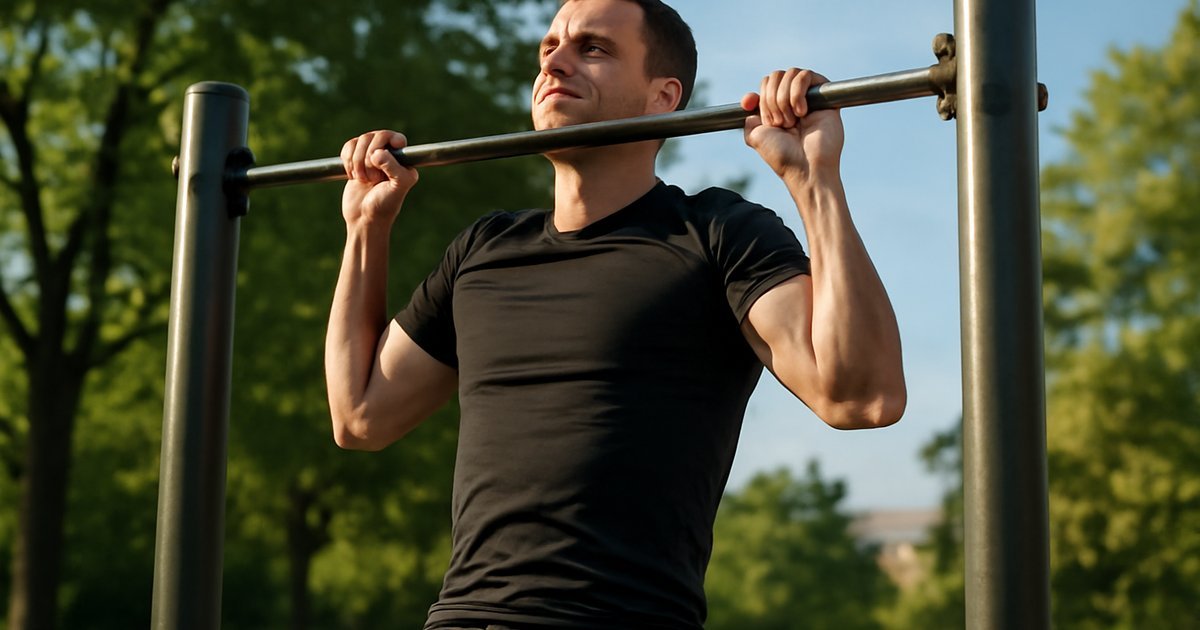
Calisthenics Training for Adults: Build Strength Anywhere
No gym membership, no equipment, no excuses — just your bodyweight and a plan that actually works.
Imagine walking into a gym for the first time, looking around at the machines, the cables, the barbells — and feeling completely overwhelmed. Or maybe you’ve been a gym regular for years but just moved to a new city, and suddenly your routine is gone. Or you’re a busy parent who can’t justify a $60/month membership when the mortgage just went up. Whatever your situation, there’s a training method that’s been hiding in plain sight, one that elite military units, gymnasts, and everyday fitness enthusiasts have relied on for decades: calisthenics.
Calisthenics training uses your own bodyweight as resistance to build real, functional strength — no equipment required. And while it might sound like a beginner-only approach, the truth is that calisthenics can challenge elite athletes just as effectively as a barbell program. A well-structured push-up progression, for example, can be scaled from a wall push-up for a complete novice to a one-arm push-up for an advanced athlete. The range is that wide.
In this guide, you’ll learn why calisthenics deserves a serious place in your fitness routine, how the science backs it up, how to get started regardless of your current fitness level, and what to watch out for so you don’t waste months spinning your wheels. Whether you’re 25 or 55, this approach can work for you — and it might be the most sustainable fitness habit you’ve ever built.
Why Calisthenics Matters More Than You Think
There’s a persistent myth in fitness culture that bodyweight training is only for people who can’t afford real equipment, or that it stops being effective once you reach a certain strength level. That couldn’t be further from the truth.
According to the American College of Sports Medicine (ACSM), resistance training — regardless of whether it uses free weights, machines, or bodyweight — produces significant improvements in muscle strength, endurance, and body composition when applied with progressive overload. The key isn’t the tool. It’s the stimulus.
What makes calisthenics particularly powerful for adults aged 25–60 is its emphasis on functional movement patterns. When you do a squat, a push-up, or a pull-up, you’re training movements that your body uses every single day — standing up from a chair, pushing open a heavy door, pulling yourself up from the floor. These patterns translate directly to better quality of life as you age.
Research published in the Journal of Human Kinetics found that an 8-week calisthenics program significantly improved upper body strength, core endurance, and posture among previously untrained adults — without any external weights. That’s a meaningful result from something you can do in your living room.
Beyond the physical benefits, calisthenics is extraordinarily accessible. You can train at home, in a park, in a hotel room, or anywhere with a small amount of floor space. That accessibility removes the most common barriers to consistency: cost, commute, and schedule.
The Science Behind Calisthenics: How It Actually Works
Here’s where a lot of people get confused: if you’re only lifting your own bodyweight, how does the training get harder over time? The answer lies in the principle of progressive overload — and calisthenics has more levers to pull than most people realize.
With barbells, you add weight. With calisthenics, you can:
- Increase leverage difficulty (moving from a standard push-up to an archer push-up to a one-arm push-up)
- Change tempo (slowing the lowering phase to increase time under tension)
- Adjust range of motion (going deeper into a squat, adding a pause at the bottom)
- Progress to unilateral variations (one-leg squats, single-arm rows)
- Increase volume and density (more reps, less rest)
This is not a limited system. It’s an incredibly deep one.
One common myth worth busting: many people assume calisthenics can’t build muscle mass, only endurance. The science disagrees. A 2017 study published in the Journal of Strength and Conditioning Research demonstrated that bodyweight resistance training at the right intensity (working near failure, with adequate volume) produces muscle hypertrophy comparable to traditional weight training in untrained to moderately trained individuals. Muscle doesn’t know whether the resistance comes from iron or from your own body — it only knows tension and fatigue.
What calisthenics does exceptionally well is train relative strength — how strong you are relative to your own bodyweight. This is a crucial metric for mobility, injury prevention, and athletic performance that traditional lifting sometimes neglects.
For adults over 40 in particular, calisthenics also tends to be gentler on joints. Because the movements are natural and unloaded by external weight, the stress on tendons and cartilage is typically lower than heavy barbell squats or bench pressing, according to Mayo Clinic guidance on age-appropriate resistance training.
How to Get Started: Practical Steps by Level
One of the best things about calisthenics is that there’s a clear entry point for everyone. Here’s how to begin based on where you are right now.
Beginner (0–3 months of consistent training)
Focus on mastering the foundational movement patterns. Aim for 3 sessions per week, with at least one rest day between sessions.
- Incline or knee push-ups — 3 sets of 8–12 reps. Build shoulder, chest, and tricep endurance before moving to full push-ups.
- Bodyweight squats — 3 sets of 10–15 reps. Focus on sitting back with your hips, keeping your knees in line with your toes.
- Dead hangs — 3 sets of 20–30 seconds. If you have access to a pull-up bar (door-frame bars cost under $30), hanging builds grip strength and shoulder health before you attempt pulling movements.
- Plank holds — 3 sets of 20–40 seconds. The foundation of core training in calisthenics.
- Glute bridges — 3 sets of 12–15 reps. Hip extension strength is critical for posture and lower back health.
At this stage, your goal is building a movement foundation — not pushing to failure. Consistency matters more than intensity.
Intermediate (3–12 months)
Once you can do 3 sets of 15 clean push-ups, 15 bodyweight squats with good form, and hold a 60-second plank, it’s time to progress.
- Full push-ups → Diamond push-ups → Pike push-ups (toward handstand push-up progression)
- Bodyweight squats → Bulgarian split squats → Pistol squat progressions
- Dead hangs → Scapular pull-ups → Negative pull-ups → Full pull-ups
- Plank → Side plank → Hollow body hold
At this level, structure your training with an upper/lower split or a push/pull/legs approach across 4 sessions per week.
Advanced (12+ months)
Advanced calisthenics includes skill-based movements that require serious strength-to-weight ratio: muscle-ups, handstand push-ups, front levers, pistol squats, and human flags. These are long-term goals that require deliberate practice — and they’re genuinely impressive benchmarks of functional fitness.
If you want to complement your calisthenics with additional cardio tools, check out our guide on Jump Rope Training for Adults — it pairs extremely well with bodyweight strength work.
Common Mistakes That Sabotage Results
Calisthenics looks simple on the surface, which is exactly why so many people make avoidable mistakes that slow their progress. Here are the most common ones — and exactly how to fix them.
Mistake #1: Skipping progressions and trying to jump ahead
It’s tempting to jump straight to pull-ups when you haven’t yet built the scapular stability and pulling strength required. The result? Shoulder impingement, elbow pain, and zero progress. Fix it by following a structured progression (like the one above) and earning each level before advancing.
Mistake #2: Ignoring the posterior chain
Calisthenics beginners tend to gravitate toward push-ups and squats — both involve the front of the body. Without pulling movements (rows, pull-up progressions) and hip hinges (glute bridges, single-leg deadlifts), you’ll develop muscle imbalances that lead to poor posture and back pain. Build your program around push, pull, squat, hinge, and core — every session or across a weekly split.
Mistake #3: Treating volume as a substitute for progression
Doing 100 push-ups a day sounds impressive, but if you’re always doing the same push-up at the same tempo, you’re training endurance — not building strength or muscle. Apply progressive overload by advancing to harder variations, slowing your reps, or adding pauses. More reps of easy movements have diminishing returns.
Mistake #4: Neglecting recovery
Because there’s no gym involved, it’s easy to train every day without realizing you’re overtraining. The ACSM recommends allowing 48 hours of recovery for each muscle group between sessions. If your push-up strength is declining week over week, you likely need more rest, not more training.
Mistake #5: Not tracking progress
Without a weight on a barbell to track, many calisthenics practitioners lose their benchmark. Keep a simple training log: record what variation you did, how many reps, and how it felt. This data tells you when to advance — and reminds you how far you’ve come.
What to Eat to Support Your Calisthenics Training
Calisthenics might be equipment-free, but your nutrition isn’t optional. What you eat significantly affects your energy, recovery, and the results you see from training.
Protein is your foundation. The Academy of Nutrition and Dietetics recommends 1.2 to 2.0 grams of protein per kilogram of body weight per day for adults who engage in regular resistance training. For a 160-pound adult, that’s roughly 87 to 145 grams of protein daily. Prioritize whole food sources: eggs, chicken breast, Greek yogurt, cottage cheese, legumes, tofu, and fish.
Carbohydrates fuel your performance. Don’t be afraid of them. The USDA Dietary Guidelines emphasize that complex carbohydrates — oats, sweet potatoes, brown rice, quinoa, fruit — should make up 45–65% of total caloric intake for most active adults. Low-carb approaches can work, but many people find their performance suffers, particularly with higher-rep calisthenics training.
Healthy fats support hormone health and joint function. Include avocado, olive oil, fatty fish (salmon, sardines), and nuts. The American Heart Association recommends prioritizing unsaturated fats and limiting saturated fat to under 10% of daily calories.
Hydration matters more than most people think. Even mild dehydration — as little as 2% of body weight lost in fluids — can noticeably reduce strength and endurance, according to research cited by the National Institutes of Health. Aim for at least half your bodyweight in ounces of water daily (so a 160-pound person needs 80 ounces minimum).
Time your meals around your workouts when possible: a protein- and carb-rich meal or snack 1–2 hours before training and a protein-focused meal within 2 hours after can meaningfully support recovery and muscle protein synthesis.
How Long Until You See Results — and What to Track
This is the question everyone wants answered — and it deserves an honest response.
Within 2–4 weeks, most beginners notice improved coordination, better body awareness during movements, and reduced soreness as the nervous system adapts. These neurological gains are real and meaningful, even if they don’t show up in the mirror yet.
Within 6–8 weeks, consistent trainees typically see measurable strength gains: more reps per set, progression to harder variations, and improved endurance. Harvard Health Publishing notes that beginners can experience noticeable strength improvements within this window if training 2–4 times per week with progressive overload.
Within 3–6 months, visible changes in muscle tone, posture, and body composition become more apparent, particularly when nutrition supports training. This timeline varies significantly based on age, starting fitness level, sleep quality, and diet consistency.
What to track:
- Max reps of your current benchmark movement (e.g., push-ups, pull-ups, squats)
- Which progression level you’re working at
- Waist circumference and how clothes fit (more reliable than scale weight alone)
- Energy levels and sleep quality — often the first things to improve with regular exercise
- Rest periods: if you need less rest between sets over time, that’s a sign of improved conditioning
Seek professional guidance if you experience persistent joint pain during movements, notice no progress after 8–10 weeks of consistent effort, or have pre-existing conditions that might affect your training approach.
For additional recovery support between sessions, our guide on Foam Rolling for Adults is an excellent complement to any calisthenics program.
Frequently Asked Questions
Can calisthenics build muscle, or is it just for endurance?
Yes, calisthenics can build muscle — but only if you apply progressive overload. Doing the same easy push-ups forever won’t stimulate hypertrophy. Advance to harder variations, increase time under tension, and train close to muscular failure. Research confirms that bodyweight training at appropriate intensities produces comparable muscle growth to traditional weight training in most untrained individuals.
Do I need any equipment to start calisthenics?
For a beginner, you need almost nothing — a floor and your body. A doorframe pull-up bar (roughly $20–$30) opens up the entire pulling movement category, which is important for balanced training. Parallette bars and gymnastic rings become useful at intermediate and advanced levels but are not necessary to begin.
Is calisthenics safe for people over 50?
Generally, yes — and it’s often recommended for adults over 50 because it avoids excessive joint loading from heavy external weights. Start with beginner-level progressions, prioritize form over intensity, and increase difficulty gradually. As always, consult your healthcare provider before beginning a new exercise program, especially if you have existing joint conditions or cardiovascular concerns.
How does calisthenics compare to going to the gym?
Both approaches can build strength, improve body composition, and support long-term health. Calisthenics has the advantage of accessibility, lower cost, and functional movement patterns. Gyms offer more options for heavy loading and targeted muscle isolation. Many fitness enthusiasts combine both — using calisthenics on days they can’t get to the gym, or as their primary method with occasional gym sessions for variety.
How many days per week should I train calisthenics?
The ACSM recommends adults perform resistance training at least 2 days per week, targeting all major muscle groups. Most effective calisthenics programs run 3–5 days per week, depending on training split and recovery capacity. Beginners should start with 3 full-body sessions per week before advancing to more frequent training.
Start Where You Are — and Build from There
Calisthenics isn’t a trend. It’s one of the oldest and most effective forms of physical training in human history — and it works precisely because it meets you exactly where you are. You don’t need to be fit to start. You don’t need a gym, a trainer, or expensive gear. You need a plan, consistency, and the willingness to progress over time.
Small, deliberate steps taken week after week will outperform any intense program you abandon after two weeks. Start with one session this week. Master one movement pattern. Add one progression when you’re ready. That’s how lasting fitness is built — not in one dramatic overhaul, but in steady, repeated effort.
If you’re looking for ways to add more variety to your training routine, our guide on Outdoor Fitness Training for Adults offers excellent ideas to complement your calisthenics practice in fresh air and natural settings.
Your bodyweight is enough. You are enough. Start today.
Wellness Disclaimer: This article is for informational and educational purposes only. The content is not intended to replace professional medical, nutritional, or fitness advice. Always consult a qualified healthcare provider, registered dietitian, or certified fitness professional before starting a new health program or making significant changes to your lifestyle.
Content reviewed by our wellness editorial team, with references to peer-reviewed research and guidelines from leading health organizations.
Leave a Reply