Tag: strength training at home

  • Calisthenics Training for Adults: Build Strength Anywhere

    Calisthenics Training for Adults: Build Strength Anywhere

    Calisthenics Training for Adults: Build Strength Anywhere

    No gym membership, no equipment, no excuses — just your bodyweight and a plan that actually works.

    Imagine walking into a gym for the first time, looking around at the machines, the cables, the barbells — and feeling completely overwhelmed. Or maybe you’ve been a gym regular for years but just moved to a new city, and suddenly your routine is gone. Or you’re a busy parent who can’t justify a $60/month membership when the mortgage just went up. Whatever your situation, there’s a training method that’s been hiding in plain sight, one that elite military units, gymnasts, and everyday fitness enthusiasts have relied on for decades: calisthenics.

    Calisthenics training uses your own bodyweight as resistance to build real, functional strength — no equipment required. And while it might sound like a beginner-only approach, the truth is that calisthenics can challenge elite athletes just as effectively as a barbell program. A well-structured push-up progression, for example, can be scaled from a wall push-up for a complete novice to a one-arm push-up for an advanced athlete. The range is that wide.

    In this guide, you’ll learn why calisthenics deserves a serious place in your fitness routine, how the science backs it up, how to get started regardless of your current fitness level, and what to watch out for so you don’t waste months spinning your wheels. Whether you’re 25 or 55, this approach can work for you — and it might be the most sustainable fitness habit you’ve ever built.


    Why Calisthenics Matters More Than You Think

    There’s a persistent myth in fitness culture that bodyweight training is only for people who can’t afford real equipment, or that it stops being effective once you reach a certain strength level. That couldn’t be further from the truth.

    According to the American College of Sports Medicine (ACSM), resistance training — regardless of whether it uses free weights, machines, or bodyweight — produces significant improvements in muscle strength, endurance, and body composition when applied with progressive overload. The key isn’t the tool. It’s the stimulus.

    What makes calisthenics particularly powerful for adults aged 25–60 is its emphasis on functional movement patterns. When you do a squat, a push-up, or a pull-up, you’re training movements that your body uses every single day — standing up from a chair, pushing open a heavy door, pulling yourself up from the floor. These patterns translate directly to better quality of life as you age.

    Research published in the Journal of Human Kinetics found that an 8-week calisthenics program significantly improved upper body strength, core endurance, and posture among previously untrained adults — without any external weights. That’s a meaningful result from something you can do in your living room.

    Beyond the physical benefits, calisthenics is extraordinarily accessible. You can train at home, in a park, in a hotel room, or anywhere with a small amount of floor space. That accessibility removes the most common barriers to consistency: cost, commute, and schedule.


    The Science Behind Calisthenics: How It Actually Works

    Here’s where a lot of people get confused: if you’re only lifting your own bodyweight, how does the training get harder over time? The answer lies in the principle of progressive overload — and calisthenics has more levers to pull than most people realize.

    With barbells, you add weight. With calisthenics, you can:

    • Increase leverage difficulty (moving from a standard push-up to an archer push-up to a one-arm push-up)
    • Change tempo (slowing the lowering phase to increase time under tension)
    • Adjust range of motion (going deeper into a squat, adding a pause at the bottom)
    • Progress to unilateral variations (one-leg squats, single-arm rows)
    • Increase volume and density (more reps, less rest)

    This is not a limited system. It’s an incredibly deep one.

    One common myth worth busting: many people assume calisthenics can’t build muscle mass, only endurance. The science disagrees. A 2017 study published in the Journal of Strength and Conditioning Research demonstrated that bodyweight resistance training at the right intensity (working near failure, with adequate volume) produces muscle hypertrophy comparable to traditional weight training in untrained to moderately trained individuals. Muscle doesn’t know whether the resistance comes from iron or from your own body — it only knows tension and fatigue.

    What calisthenics does exceptionally well is train relative strength — how strong you are relative to your own bodyweight. This is a crucial metric for mobility, injury prevention, and athletic performance that traditional lifting sometimes neglects.

    For adults over 40 in particular, calisthenics also tends to be gentler on joints. Because the movements are natural and unloaded by external weight, the stress on tendons and cartilage is typically lower than heavy barbell squats or bench pressing, according to Mayo Clinic guidance on age-appropriate resistance training.


    How to Get Started: Practical Steps by Level

    One of the best things about calisthenics is that there’s a clear entry point for everyone. Here’s how to begin based on where you are right now.

    Beginner (0–3 months of consistent training)

    Focus on mastering the foundational movement patterns. Aim for 3 sessions per week, with at least one rest day between sessions.

    1. Incline or knee push-ups — 3 sets of 8–12 reps. Build shoulder, chest, and tricep endurance before moving to full push-ups.
    2. Bodyweight squats — 3 sets of 10–15 reps. Focus on sitting back with your hips, keeping your knees in line with your toes.
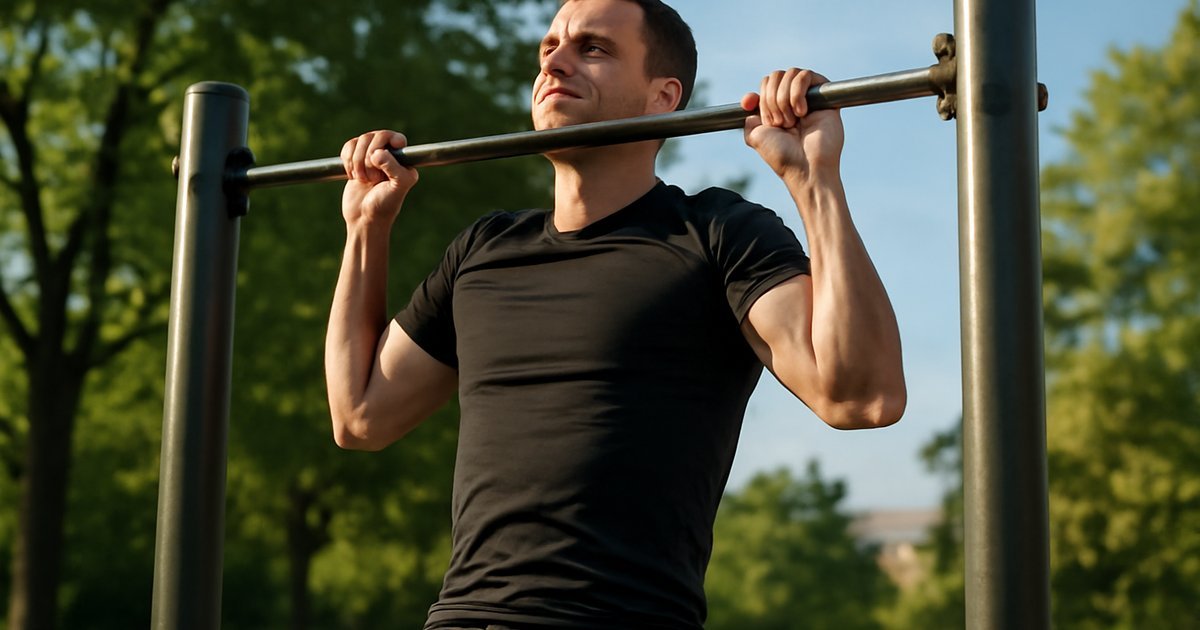
    3. Dead hangs — 3 sets of 20–30 seconds. If you have access to a pull-up bar (door-frame bars cost under $30), hanging builds grip strength and shoulder health before you attempt pulling movements.
    4. Plank holds — 3 sets of 20–40 seconds. The foundation of core training in calisthenics.
    5. Glute bridges — 3 sets of 12–15 reps. Hip extension strength is critical for posture and lower back health.

    At this stage, your goal is building a movement foundation — not pushing to failure. Consistency matters more than intensity.

    Intermediate (3–12 months)

    Once you can do 3 sets of 15 clean push-ups, 15 bodyweight squats with good form, and hold a 60-second plank, it’s time to progress.

    • Full push-ups → Diamond push-ups → Pike push-ups (toward handstand push-up progression)
    • Bodyweight squats → Bulgarian split squats → Pistol squat progressions
    • Dead hangs → Scapular pull-ups → Negative pull-ups → Full pull-ups
    • Plank → Side plank → Hollow body hold

    At this level, structure your training with an upper/lower split or a push/pull/legs approach across 4 sessions per week.

    Advanced (12+ months)

    Advanced calisthenics includes skill-based movements that require serious strength-to-weight ratio: muscle-ups, handstand push-ups, front levers, pistol squats, and human flags. These are long-term goals that require deliberate practice — and they’re genuinely impressive benchmarks of functional fitness.

    If you want to complement your calisthenics with additional cardio tools, check out our guide on Jump Rope Training for Adults — it pairs extremely well with bodyweight strength work.


    Common Mistakes That Sabotage Results

    Calisthenics looks simple on the surface, which is exactly why so many people make avoidable mistakes that slow their progress. Here are the most common ones — and exactly how to fix them.

    Mistake #1: Skipping progressions and trying to jump ahead

    It’s tempting to jump straight to pull-ups when you haven’t yet built the scapular stability and pulling strength required. The result? Shoulder impingement, elbow pain, and zero progress. Fix it by following a structured progression (like the one above) and earning each level before advancing.

    Mistake #2: Ignoring the posterior chain

    Calisthenics beginners tend to gravitate toward push-ups and squats — both involve the front of the body. Without pulling movements (rows, pull-up progressions) and hip hinges (glute bridges, single-leg deadlifts), you’ll develop muscle imbalances that lead to poor posture and back pain. Build your program around push, pull, squat, hinge, and core — every session or across a weekly split.

    Mistake #3: Treating volume as a substitute for progression

    Doing 100 push-ups a day sounds impressive, but if you’re always doing the same push-up at the same tempo, you’re training endurance — not building strength or muscle. Apply progressive overload by advancing to harder variations, slowing your reps, or adding pauses. More reps of easy movements have diminishing returns.

    Mistake #4: Neglecting recovery

    Because there’s no gym involved, it’s easy to train every day without realizing you’re overtraining. The ACSM recommends allowing 48 hours of recovery for each muscle group between sessions. If your push-up strength is declining week over week, you likely need more rest, not more training.

    Mistake #5: Not tracking progress

    Without a weight on a barbell to track, many calisthenics practitioners lose their benchmark. Keep a simple training log: record what variation you did, how many reps, and how it felt. This data tells you when to advance — and reminds you how far you’ve come.


    What to Eat to Support Your Calisthenics Training

    Calisthenics might be equipment-free, but your nutrition isn’t optional. What you eat significantly affects your energy, recovery, and the results you see from training.

    Protein is your foundation. The Academy of Nutrition and Dietetics recommends 1.2 to 2.0 grams of protein per kilogram of body weight per day for adults who engage in regular resistance training. For a 160-pound adult, that’s roughly 87 to 145 grams of protein daily. Prioritize whole food sources: eggs, chicken breast, Greek yogurt, cottage cheese, legumes, tofu, and fish.

    Carbohydrates fuel your performance. Don’t be afraid of them. The USDA Dietary Guidelines emphasize that complex carbohydrates — oats, sweet potatoes, brown rice, quinoa, fruit — should make up 45–65% of total caloric intake for most active adults. Low-carb approaches can work, but many people find their performance suffers, particularly with higher-rep calisthenics training.

    Healthy fats support hormone health and joint function. Include avocado, olive oil, fatty fish (salmon, sardines), and nuts. The American Heart Association recommends prioritizing unsaturated fats and limiting saturated fat to under 10% of daily calories.

    Hydration matters more than most people think. Even mild dehydration — as little as 2% of body weight lost in fluids — can noticeably reduce strength and endurance, according to research cited by the National Institutes of Health. Aim for at least half your bodyweight in ounces of water daily (so a 160-pound person needs 80 ounces minimum).

    Time your meals around your workouts when possible: a protein- and carb-rich meal or snack 1–2 hours before training and a protein-focused meal within 2 hours after can meaningfully support recovery and muscle protein synthesis.


    How Long Until You See Results — and What to Track

    This is the question everyone wants answered — and it deserves an honest response.

    Within 2–4 weeks, most beginners notice improved coordination, better body awareness during movements, and reduced soreness as the nervous system adapts. These neurological gains are real and meaningful, even if they don’t show up in the mirror yet.

    Within 6–8 weeks, consistent trainees typically see measurable strength gains: more reps per set, progression to harder variations, and improved endurance. Harvard Health Publishing notes that beginners can experience noticeable strength improvements within this window if training 2–4 times per week with progressive overload.

    Within 3–6 months, visible changes in muscle tone, posture, and body composition become more apparent, particularly when nutrition supports training. This timeline varies significantly based on age, starting fitness level, sleep quality, and diet consistency.

    What to track:

    • Max reps of your current benchmark movement (e.g., push-ups, pull-ups, squats)
    • Which progression level you’re working at
    • Waist circumference and how clothes fit (more reliable than scale weight alone)
    • Energy levels and sleep quality — often the first things to improve with regular exercise
    • Rest periods: if you need less rest between sets over time, that’s a sign of improved conditioning

    Seek professional guidance if you experience persistent joint pain during movements, notice no progress after 8–10 weeks of consistent effort, or have pre-existing conditions that might affect your training approach.

    For additional recovery support between sessions, our guide on Foam Rolling for Adults is an excellent complement to any calisthenics program.


    Frequently Asked Questions

    Can calisthenics build muscle, or is it just for endurance?
    Yes, calisthenics can build muscle — but only if you apply progressive overload. Doing the same easy push-ups forever won’t stimulate hypertrophy. Advance to harder variations, increase time under tension, and train close to muscular failure. Research confirms that bodyweight training at appropriate intensities produces comparable muscle growth to traditional weight training in most untrained individuals.

    Do I need any equipment to start calisthenics?
    For a beginner, you need almost nothing — a floor and your body. A doorframe pull-up bar (roughly $20–$30) opens up the entire pulling movement category, which is important for balanced training. Parallette bars and gymnastic rings become useful at intermediate and advanced levels but are not necessary to begin.

    Is calisthenics safe for people over 50?
    Generally, yes — and it’s often recommended for adults over 50 because it avoids excessive joint loading from heavy external weights. Start with beginner-level progressions, prioritize form over intensity, and increase difficulty gradually. As always, consult your healthcare provider before beginning a new exercise program, especially if you have existing joint conditions or cardiovascular concerns.

    How does calisthenics compare to going to the gym?
    Both approaches can build strength, improve body composition, and support long-term health. Calisthenics has the advantage of accessibility, lower cost, and functional movement patterns. Gyms offer more options for heavy loading and targeted muscle isolation. Many fitness enthusiasts combine both — using calisthenics on days they can’t get to the gym, or as their primary method with occasional gym sessions for variety.

    How many days per week should I train calisthenics?
    The ACSM recommends adults perform resistance training at least 2 days per week, targeting all major muscle groups. Most effective calisthenics programs run 3–5 days per week, depending on training split and recovery capacity. Beginners should start with 3 full-body sessions per week before advancing to more frequent training.


    Start Where You Are — and Build from There

    Calisthenics isn’t a trend. It’s one of the oldest and most effective forms of physical training in human history — and it works precisely because it meets you exactly where you are. You don’t need to be fit to start. You don’t need a gym, a trainer, or expensive gear. You need a plan, consistency, and the willingness to progress over time.

    Small, deliberate steps taken week after week will outperform any intense program you abandon after two weeks. Start with one session this week. Master one movement pattern. Add one progression when you’re ready. That’s how lasting fitness is built — not in one dramatic overhaul, but in steady, repeated effort.

    If you’re looking for ways to add more variety to your training routine, our guide on Outdoor Fitness Training for Adults offers excellent ideas to complement your calisthenics practice in fresh air and natural settings.

    Your bodyweight is enough. You are enough. Start today.


    Wellness Disclaimer: This article is for informational and educational purposes only. The content is not intended to replace professional medical, nutritional, or fitness advice. Always consult a qualified healthcare provider, registered dietitian, or certified fitness professional before starting a new health program or making significant changes to your lifestyle.

    Content reviewed by our wellness editorial team, with references to peer-reviewed research and guidelines from leading health organizations.
  • Bodyweight Training: Build Strength With No Equipment

    Bodyweight Training: Build Strength With No Equipment

    Bodyweight Training: Build Strength With No Equipment

    You don’t need a gym membership, dumbbells, or any equipment at all — just your own body and a few feet of floor space.

    Think about the last time you skipped a workout because the gym was too crowded, too far, or just too much effort after a long day. You’re not alone. According to the American College of Sports Medicine (ACSM), one of the top barriers to regular physical activity among US adults is access to facilities and equipment. But here’s what most people overlook: some of the most effective training you can do requires nothing more than your own bodyweight.

    Bodyweight training — also called calisthenics — has been used for centuries by athletes, military personnel, and everyday fitness enthusiasts. And modern exercise science confirms what many already suspected: it builds real, functional strength, improves cardiovascular fitness, and enhances mobility in ways that translate directly to everyday life.

    This guide breaks down exactly how bodyweight training works, why it belongs in your fitness routine regardless of your experience level, and how to structure a program that actually gets results. Whether you’re a complete beginner or someone looking to sharpen your fitness without a gym, this is the practical roadmap you’ve been looking for.

    Why Bodyweight Training Matters More Than You Think

    Many people assume that without external resistance — dumbbells, barbells, machines — they can’t build meaningful strength. That assumption is outdated and, frankly, wrong.

    A 2017 review published in the Journal of Human Kinetics found that progressive calisthenics training produces significant gains in muscular strength and endurance, comparable to resistance training with external loads when volume and intensity are properly managed. The key word there is progressive — meaning you systematically increase the challenge over time, which is the same principle that makes weightlifting effective.

    Beyond muscle building, bodyweight training delivers something gym machines often miss: it trains your body to move as a unified system. Push-ups, squats, lunges, and planks all require coordination across multiple muscle groups simultaneously. This translates into better posture, reduced injury risk, and stronger performance in everyday activities like carrying groceries, climbing stairs, or getting up from the floor.

    For busy adults between 25 and 60, the time efficiency alone is a game-changer. You can complete an effective full-body session in 20 to 30 minutes with zero commute, no equipment setup, and no waiting for machines. That kind of flexibility is what makes this style of training genuinely sustainable over the long term.

    The Science Behind How Bodyweight Training Builds Strength

    Here’s the foundational concept: your muscles don’t know the difference between a barbell and your own bodyweight. What they respond to is mechanical tension, metabolic stress, and muscle damage — the three primary drivers of muscle adaptation, as described in exercise physiology research reviewed by the National Strength and Conditioning Association (NSCA).

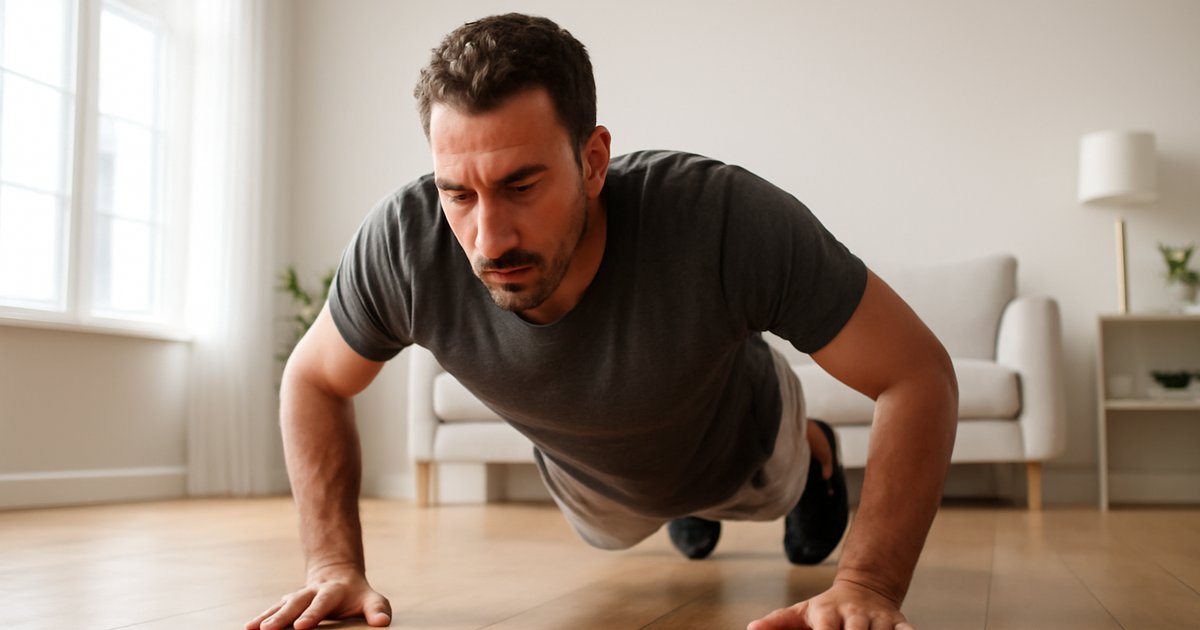
    When you perform a push-up, your chest, shoulders, and triceps generate force against the resistance of gravity and your own mass. When that effort becomes challenging enough, your muscles adapt by growing stronger and, over time, larger. The critical factor is that you must continue increasing the difficulty to keep making progress — a principle known as progressive overload. (For a deeper dive into this concept, see our guide on Progressive Overload: The Key to Never-Ending Fitness Gains.)

    One common myth is that bodyweight training is only useful for beginners. In reality, elite gymnasts and military athletes use calisthenics as their primary training method — and the demands of movements like single-leg squats, pike push-ups, and archer rows are anything but beginner-level.

    A 2019 study in the International Journal of Exercise Science confirmed that an 8-week bodyweight program significantly improved upper body strength and muscular endurance in physically active adults, with results comparable to those seen in traditional gym-based programs. The takeaway: it’s not the tools that determine your results — it’s how intelligently you apply the principles.

    How to Get Started: A Practical Step-by-Step Approach

    Starting a bodyweight training program is far simpler than most people expect. Here’s how to do it based on your current fitness level.

    Step 1: Establish your movement baselines
    Before you jump into a program, know where you stand. Can you perform 10 full push-ups with good form? Can you hold a plank for 30 seconds? Can you do 15 bodyweight squats without knee discomfort? These baselines will help you choose the right starting point and track progress meaningfully.

    Step 2: Master the five foundational movement patterns
    Bodyweight training is built on five core patterns:

    • Push — push-ups, pike push-ups, dips
    • Pull — inverted rows (using a table or bar), doorframe rows
    • Squat — bodyweight squat, split squat, Bulgarian split squat
    • Hinge — glute bridge, single-leg deadlift (without weight)
    • Core stabilization — plank, dead bug, hollow body hold

    Every effective bodyweight session should include at least three of these patterns.

    For beginners: Aim for 2-3 sessions per week. Start with 2-3 sets of 8-12 reps per exercise. Rest 60-90 seconds between sets. Focus on form before adding volume.

    For intermediate trainees: Increase to 3-4 sessions per week. Introduce more challenging progressions — like single-leg squats, decline push-ups, and tempo training (slowing down the lowering phase). Reduce rest periods to increase metabolic demand.

    For advanced: Explore high-difficulty calisthenics skills like archer push-ups, pistol squats, and L-sit progressions. Pair with our Compound Exercises: Your Full-Body Strength Shortcut guide for hybrid programming ideas.

    Step 3: Schedule your sessions strategically
    For most adults, 3 non-consecutive days per week is ideal for full-body bodyweight training. This gives your muscles 48 hours to recover between sessions — a timeline backed by ACSM recovery guidelines.

    Common Mistakes That Sabotage Your Results

    Even well-intentioned trainees make errors that stall progress or lead to frustration. Here are the most common ones — and exactly how to fix them.

    Mistake 1: Neglecting progressive overload
    Doing the same 20 push-ups and 30 squats every session for months will not produce continued gains. Your body adapts quickly. Fix this by advancing the exercise variation, adding reps or sets, slowing the tempo, or reducing rest time on a regular basis — every 1 to 2 weeks ideally.

    Mistake 2: Skipping pulling movements
    Most bodyweight beginners focus heavily on pushing (push-ups) and squatting while ignoring the back. This creates muscular imbalances and can lead to shoulder and postural problems over time. Always include some form of rowing or pulling movement — inverted rows using a sturdy table edge or a low bar work well at home.

    Mistake 3: Rushing through reps with poor form
    Speed-rapping through 50 squats with a rounded back and caved knees trains dysfunction. Quality reps build quality muscle. Slow down, control every phase of the movement, and stop a set when your form breaks down — not when you’ve hit an arbitrary number.

    Mistake 4: Ignoring recovery and mobility
    Bodyweight training taxes your joints and connective tissue, not just your muscles. Skipping warm-ups and cool-downs leads to tightness, reduced range of motion, and eventually injury. Spend 5-10 minutes before and after each session on dynamic movement preparation and static stretching. Our guide on Unlock Your Movement: The Complete Guide to Mobility Training has everything you need.

    What to Eat to Support Bodyweight Training

    Training without supporting your nutrition is like building a house without materials. You don’t need a complicated diet — but a few fundamentals matter a great deal.

    Protein: The Academy of Nutrition and Dietetics recommends 1.2 to 2.0 grams of protein per kilogram of body weight per day for active adults. For a 155-pound (70 kg) person, that’s roughly 84 to 140 grams daily. Prioritize whole food sources: eggs, chicken breast, Greek yogurt, legumes, cottage cheese, and canned tuna.

    Carbohydrates: Carbs fuel your training sessions. Don’t fear them. According to USDA Dietary Guidelines, 45-65% of your daily calories should come from carbohydrates, with an emphasis on whole grains, fruits, and vegetables. A small carbohydrate-rich snack 30-60 minutes before a session can improve performance noticeably.

    Healthy fats: Omega-3 fatty acids from fatty fish, walnuts, and flaxseed support muscle recovery and reduce exercise-induced inflammation, according to research published in the Journal of the International Society of Sports Nutrition.

    Hydration: Even mild dehydration — as little as 2% of body weight — can impair exercise performance, per the American Council on Exercise. Aim for at least 8-10 cups of water daily, more on training days.

    What to limit: Heavily processed foods, excessive alcohol, and added sugars don’t support muscular recovery or lean body composition goals. That doesn’t mean perfection — just consistency over time.

    How Long Until You See Results and What to Track

    Honest answer: it depends on your starting point, training consistency, nutrition, sleep quality, and recovery habits. That said, research provides some reliable benchmarks.

    Most beginners notice meaningful strength improvements within 3 to 4 weeks of consistent training. This is largely due to neural adaptations — your nervous system becomes more efficient at recruiting muscle fibers — rather than muscle growth itself. Visible changes in muscle tone and body composition typically emerge around 6 to 12 weeks with consistent effort.

    A Harvard Health Publishing resource on exercise adaptation notes that the first 4 weeks are largely about learning the movements and building a habit. Stick through them — even when progress feels invisible — because foundational adaptation is happening under the surface.

    What to track:

    • Maximum reps per exercise (weekly)
    • Time under tension (how long each set takes)
    • How a session feels — difficulty, fatigue, recovery speed
    • Body measurements (waist, hips, arms) every 4 weeks
    • Photos every 4-6 weeks in consistent lighting

    When to reassess: If you’ve been training consistently for 12 weeks and see no strength or body composition changes, consider consulting a certified personal trainer or registered dietitian to review your program and nutrition. Plateaus are normal — they’re usually a sign that something needs to be adjusted, not abandoned.

    Frequently Asked Questions

    Can bodyweight training alone build significant muscle mass?
    Yes — to a meaningful degree, especially if you haven’t trained before. Research shows that bodyweight exercises can build both strength and muscle hypertrophy when progressive overload is applied. However, at very advanced stages, adding external resistance (even light dumbbells or resistance bands) may help continue driving muscle growth beyond what bodyweight alone can offer.

    How many days per week should I do bodyweight training?
    For most adults, 3 to 4 days per week is the sweet spot for full-body bodyweight sessions, with at least one rest day between sessions. You can also split it into upper and lower body days for a 4-5 day schedule if you prefer more frequency. Results vary based on individual recovery capacity.

    Is bodyweight training good for weight loss?
    Bodyweight training supports weight management by building lean muscle (which increases resting calorie burn) and burning calories during sessions. Combined with a well-balanced, calorie-appropriate diet, it can be an effective tool. That said, nutrition plays the more dominant role in fat loss — training alone typically isn’t enough without dietary consistency.

    What if I have joint pain or physical limitations?
    Bodyweight training can often be modified to accommodate joint pain or mobility restrictions. For example, wall push-ups replace floor push-ups for shoulder issues; seated leg raises can substitute for lunges with knee pain. Always consult your healthcare provider before starting a new exercise program if you have an existing injury or condition.

    Do I need to warm up before bodyweight workouts?
    Absolutely, and it’s worth taking seriously. A 5-10 minute dynamic warm-up — including leg swings, arm circles, hip openers, and a light jog in place — prepares your joints, raises your core temperature, and reduces injury risk. The ACSM recommends warming up before every exercise session, regardless of intensity.

    Your Next Step Starts on the Floor

    Bodyweight training is one of the most democratic forms of fitness ever developed. No gym required. No special equipment. No perfect schedule. Just a commitment to showing up, moving intentionally, and challenging yourself a little more each week.

    The evidence is clear: consistent, progressive bodyweight training builds real strength, supports healthy body composition, improves mobility, and can be done anywhere — for life. The hardest part isn’t the exercise itself. It’s deciding to start and then choosing to come back again the next day.

    Pick one movement from each of the five foundational patterns. Do 2-3 sets of each today. That’s your starting point. Everything else builds from there — one rep, one session, one week at a time.


    Wellness Disclaimer: This article is for informational and educational purposes only. The content is not intended to replace professional medical, nutritional, or fitness advice. Always consult a qualified healthcare provider, registered dietitian, or certified fitness professional before starting a new health program or making significant changes to your lifestyle.

    Author Line: Content reviewed by our wellness editorial team, with references to peer-reviewed research and guidelines from leading health organizations.

  • Home Workout Plans: Get Fit Without the Gym

    Home Workout Plans: Get Fit Without the Gym

    Home Workout Plans: Get Fit Without the Gym

    You don’t need a gym membership, fancy equipment, or two free hours to build real fitness — you just need a plan that actually works with your life.

    It’s 6:45 AM. You have 30 minutes before the kids wake up or the work calls start rolling in. The gym is 20 minutes away, and the idea of commuting just to exercise feels impossible. Sound familiar? You’re not alone — and here’s the truth: that 30-minute window at home can be more effective than you think.

    According to the American College of Sports Medicine (ACSM), adults need at least 150 minutes of moderate-intensity exercise per week for meaningful cardiovascular and muscular health benefits. The barrier isn’t always effort — it’s logistics. And home workout plans solve exactly that problem.

    In this guide, you’ll learn how to build an effective home workout routine from scratch, understand the science behind why home training works, avoid the most common mistakes that keep people spinning their wheels, and get a clear, realistic picture of when you’ll start seeing results. Whether you’re a complete beginner or someone returning after a long break, this is your practical starting point.

    Why Home Workouts Matter More Than You Think

    There’s a stubborn belief that "real" fitness only happens in commercial gyms — surrounded by machines, mirrors, and monthly fees. But the research tells a different story.

    A landmark study published in PLOS ONE found that home-based exercise programs produced comparable improvements in cardiovascular fitness, muscular endurance, and body composition to gym-based training when exercise frequency, duration, and intensity were matched. The gym isn’t the magic ingredient — consistency is.

    From a practical standpoint, home training removes three of the biggest barriers to regular exercise: travel time, cost, and scheduling inflexibility. The ACSM notes that convenience is one of the strongest predictors of long-term exercise adherence. When your workout space is steps away, the likelihood of actually doing it increases significantly.

    Home workouts also give you full control. You choose the time, the music, the temperature, and the pace. For adults managing work stress, family responsibilities, or social anxiety around gyms, that autonomy matters. It lowers the psychological friction that turns "I’ll work out tomorrow" into weeks of inactivity.

    The bottom line: a home workout plan isn’t a compromise — for many people, it’s the smarter, more sustainable choice.

    The Science Behind Effective Home Training

    Here’s the myth worth busting immediately: bodyweight training is only for beginners or people who want to "tone up." In reality, bodyweight and minimal-equipment exercises can build significant strength, improve cardiovascular health, and support healthy body composition — at any fitness level.

    The principle at work is called progressive overload — the gradual increase of stress placed on muscles over time. In a gym setting, you add weight to the bar. At home, you progress by increasing reps, adjusting leverage, slowing tempo, reducing rest periods, or moving to harder exercise variations. The physiological stimulus is the same.

    Research published in the Journal of Strength and Conditioning Research showed that bodyweight squats, push-ups, and hip hinge movements activate the same primary muscle groups — quads, glutes, chest, shoulders, and back — as their barbell counterparts when performed with adequate intensity and volume.

    Compound movements (exercises that engage multiple muscle groups simultaneously) are the backbone of effective home training. Squats, lunges, push-ups, planks, mountain climbers, and hip bridges are not "easy alternatives" — they are legitimate exercises with decades of evidence behind them.

    One important nuance: home training has real limits for advanced strength athletes pursuing maximal hypertrophy or powerlifting goals. But for the vast majority of adults focused on health, functional fitness, and looking and feeling better — home workouts deliver meaningful results.

    How to Build Your Home Workout Plan: Practical Steps

    Building an effective home workout plan doesn’t require a personal trainer, an app subscription, or hours of research. It requires structure, progression, and a clear understanding of your starting point.

    Step 1: Define Your Goal and Time Budget

    Before picking exercises, be honest about two things: what you’re training for, and how many minutes per day you can realistically commit. Three 30-minute sessions per week is enough to drive meaningful change. Don’t plan for daily 60-minute workouts if your life doesn’t support that — you’ll quit within two weeks.

    Step 2: Choose a Training Structure

    Three structures work well at home:

    • Full-body training (3x/week): Ideal for beginners. Train every major muscle group each session. Rest at least one day between sessions.
    • Upper/Lower split (4x/week): Two upper-body days, two lower-body days. Good for intermediate trainees wanting more volume.
    • Push/Pull/Legs (5-6x/week): Advanced option. High frequency, high volume. Not recommended unless you already have a solid base.

    Step 3: Build Each Session Around These Core Movements

    • Push: Push-up variations (standard, wide, close-grip, incline, decline)
    • Pull: Resistance band rows, doorframe rows, or inverted rows under a sturdy table
    • Hinge: Hip bridges, single-leg deadlifts (bodyweight or with a backpack)
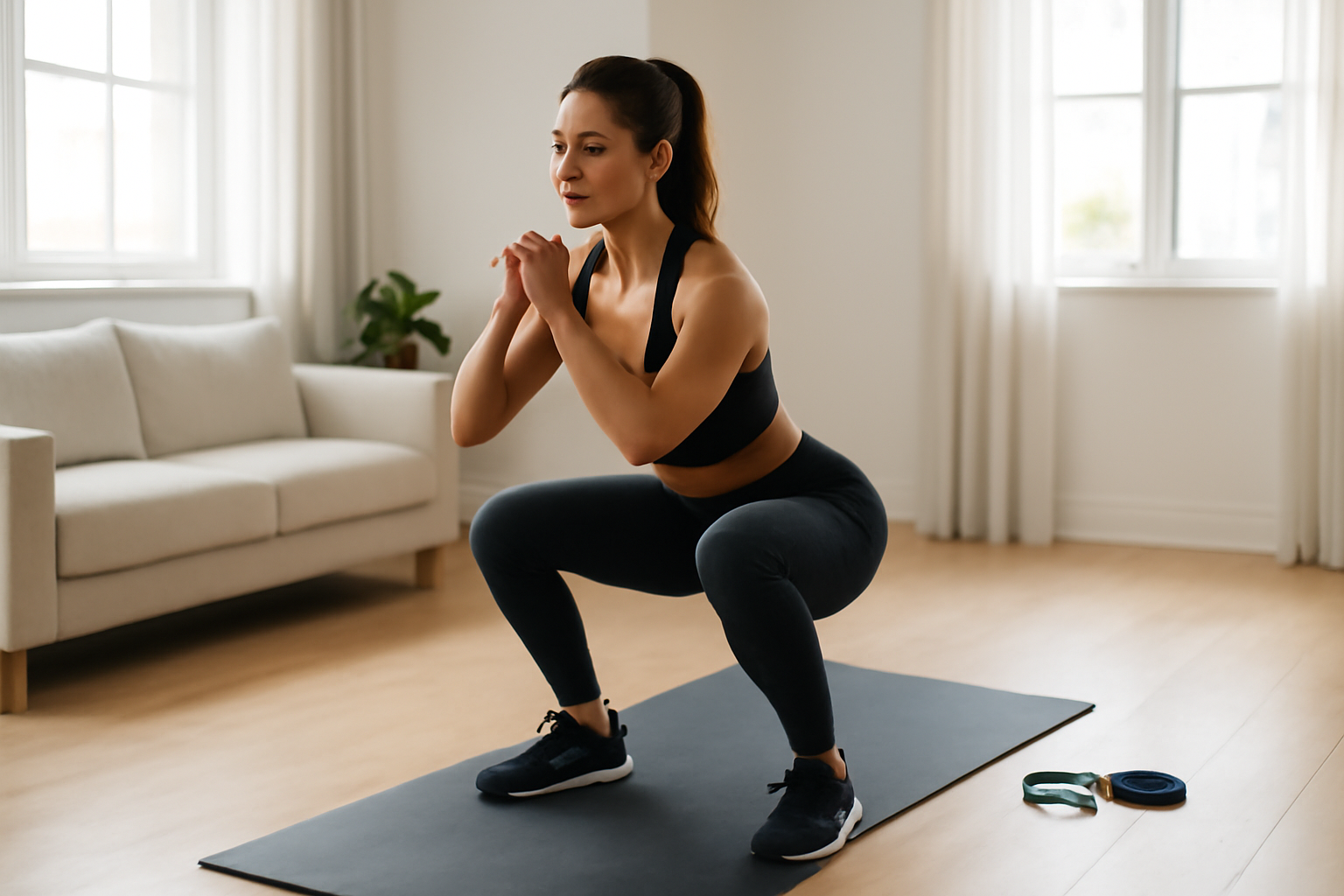
    • Squat: Bodyweight squats, sumo squats, split squats, Bulgarian split squats
    • Core: Planks, dead bugs, mountain climbers, hollow body holds
    • Cardio: Jumping jacks, high knees, burpees, jump rope, stair climbing

    Step 4: Beginner Sample Week

    Monday / Wednesday / Friday — Full Body (30 minutes)

    • Warm-up: 5 minutes of light movement (arm circles, leg swings, marching in place)
    • 3 rounds: 10 push-ups, 15 bodyweight squats, 10 hip bridges, 30-second plank
    • Cardio finisher: 3 x 1-minute high knees or jumping jacks
    • Cool-down: 5 minutes of gentle stretching

    Step 5: Intermediate Progression

    Once you can complete 3 sets of 15 reps with good form on any exercise, it’s time to progress. Options include: elevating feet during push-ups, adding a resistance band, slowing the tempo to 3-4 seconds on the way down, or adding a weighted backpack for squats and hinges.

    If you’re interested in pairing your home workouts with a gym-based strength approach, our Strength Training for Beginners: Your Complete Starter Guide covers the fundamentals you need to know before picking up a barbell.

    Common Mistakes That Sabotage Home Workout Results

    Home workouts are accessible — but that accessibility can work against you if you fall into these traps. These are easy mistakes to make, and recognizing them is the first step to fixing them.

    Mistake #1: No Structure or Progression Plan

    Doing random YouTube videos every day with no consistent programming is fun, but it won’t build strength or fitness in any meaningful direction. The body adapts to repeated stress — but only when that stress increases systematically. Fix it: follow a structured plan for at least 6-8 weeks before switching things up.

    Mistake #2: Skipping the Warm-Up

    Jumping straight into squats and push-ups cold increases your injury risk and reduces performance. A 5-minute dynamic warm-up — leg swings, hip circles, arm rotations, and light marching — primes your joints and nervous system. It takes five minutes. It matters.

    Mistake #3: Training Too Hard, Too Soon

    Soreness after your first week isn’t a badge of honor — it’s a sign your body wasn’t ready for that volume. Extreme soreness often leads to skipped sessions, which breaks your momentum. According to the ACSM, beginners should start with 2-3 days per week at moderate intensity and build gradually over 4-6 weeks.

    Mistake #4: Neglecting Recovery

    Rest days are not wasted days. Muscle repair and adaptation happen during recovery, not during the workout itself. Chronic underrecovery leads to fatigue, declining performance, and elevated injury risk. Build at least 1-2 full rest days into every week.

    Mistake #5: Ignoring Nutrition and Sleep

    Exercise is only one piece of the puzzle. Harvard Health Publishing consistently emphasizes that sleep deprivation and poor nutrition blunt the physiological response to training. If you’re exercising consistently but not seeing progress, your kitchen and your sleep schedule are worth examining before you increase workout volume.

    What to Eat to Support Your Home Workout Plan

    You don’t need a rigid meal plan to fuel your workouts effectively — but a few strategic habits make a measurable difference.

    The Academy of Nutrition and Dietetics recommends that physically active adults consume 0.7 to 1.0 grams of protein per pound of body weight daily to support muscle repair and growth. For a 160-pound adult, that’s roughly 112-160 grams of protein per day. Prioritize whole-food protein sources: chicken breast, eggs, Greek yogurt, cottage cheese, lentils, tofu, and canned fish.

    Pre-workout nutrition: Eat a small meal or snack 60-90 minutes before exercising if possible. A banana with nut butter, oatmeal with berries, or a small portion of rice with chicken provides carbohydrates for energy and protein to protect muscle tissue.

    Post-workout nutrition: The 30-60 minute window after exercise is a good time to consume protein and carbohydrates. A protein shake with fruit, eggs on toast, or yogurt with granola are practical options. This isn’t mandatory for casual workouts, but it supports recovery when training with higher intensity.

    Hydration: The ACSM recommends drinking 17-20 ounces of water 2-3 hours before exercise and 7-10 ounces every 10-20 minutes during activity. Dehydration — even mild — impairs strength, endurance, and cognitive focus.

    Avoid extreme restriction on training days. Under-fueling leads to fatigue, muscle breakdown, and poor performance. The goal is to support your body, not punish it.

    How Long Until You See Results — and What to Track

    One of the most common reasons people quit is expecting results too quickly. Here’s the honest, research-backed timeline.

    Weeks 1-2: You won’t see visible changes, but your nervous system is adapting. You’ll feel exercises getting slightly easier — this is neurological adaptation, not muscle growth. Energy levels and sleep quality may already begin to improve.

    Weeks 3-6: Endurance improves noticeably. You can complete workouts that felt impossible in week one. Some people begin to notice subtle changes in how clothes fit. Body composition shifts are starting, though often not yet visible in the mirror.

    Weeks 8-12: This is where visible progress typically begins for consistent trainees. Muscle definition increases, cardiovascular capacity improves significantly, and many people report measurable changes in waist circumference, resting heart rate, and energy levels throughout the day.

    Research from the Journal of Applied Physiology confirms that meaningful muscle hypertrophy requires at least 6-8 weeks of consistent, progressive training — and that’s true whether you’re training at home or in a gym.

    What to track:

    • Exercise performance: reps, sets, time, and perceived effort — not just how you look
    • Energy levels and sleep quality: often the first improvements to notice
    • Body measurements (waist, hips, chest) rather than scale weight alone
    • Progress photos every 3-4 weeks under consistent lighting
    • Resting heart rate over time — a declining resting HR is a reliable marker of improving cardiovascular fitness

    When to seek professional guidance: if you’ve trained consistently for 12 weeks with no measurable changes, consult a certified fitness professional (NASM, ACE, or ACSM-certified trainer) or your healthcare provider to rule out nutritional deficiencies or hormonal factors.

    If you want to complement your home routine with lower-intensity activity on recovery days, our Walking for Weight Loss: The Science-Backed Guide is a great companion read — walking is genuinely underrated as an active recovery tool.

    Frequently Asked Questions

    Can I really build muscle at home without weights?

    Yes — with caveats. Bodyweight training can absolutely build muscle, especially for beginners and intermediate trainees. The key is applying progressive overload over time: harder variations, more volume, slower tempo, and reduced rest. Advanced athletes may eventually need external resistance (resistance bands, weighted vests, or dumbbells) to keep progressing, but most people won’t hit that ceiling for months or even years.

    How many days per week should I work out at home?

    For most adults, 3 to 4 days per week is the sweet spot — enough stimulus for consistent progress without overtraining. The ACSM recommends at least 2 days of strength-focused activity and 150 minutes of moderate cardio per week. These can absolutely overlap in a well-designed home workout plan.

    What if I don’t have any equipment at all?

    You can make substantial progress with zero equipment. Push-ups, squats, lunges, hip bridges, planks, and mountain climbers require nothing but floor space. Once you want more resistance, a single set of resistance bands (under $25) opens up a dramatically wider range of exercises. A jump rope is another high-value, low-cost addition for cardio work.

    Is a home workout plan effective for weight loss?

    Exercise supports weight management primarily by increasing energy expenditure and preserving lean muscle mass during a calorie deficit. Home workouts are effective for this purpose — but the Academy of Nutrition and Dietetics emphasizes that nutrition remains the dominant factor in body weight change. Exercise and diet work best as partners, not substitutes for each other.

    How do I stay motivated working out at home?

    Motivation is unreliable — habits are not. Build consistency by scheduling your workouts like appointments, keeping your workout space visually accessible, and tracking your progress week to week. Research from the American Psychological Association shows that identity-based motivation ("I’m someone who exercises regularly") is more durable than outcome-based motivation ("I want to lose weight"). Start small, stay consistent, and let the results reinforce the habit.

    Final Thoughts: Your Living Room Is Already a Gym

    The best workout plan is the one you’ll actually do. And for millions of busy adults, that plan lives at home — between the kitchen and the couch, before the workday starts or after the kids go to bed.

    You don’t need to overhaul your life to get fit. You need a clear structure, a commitment to progressive overload, and the patience to let results accumulate over weeks, not days. Start with three 30-minute sessions this week. Choose five movements. Write down your reps. Show up next session and try to beat them by one.

    That’s it. That’s the whole system. Consistency over perfection — every single time.

    And if you ever want to expand beyond home training, our HIIT vs Steady-State Cardio guide can help you decide what style of training to layer in next.


    Wellness Disclaimer: This article is for informational and educational purposes only. The content is not intended to replace professional medical, nutritional, or fitness advice. Always consult a qualified healthcare provider, registered dietitian, or certified fitness professional before starting a new health program or making significant changes to your lifestyle.

    Author Line: Content reviewed by our wellness editorial team, with references to peer-reviewed research and guidelines from leading health organizations including the American College of Sports Medicine, Academy of Nutrition and Dietetics, and Harvard Health Publishing.