Tag: home workout

  • TRX Suspension Training: Build Strength Anywhere

    TRX Suspension Training: Build Strength Anywhere

    You don’t need a fully loaded gym to build real, functional strength — just two straps and the willingness to show up.

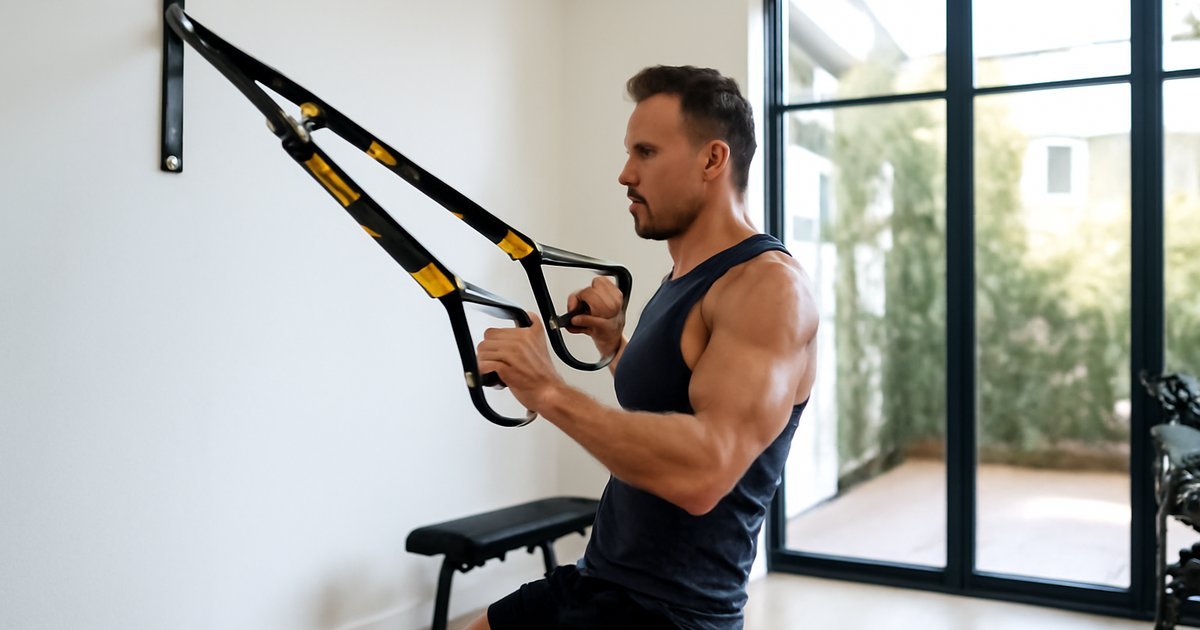
    Picture this: you walk into a hotel gym, a friend’s garage, or your own living room, and within minutes you’re running a full-body workout with nothing but a pair of yellow straps anchored to a door or a pull-up bar. No machines, no plates, no excuses.

    That’s exactly what TRX suspension training offers — and it’s one of the most underused tools in the fitness world for adults aged 25 to 60. While it was originally developed by a Navy SEAL for training in the field, suspension training has since earned serious credibility in physical therapy offices, athletic performance centers, and everyday home gyms across the country.

    If you’ve been curious about TRX but weren’t sure where to start, whether it’s effective, or how it compares to traditional weightlifting, this guide breaks it all down. You’ll learn the science behind why it works, how to get started safely, what mistakes to avoid, and what realistic results look like over time.

    Let’s get into it.

    Why Suspension Training Matters More Than You Think

    Most people still think of suspension trainers as a niche piece of gym equipment — something reserved for elite athletes or physical therapists. But the evidence suggests it deserves a much wider audience.

    According to the American Council on Exercise (ACE), suspension training consistently activates the core musculature at significantly higher levels than many traditional floor-based exercises. In one ACE-commissioned study comparing TRX movements to conventional gym exercises, researchers found that TRX versions of common moves like push-ups and rows led to substantially greater core engagement — sometimes as much as 30% more activation compared to their standard counterparts.

    Why does that matter for you? Because core stability isn’t just about abs. It’s the foundation of everything — injury prevention, posture, lifting power, and even how efficiently you move through daily life. When your core is stronger, your whole body works better.

    Beyond core strength, suspension training builds what exercise scientists call neuromuscular coordination — the ability of your brain and muscles to communicate quickly and effectively. This is especially critical as we age, because loss of neuromuscular efficiency contributes directly to falls, joint instability, and declining functional movement. Research published in the Journal of Human Kinetics found that suspension training programs improved both strength and balance outcomes in adult participants across multiple age groups.

    The bottom line: this isn’t a trendy fitness gimmick. It’s a well-supported training method with real, measurable benefits — and it scales to where you are right now, regardless of your current fitness level.

    How TRX Suspension Training Actually Works

    Here’s the core principle: instead of lifting a fixed external weight, your body becomes the resistance. The TRX straps anchor to a fixed point overhead, and you hold the handles while performing exercises at varying angles. The more horizontal your body position, the more of your bodyweight is working against you — making every move infinitely scalable.

    A squat with 80% of your bodyweight loaded is very different from the same squat with 40%. That’s the beauty of angle manipulation in suspension training. You don’t need to change equipment — you just take a step forward or backward to increase or decrease the challenge.

    One common myth worth busting: Many people assume TRX is only useful for beginners or rehabilitation. That’s simply not accurate. A 2019 study published in the International Journal of Sports Physical Therapy demonstrated that suspension training produced measurable gains in muscular endurance, balance, and functional strength in both sedentary adults and trained athletes — proving its value across the fitness spectrum.

    The instability element is also doing real work. Because you’re never on a fully stable surface, your stabilizer muscles — the smaller, deeper muscles surrounding your joints — have to fire constantly throughout every rep. Traditional machines eliminate this instability intentionally, which is useful for isolation work, but also means those small stabilizers often go undertrained. Suspension training fills that gap.

    It also offers a remarkably joint-friendly training environment. Because you control the angle and load at every point in the movement, there’s far less compressive force on the knees, hips, and lower back compared to heavy barbell lifts. For adults managing minor joint discomfort or returning from injury, this can be a significant advantage — though results vary significantly based on individual health status, and professional guidance is always recommended.

    How to Get Started With Suspension Training

    Starting with TRX doesn’t require a gym membership or a trainer — though both can accelerate your progress. Here’s a practical framework to get you moving safely and effectively.

    What you need:

    • A TRX or comparable suspension trainer (quality matters — avoid very cheap knockoffs that may have poor weight ratings)
    • A sturdy anchor point: a door anchor kit, a squat rack, a pull-up bar, or a ceiling mount
    • About 6-8 feet of clearance in front of the anchor point
    • Athletic shoes with good grip

    Beginner-Level Starter Routine (2-3 days per week):

    1. TRX Squat — Stand facing the anchor, hold straps at chest height, lower into a squat using the straps for balance support. 3 sets of 10-12 reps.
    2. TRX Row — Lean back with arms extended, pull your chest to the handles. The more horizontal you are, the harder it gets. 3 sets of 8-12 reps.
    3. TRX Push-Up — Hands in handles, body at an angle, perform a push-up. Steeper angle = easier. 3 sets of 8-10 reps.
    4. TRX Hip Hinge — Hold straps, hinge forward at the hips while keeping your spine neutral, then drive your hips forward to stand. 3 sets of 10 reps.
    5. TRX Plank Hold — Feet in the foot cradles, body in a plank position. Hold for 20-30 seconds, 3 sets.

    Intermediate progression: Once these feel manageable, reduce your angle to increase load, add a pause at the bottom of each movement, or introduce single-leg and single-arm variations.

    Advanced options: TRX pikes, atomic push-ups, single-leg squats with suspension assist, and power pulls all challenge even experienced athletes. These are also where pairing suspension training with other modalities — like bodyweight training or dumbbell work — can create a highly effective full-body program.

    Common Mistakes That Sabotage Your Results

    Suspension training looks simple — and in some ways, it is. But there are a handful of easy mistakes that will stall your progress or increase your injury risk if left unchecked.

    1. Letting the straps go slack mid-movement
    This is the most common beginner error. When there’s no tension in the straps, you lose stability and significantly reduce the effectiveness of the exercise. Always start each rep with the straps taut and maintain that tension throughout. If you can’t, you may be using too steep an angle — make the move easier until your form is solid.

    2. Skipping the setup check
    Anchor point failure is a real risk with suspension training. Before every workout, test your anchor by applying gradual load — don’t just assume the door anchor held from last week. Inspect the straps for fraying or damage periodically. This isn’t paranoia; it’s basic safety maintenance.

    3. Rushing through reps with poor posture
    Because suspension training is inherently unstable, momentum becomes a major compensation strategy for people who are fatigued or moving too fast. Slow, controlled reps with a neutral spine and engaged core will always outperform rushed, sloppy ones. Aim for a 2-second lowering phase on most movements.

    4. Training too frequently without recovery
    Suspension training is deceptively demanding on stabilizer muscles that aren’t used to this type of stress. Many beginners feel fine during the workout but are significantly sore two days later. According to the American College of Sports Medicine (ACSM), most adults benefit from 48 hours of recovery between sessions targeting the same muscle groups, especially in the first 4-6 weeks of a new program.

    5. Sticking to the same angles indefinitely
    Your body adapts quickly to fixed stimuli. If you’re doing the same TRX row at the same angle for months, you’re leaving progress on the table. Track your angles, rep counts, and tempo — and adjust them regularly to keep progressing.

    What to Eat to Support Your Suspension Training Results

    No training program outperforms a poor nutritional foundation. If you’re using suspension training to build strength and improve body composition, these evidence-backed nutrition principles from the Academy of Nutrition and Dietetics and the USDA Dietary Guidelines will support your progress.

    Protein is non-negotiable. Muscle repair and growth require adequate protein intake. Research consistently supports a target of approximately 0.7 to 1.0 grams of protein per pound of body weight per day for active adults. Practical sources include chicken breast, eggs, Greek yogurt, canned tuna, legumes, and cottage cheese. Spread your intake across meals rather than loading it all at dinner.

    Don’t fear carbohydrates before training. Glycogen — stored carbohydrate in your muscles — is your body’s preferred energy source during moderate to high intensity exercise. A light carbohydrate-containing snack 60-90 minutes before training (think a banana with almond butter or oatmeal with berries) can meaningfully improve your performance and delay fatigue.

    Post-workout recovery window matters. Consuming a combination of protein (20-30g) and carbohydrates within 60-90 minutes of finishing your workout supports glycogen replenishment and muscle protein synthesis, according to research published in the Journal of the International Society of Sports Nutrition.

    Hydration is a training variable. Even mild dehydration — as little as 2% of body weight — can reduce strength output and cognitive focus. Aim for half your bodyweight in ounces of water daily as a general baseline, and increase this on training days or in warm conditions.

    Watch for under-fueling. Suspension training is physically demanding. Adults who consistently train while under-fueling often experience fatigue, poor recovery, mood changes, and plateau. Eating enough total calories to support your activity level is just as important as eating the right foods.

    How Long Until You See Results and What to Track

    Here’s the honest answer: it depends on your starting point, consistency, nutrition, sleep, and recovery. That said, there are some realistic general benchmarks supported by exercise science.

    Weeks 1-2: You’ll likely notice improved coordination and body awareness as your nervous system learns the movements. Don’t be discouraged if you feel awkward early on — this is normal and it means adaptation is already happening.

    Weeks 3-6: Most people start to notice improved muscular endurance, better posture, and reduced difficulty with everyday movements like carrying groceries or climbing stairs. These are functional gains that research identifies as early adaptations to resistance training.

    Weeks 6-12: Visible strength improvements, changes in muscle tone, and measurable gains in balance and stability become apparent for consistent trainees. A 12-week suspension training study cited in the Journal of Human Kinetics found significant improvements in core strength and lower-body stability in adult participants who trained three times per week.

    Metrics worth tracking:

    • The angle at which you can perform each movement with good form
    • Number of clean reps per set
    • Time under tension (for plank holds and isometric moves)
    • Perceived exertion and recovery time between sessions
    • Qualitative measures: how you feel getting out of bed, climbing stairs, carrying things

    When to reassess: If you’ve been consistent for 8-10 weeks and aren’t noticing any improvement, it may be time to revisit your nutrition, sleep quality, workout programming, or get an assessment from a certified personal trainer (look for NASM-CPT, ACSM-CPT, or ACE-CPT credentials).

    If you enjoy combining this approach with other training styles, exploring balance training alongside TRX can amplify your stability gains significantly.

    Frequently Asked Questions About TRX and Suspension Training

    Is TRX suspension training good for weight loss?
    Suspension training can support a weight loss goal as part of a broader strategy that includes a calorie-appropriate diet and regular physical activity. It builds lean muscle mass, which increases resting metabolic rate over time, and circuit-style TRX workouts can elevate your heart rate for a meaningful cardiovascular effect. That said, no single workout guarantees fat loss — energy balance and overall lifestyle factors are the dominant variables.

    Can older adults or beginners use TRX safely?
    Yes — and in many cases, TRX is actually more beginner-friendly than free weights because the angle can be adjusted to reduce load instantly. Older adults benefit from its joint-friendly design and the built-in balance challenge. However, anyone with a recent injury, osteoporosis, or a significant balance disorder should consult a healthcare provider or physical therapist before starting.

    How does TRX compare to traditional weightlifting?
    They complement rather than compete with each other. Suspension training excels at building core stability, neuromuscular coordination, and functional movement patterns. Traditional weightlifting tends to be more efficient for maximum strength and muscle hypertrophy in the long term. Many athletes and fitness enthusiasts use both. If you’re interested in adding free weights to your program, dumbbell training pairs especially well with TRX.

    How many days per week should I do TRX?
    For most adults, 2-3 non-consecutive days per week is a well-supported starting frequency. This allows adequate recovery between sessions, particularly for stabilizer muscles that are doing unusually high work during suspension exercises. As you adapt over several months, you may increase to 4 days using a split approach.

    Do I need to buy an official TRX brand, or are cheaper options okay?
    The TRX brand is the original and has the most extensive weight-testing and quality documentation. However, there are reputable alternatives from brands like Rogue and Jungle Gym that have also been independently tested. Be cautious with very low-cost options from unknown manufacturers, especially when purchasing through unverified channels — the anchor and strap integrity matters for your safety.

    Conclusion

    TRX suspension training won’t turn you into an athlete overnight — nothing honest will. But it is one of the most genuinely versatile, evidence-supported, and accessible strength training tools available to adults who want to build real functional strength without a complicated setup or a heavy equipment budget.

    The key, as always, is consistency over intensity. Start with the basics, learn the movements with care, fuel your body well, and let your body adapt over time. Small improvements every week compound into remarkable progress over months.

    Your next step is simple: anchor those straps, pick two exercises from the beginner list above, and get through your first session today. That’s how every meaningful fitness journey begins — not perfectly, just purposefully.


    This article is for informational and educational purposes only. The content is not intended to replace professional medical, nutritional, or fitness advice. Always consult a qualified healthcare provider, registered dietitian, or certified fitness professional before starting a new health program or making significant changes to your lifestyle.

    Content reviewed by our wellness editorial team, with references to peer-reviewed research and guidelines from leading health organizations.

  • Dumbbell Training for Adults: Build Strength and Burn Fat

    Dumbbell Training for Adults: Build Strength and Burn Fat

    Dumbbell Training for Adults: Build Strength and Burn Fat

    You don’t need a fancy gym setup or expensive machines — two dumbbells and a plan can completely change your body and energy levels.

    If you’ve ever walked into a gym and felt overwhelmed by all the equipment, you’re not alone. Rows of machines, cable setups, and complicated racks can make the idea of strength training feel inaccessible. But here’s what most people don’t realize: dumbbells are one of the most versatile, science-supported tools in all of fitness — and they work just as well at home as they do in a gym.

    Dumbbell training for adults is having a well-deserved moment, and the research backs it up. Whether your goal is to build lean muscle, improve your metabolic health, reduce joint pain, or simply feel stronger moving through daily life, a well-designed dumbbell workout program can deliver meaningful, lasting results.

    In this guide, you’ll learn exactly how dumbbell training works, why it’s especially effective for adults over 25, how to get started safely, and what common mistakes to avoid. No fluff — just practical, evidence-backed guidance you can apply starting today.

    Why Dumbbell Training Matters More Than You Think

    Here’s a stat that puts things in perspective: according to the American College of Sports Medicine (ACSM), adults begin losing 3 to 5 percent of muscle mass per decade after age 30 — a process called sarcopenia. By age 60, some individuals have lost as much as 30 percent of their total muscle mass if they haven’t been actively training.

    That’s not just a cosmetic issue. Muscle loss is directly tied to reduced metabolism, increased risk of type 2 diabetes, poor bone density, and a higher likelihood of injury from everyday activities. Resistance training — including dumbbell work — is one of the most effective interventions known to slow this decline.

    What makes dumbbells particularly valuable is the way they engage your stabilizer muscles. Unlike fixed machines, which lock your body into a guided path, dumbbells require your joints, tendons, and smaller muscle groups to work together to control the movement. This means you’re building functional strength — the kind that translates to carrying groceries, playing with kids, or staying injury-free on the trail.

    Research published in the Journal of Strength and Conditioning Research found that free-weight training produced significantly greater activation of stabilizer muscles compared to machine-based training, without sacrificing overall strength gains. That’s a compelling reason to grab a pair of dumbbells and get to work.

    How Dumbbell Training Actually Works

    Let’s clear up a common myth first: lifting weights won’t make you bulky unless you’re eating a significant caloric surplus and training specifically for hypertrophy over many months. For most adults, consistent dumbbell training leads to a leaner, more defined physique — not an oversized one.

    Here’s what’s actually happening inside your body when you train with dumbbells. When you create mechanical tension by lifting a load — say, performing a dumbbell row — you create microscopic damage to your muscle fibers. Your body responds by repairing those fibers stronger than before, a process driven by satellite cells and protein synthesis. Over time, this leads to increased muscle density, improved neuromuscular coordination, and a higher resting metabolic rate.

    According to Harvard Health Publishing, adding just 10 pounds of lean muscle can increase your resting metabolism by approximately 100 calories per day. That may not sound like much, but over weeks and months, it adds up considerably.

    Dumbbell training also supports cardiovascular health when structured correctly. Circuit-style dumbbell workouts — where you move from one exercise to the next with minimal rest — can keep your heart rate elevated and deliver metabolic conditioning benefits similar to moderate-intensity cardio. This dual-purpose efficiency is one reason busy adults often prefer it over isolated cardio sessions.

    One thing to keep in mind: results vary significantly based on your starting point, training frequency, recovery quality, and nutrition. Dumbbell training is a powerful tool, but it works best as part of a broader wellness approach.

    How to Get Started: A Practical Step-by-Step Plan

    Getting started with dumbbell training doesn’t require perfection — it requires consistency and a sensible structure. Here’s how to build a foundation that sticks.

    Step 1 — Choose your starting weights wisely.
    For most beginners, a range of two to three dumbbell pairs works well: a lighter set (8–12 lbs), a moderate set (15–20 lbs), and a heavier set (25–35 lbs). Adjustable dumbbells are a space-efficient and cost-effective option if you’re training at home. The right weight for any given exercise is one where the last 2–3 reps feel challenging but your form remains solid.

    Step 2 — Start with a 3-day-per-week full-body program.
    Beginners benefit most from training the full body each session rather than splitting by muscle group. A simple structure might look like this: Day 1 (Monday), Day 2 (Wednesday), Day 3 (Friday), with rest or light activity on the days in between. This frequency allows adequate recovery while building the motor patterns you need to progress.

    Step 3 — Master the foundational movement patterns first.
    Before chasing heavy weights, focus on learning five essential movement patterns:

    • Push — Dumbbell chest press, overhead press
    • Pull — Dumbbell rows, reverse fly
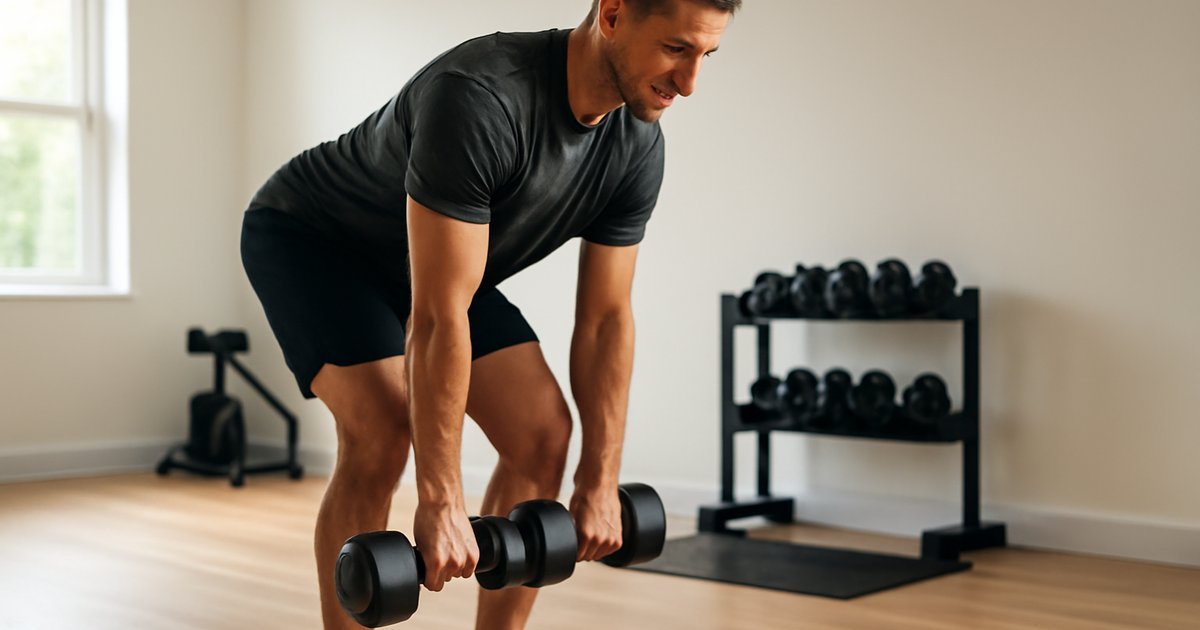
    • Hinge — Romanian deadlift, single-leg deadlift
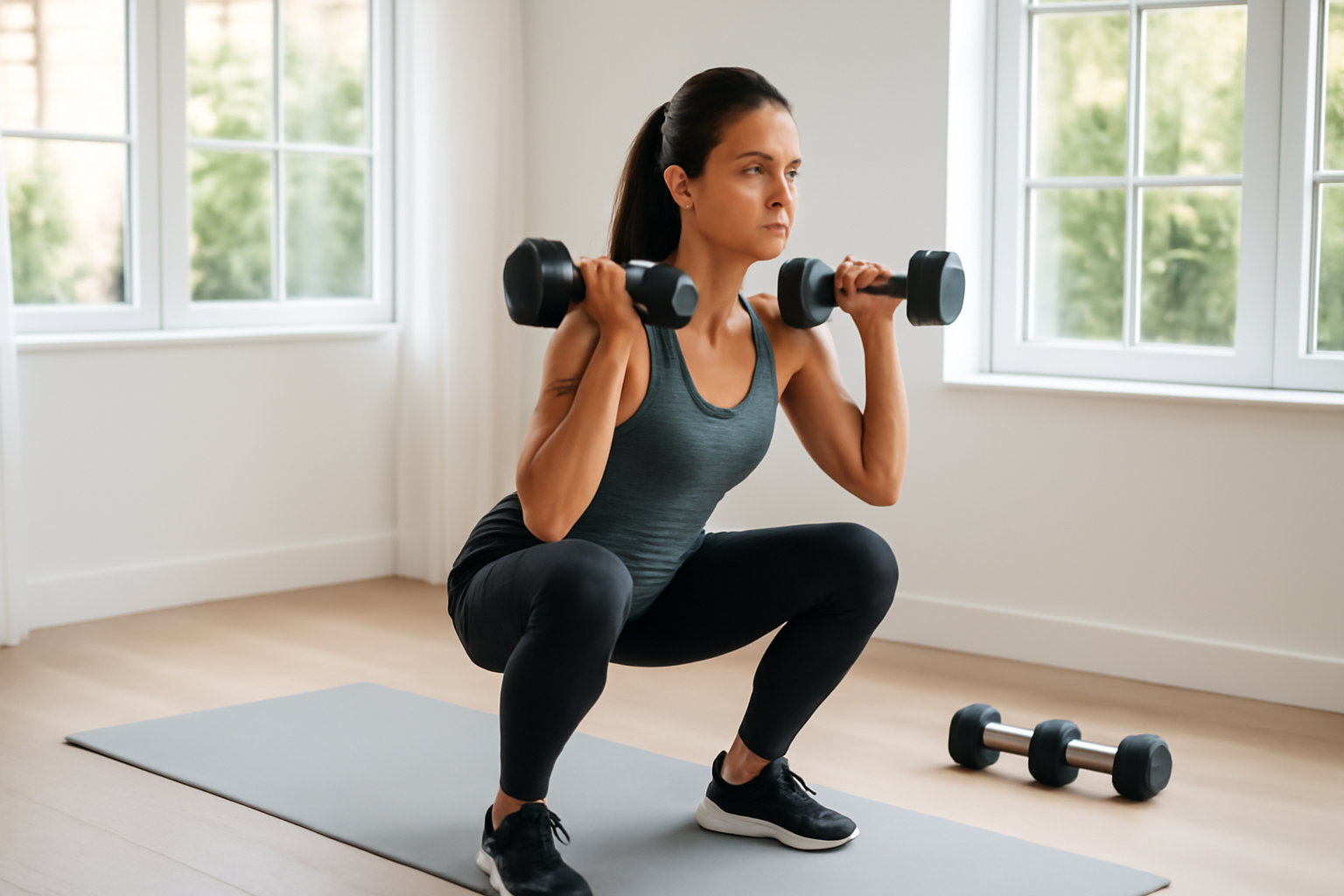
    • Squat — Goblet squat, split squat
    • Carry — Farmer’s carry, suitcase carry

    A well-rounded dumbbell session includes at least one exercise from each category, hitting your upper and lower body while keeping the core engaged throughout. For a strong foundation in total-body movement, our guide on compound exercises for full-body strength pairs perfectly with this approach.

    Beginner sample session (30–40 minutes):

    • Goblet Squat — 3 sets x 10 reps
    • Dumbbell Romanian Deadlift — 3 sets x 10 reps
    • Dumbbell Chest Press — 3 sets x 10 reps
    • Bent-Over Row — 3 sets x 10 reps per arm
    • Farmer’s Carry — 3 sets x 30 seconds

    Intermediate upgrade: Add supersets (pairing a push with a pull), increase weight by 5% when you can complete all reps with clean form, and incorporate unilateral movements (single-arm, single-leg) to address muscle imbalances. For those ready to challenge their endurance alongside strength, the principles in Zone 2 cardio training can complement your dumbbell sessions effectively.

    Common Mistakes That Sabotage Your Dumbbell Training Results

    Even motivated adults make these missteps — and they can stall progress faster than you’d expect.

    Mistake #1 — Using weight that’s too light for too long.
    This is by far the most common issue, especially among women who are concerned about getting bulky. If your last rep of a set feels effortless, the weight isn’t creating enough stimulus to trigger adaptation. The fix: apply progressive overload — gradually increase your resistance, reps, or sets over time. Our detailed guide on progressive overload training walks you through how to do this systematically without risking injury.

    Mistake #2 — Skipping the warm-up.
    Jumping straight into heavy sets with cold muscles and stiff joints dramatically raises your injury risk. A 5–8 minute dynamic warm-up — think leg swings, arm circles, hip hinges, and bodyweight squats — prepares your nervous system and increases range of motion. This matters even more as you get into your 30s, 40s, and beyond.

    Mistake #3 — Neglecting the posterior chain.
    Most people instinctively train what they can see in the mirror — chest, biceps, quads. But your posterior chain (glutes, hamstrings, upper back, rear delts) is just as important for posture, injury prevention, and total-body strength. Make sure every training week includes Romanian deadlifts, rows, and reverse flies.

    Mistake #4 — Training without adequate rest between sessions.
    Muscle isn’t built in the gym — it’s built during recovery. According to the ACSM, most adults need 48 to 72 hours of recovery between sessions targeting the same muscle groups. Training the same muscles daily without rest can lead to overtraining, elevated cortisol, and regression rather than progress.

    Mistake #5 — Inconsistent breathing.
    Holding your breath during lifts (especially heavier ones) spikes internal pressure and reduces stability. The general rule: exhale on the exertion phase (when you lift or press), inhale on the return. Practicing this deliberately makes it automatic over time.

    What to Eat to Support Dumbbell Training Results

    Training without adequate nutrition is like building a house without materials. Your muscles need specific fuel to repair, grow, and perform.

    Protein is your top priority. The Academy of Nutrition and Dietetics recommends that adults engaged in regular resistance training consume 1.2 to 1.7 grams of protein per kilogram of body weight per day. For a 160-pound adult, that’s roughly 87 to 123 grams of protein daily. High-quality sources include lean chicken and turkey, eggs, Greek yogurt, cottage cheese, canned tuna, legumes, and tofu.

    Don’t neglect carbohydrates. Carbs are your muscles’ primary energy source. Low-carb approaches may blunt performance and recovery, particularly if you’re training at moderate to high intensity. Focus on whole-food carbs: oats, brown rice, sweet potatoes, quinoa, and fruit.

    Healthy fats support hormonal balance. Dietary fat plays a direct role in testosterone and estrogen regulation — hormones that affect muscle-building capacity. The USDA Dietary Guidelines recommend 20–35% of total calories from fat, prioritizing unsaturated sources like olive oil, avocados, nuts, and fatty fish.

    Timing matters — a little. While total daily protein intake is the bigger lever, consuming a protein-rich meal or snack within 1–2 hours post-workout can support muscle protein synthesis. A Greek yogurt with berries, a protein shake with milk, or eggs on whole-grain toast are all solid options.

    Hydration: Even mild dehydration (1–2% of body weight) can reduce strength output and cognitive performance during training. Aim for at least half your body weight in ounces of water daily, and more on training days.

    How Long Until You See Results — and What to Track

    Honest answer: noticeable physical changes typically take 6 to 12 weeks of consistent training and adequate nutrition. But that doesn’t mean nothing is happening before that.

    In the first 2–4 weeks, the primary adaptations are neurological. Your brain is learning to recruit muscle fibers more efficiently, which is why many beginners feel stronger before they look different. Strength gains during this phase can be significant — sometimes 10 to 20 percent increases in working weight — even without visible muscle growth.

    Visible changes in muscle definition and body composition typically become apparent after 8–12 weeks when training is combined with adequate protein and a reasonable caloric intake. Research published in Sports Medicine confirms that untrained adults can expect meaningful improvements in strength, lean mass, and functional capacity within a 12-week progressive resistance program.

    What to track:

    • Working weights per exercise (are they going up over time?)
    • Reps completed at a given weight
    • Energy levels and recovery quality
    • Body measurements (waist, hips, arms) — more reliable than scale weight alone
    • How everyday tasks feel (climbing stairs, carrying bags, posture)

    If you’ve been training consistently for 12 weeks with no perceptible improvement in any of these areas, consider reassessing your program, nutrition, sleep quality, or consulting a certified personal trainer or registered dietitian for personalized guidance.

    Frequently Asked Questions About Dumbbell Training

    Can I build serious muscle with just dumbbells?
    Absolutely — especially in the beginner to intermediate range. Dumbbells allow for a wide range of loads, movements, and tempos that can drive significant muscle and strength gains. Advanced lifters may eventually benefit from adding barbells or other tools for maximal loading, but most adults can achieve excellent results with dumbbells alone.

    How heavy should my dumbbells be?
    This depends entirely on the exercise and your current fitness level. A general rule: if you can complete more than 15 reps with perfect form and feel minimal fatigue, go heavier. If you can’t complete 8 reps with proper technique, drop down. Investing in an adjustable set or two to three pairs of different weights gives you the most flexibility.

    Is dumbbell training safe for people with joint issues?
    For many people with mild to moderate joint concerns, dumbbell training can actually improve joint stability and reduce pain over time by strengthening the muscles that support the joint. That said, this depends on the specific condition. If you have a diagnosed joint issue — knee osteoarthritis, shoulder impingement, or similar — consult a physical therapist or sports medicine physician before starting a program.

    How many days per week should I train with dumbbells?
    For most adults, 3 full-body sessions per week is an excellent starting point and sustainable long-term. As you advance, you might move to a 4-day upper/lower split. More than 5 days per week of resistance training is generally unnecessary for general health and wellness goals, and recovery becomes increasingly important with age.

    Do I need to stretch after dumbbell workouts?
    Post-workout stretching can support flexibility and reduce muscle soreness — and it’s a good habit to build. Spend 5–10 minutes on static stretches targeting the muscles you just worked. For a deeper approach to improving mobility alongside your strength training, explore our guide on flexibility training for adults.

    Start Simple, Stay Consistent, and Let the Results Follow

    Dumbbell training isn’t a shortcut or a trend — it’s one of the most time-tested, research-supported methods for building strength, improving body composition, and protecting your long-term health. The barrier to entry is low, the equipment is affordable, and the benefits compound over time in ways that go far beyond aesthetics.

    You don’t need to overhaul your entire life to start. Pick up a pair of dumbbells. Learn the five foundational movement patterns. Train three days a week. Eat enough protein. Sleep well. Track your progress. Then do it again next week.

    Small, consistent actions are what separate people who transform their health from those who stay stuck. Today is a great day to take the first step.


    This article is for informational and educational purposes only. The content is not intended to replace professional medical, nutritional, or fitness advice. Always consult a qualified healthcare provider, registered dietitian, or certified fitness professional before starting a new health program or making significant changes to your lifestyle.

    Content reviewed by our wellness editorial team, with references to peer-reviewed research and guidelines from leading health organizations.
  • Bodyweight Training: Build Strength With No Equipment

    Bodyweight Training: Build Strength With No Equipment

    Bodyweight Training: Build Strength With No Equipment

    You don’t need a gym membership, dumbbells, or any equipment at all — just your own body and a few feet of floor space.

    Think about the last time you skipped a workout because the gym was too crowded, too far, or just too much effort after a long day. You’re not alone. According to the American College of Sports Medicine (ACSM), one of the top barriers to regular physical activity among US adults is access to facilities and equipment. But here’s what most people overlook: some of the most effective training you can do requires nothing more than your own bodyweight.

    Bodyweight training — also called calisthenics — has been used for centuries by athletes, military personnel, and everyday fitness enthusiasts. And modern exercise science confirms what many already suspected: it builds real, functional strength, improves cardiovascular fitness, and enhances mobility in ways that translate directly to everyday life.

    This guide breaks down exactly how bodyweight training works, why it belongs in your fitness routine regardless of your experience level, and how to structure a program that actually gets results. Whether you’re a complete beginner or someone looking to sharpen your fitness without a gym, this is the practical roadmap you’ve been looking for.

    Why Bodyweight Training Matters More Than You Think

    Many people assume that without external resistance — dumbbells, barbells, machines — they can’t build meaningful strength. That assumption is outdated and, frankly, wrong.

    A 2017 review published in the Journal of Human Kinetics found that progressive calisthenics training produces significant gains in muscular strength and endurance, comparable to resistance training with external loads when volume and intensity are properly managed. The key word there is progressive — meaning you systematically increase the challenge over time, which is the same principle that makes weightlifting effective.

    Beyond muscle building, bodyweight training delivers something gym machines often miss: it trains your body to move as a unified system. Push-ups, squats, lunges, and planks all require coordination across multiple muscle groups simultaneously. This translates into better posture, reduced injury risk, and stronger performance in everyday activities like carrying groceries, climbing stairs, or getting up from the floor.

    For busy adults between 25 and 60, the time efficiency alone is a game-changer. You can complete an effective full-body session in 20 to 30 minutes with zero commute, no equipment setup, and no waiting for machines. That kind of flexibility is what makes this style of training genuinely sustainable over the long term.

    The Science Behind How Bodyweight Training Builds Strength

    Here’s the foundational concept: your muscles don’t know the difference between a barbell and your own bodyweight. What they respond to is mechanical tension, metabolic stress, and muscle damage — the three primary drivers of muscle adaptation, as described in exercise physiology research reviewed by the National Strength and Conditioning Association (NSCA).

    When you perform a push-up, your chest, shoulders, and triceps generate force against the resistance of gravity and your own mass. When that effort becomes challenging enough, your muscles adapt by growing stronger and, over time, larger. The critical factor is that you must continue increasing the difficulty to keep making progress — a principle known as progressive overload. (For a deeper dive into this concept, see our guide on Progressive Overload: The Key to Never-Ending Fitness Gains.)

    One common myth is that bodyweight training is only useful for beginners. In reality, elite gymnasts and military athletes use calisthenics as their primary training method — and the demands of movements like single-leg squats, pike push-ups, and archer rows are anything but beginner-level.

    A 2019 study in the International Journal of Exercise Science confirmed that an 8-week bodyweight program significantly improved upper body strength and muscular endurance in physically active adults, with results comparable to those seen in traditional gym-based programs. The takeaway: it’s not the tools that determine your results — it’s how intelligently you apply the principles.

    How to Get Started: A Practical Step-by-Step Approach

    Starting a bodyweight training program is far simpler than most people expect. Here’s how to do it based on your current fitness level.

    Step 1: Establish your movement baselines
    Before you jump into a program, know where you stand. Can you perform 10 full push-ups with good form? Can you hold a plank for 30 seconds? Can you do 15 bodyweight squats without knee discomfort? These baselines will help you choose the right starting point and track progress meaningfully.

    Step 2: Master the five foundational movement patterns
    Bodyweight training is built on five core patterns:

    • Push — push-ups, pike push-ups, dips
    • Pull — inverted rows (using a table or bar), doorframe rows
    • Squat — bodyweight squat, split squat, Bulgarian split squat
    • Hinge — glute bridge, single-leg deadlift (without weight)
    • Core stabilization — plank, dead bug, hollow body hold

    Every effective bodyweight session should include at least three of these patterns.

    For beginners: Aim for 2-3 sessions per week. Start with 2-3 sets of 8-12 reps per exercise. Rest 60-90 seconds between sets. Focus on form before adding volume.

    For intermediate trainees: Increase to 3-4 sessions per week. Introduce more challenging progressions — like single-leg squats, decline push-ups, and tempo training (slowing down the lowering phase). Reduce rest periods to increase metabolic demand.

    For advanced: Explore high-difficulty calisthenics skills like archer push-ups, pistol squats, and L-sit progressions. Pair with our Compound Exercises: Your Full-Body Strength Shortcut guide for hybrid programming ideas.

    Step 3: Schedule your sessions strategically
    For most adults, 3 non-consecutive days per week is ideal for full-body bodyweight training. This gives your muscles 48 hours to recover between sessions — a timeline backed by ACSM recovery guidelines.

    Common Mistakes That Sabotage Your Results

    Even well-intentioned trainees make errors that stall progress or lead to frustration. Here are the most common ones — and exactly how to fix them.

    Mistake 1: Neglecting progressive overload
    Doing the same 20 push-ups and 30 squats every session for months will not produce continued gains. Your body adapts quickly. Fix this by advancing the exercise variation, adding reps or sets, slowing the tempo, or reducing rest time on a regular basis — every 1 to 2 weeks ideally.

    Mistake 2: Skipping pulling movements
    Most bodyweight beginners focus heavily on pushing (push-ups) and squatting while ignoring the back. This creates muscular imbalances and can lead to shoulder and postural problems over time. Always include some form of rowing or pulling movement — inverted rows using a sturdy table edge or a low bar work well at home.

    Mistake 3: Rushing through reps with poor form
    Speed-rapping through 50 squats with a rounded back and caved knees trains dysfunction. Quality reps build quality muscle. Slow down, control every phase of the movement, and stop a set when your form breaks down — not when you’ve hit an arbitrary number.

    Mistake 4: Ignoring recovery and mobility
    Bodyweight training taxes your joints and connective tissue, not just your muscles. Skipping warm-ups and cool-downs leads to tightness, reduced range of motion, and eventually injury. Spend 5-10 minutes before and after each session on dynamic movement preparation and static stretching. Our guide on Unlock Your Movement: The Complete Guide to Mobility Training has everything you need.

    What to Eat to Support Bodyweight Training

    Training without supporting your nutrition is like building a house without materials. You don’t need a complicated diet — but a few fundamentals matter a great deal.

    Protein: The Academy of Nutrition and Dietetics recommends 1.2 to 2.0 grams of protein per kilogram of body weight per day for active adults. For a 155-pound (70 kg) person, that’s roughly 84 to 140 grams daily. Prioritize whole food sources: eggs, chicken breast, Greek yogurt, legumes, cottage cheese, and canned tuna.

    Carbohydrates: Carbs fuel your training sessions. Don’t fear them. According to USDA Dietary Guidelines, 45-65% of your daily calories should come from carbohydrates, with an emphasis on whole grains, fruits, and vegetables. A small carbohydrate-rich snack 30-60 minutes before a session can improve performance noticeably.

    Healthy fats: Omega-3 fatty acids from fatty fish, walnuts, and flaxseed support muscle recovery and reduce exercise-induced inflammation, according to research published in the Journal of the International Society of Sports Nutrition.

    Hydration: Even mild dehydration — as little as 2% of body weight — can impair exercise performance, per the American Council on Exercise. Aim for at least 8-10 cups of water daily, more on training days.

    What to limit: Heavily processed foods, excessive alcohol, and added sugars don’t support muscular recovery or lean body composition goals. That doesn’t mean perfection — just consistency over time.

    How Long Until You See Results and What to Track

    Honest answer: it depends on your starting point, training consistency, nutrition, sleep quality, and recovery habits. That said, research provides some reliable benchmarks.

    Most beginners notice meaningful strength improvements within 3 to 4 weeks of consistent training. This is largely due to neural adaptations — your nervous system becomes more efficient at recruiting muscle fibers — rather than muscle growth itself. Visible changes in muscle tone and body composition typically emerge around 6 to 12 weeks with consistent effort.

    A Harvard Health Publishing resource on exercise adaptation notes that the first 4 weeks are largely about learning the movements and building a habit. Stick through them — even when progress feels invisible — because foundational adaptation is happening under the surface.

    What to track:

    • Maximum reps per exercise (weekly)
    • Time under tension (how long each set takes)
    • How a session feels — difficulty, fatigue, recovery speed
    • Body measurements (waist, hips, arms) every 4 weeks
    • Photos every 4-6 weeks in consistent lighting

    When to reassess: If you’ve been training consistently for 12 weeks and see no strength or body composition changes, consider consulting a certified personal trainer or registered dietitian to review your program and nutrition. Plateaus are normal — they’re usually a sign that something needs to be adjusted, not abandoned.

    Frequently Asked Questions

    Can bodyweight training alone build significant muscle mass?
    Yes — to a meaningful degree, especially if you haven’t trained before. Research shows that bodyweight exercises can build both strength and muscle hypertrophy when progressive overload is applied. However, at very advanced stages, adding external resistance (even light dumbbells or resistance bands) may help continue driving muscle growth beyond what bodyweight alone can offer.

    How many days per week should I do bodyweight training?
    For most adults, 3 to 4 days per week is the sweet spot for full-body bodyweight sessions, with at least one rest day between sessions. You can also split it into upper and lower body days for a 4-5 day schedule if you prefer more frequency. Results vary based on individual recovery capacity.

    Is bodyweight training good for weight loss?
    Bodyweight training supports weight management by building lean muscle (which increases resting calorie burn) and burning calories during sessions. Combined with a well-balanced, calorie-appropriate diet, it can be an effective tool. That said, nutrition plays the more dominant role in fat loss — training alone typically isn’t enough without dietary consistency.

    What if I have joint pain or physical limitations?
    Bodyweight training can often be modified to accommodate joint pain or mobility restrictions. For example, wall push-ups replace floor push-ups for shoulder issues; seated leg raises can substitute for lunges with knee pain. Always consult your healthcare provider before starting a new exercise program if you have an existing injury or condition.

    Do I need to warm up before bodyweight workouts?
    Absolutely, and it’s worth taking seriously. A 5-10 minute dynamic warm-up — including leg swings, arm circles, hip openers, and a light jog in place — prepares your joints, raises your core temperature, and reduces injury risk. The ACSM recommends warming up before every exercise session, regardless of intensity.

    Your Next Step Starts on the Floor

    Bodyweight training is one of the most democratic forms of fitness ever developed. No gym required. No special equipment. No perfect schedule. Just a commitment to showing up, moving intentionally, and challenging yourself a little more each week.

    The evidence is clear: consistent, progressive bodyweight training builds real strength, supports healthy body composition, improves mobility, and can be done anywhere — for life. The hardest part isn’t the exercise itself. It’s deciding to start and then choosing to come back again the next day.

    Pick one movement from each of the five foundational patterns. Do 2-3 sets of each today. That’s your starting point. Everything else builds from there — one rep, one session, one week at a time.


    Wellness Disclaimer: This article is for informational and educational purposes only. The content is not intended to replace professional medical, nutritional, or fitness advice. Always consult a qualified healthcare provider, registered dietitian, or certified fitness professional before starting a new health program or making significant changes to your lifestyle.

    Author Line: Content reviewed by our wellness editorial team, with references to peer-reviewed research and guidelines from leading health organizations.
  • Resistance Band Training: Build Strength Anywhere

    Resistance Band Training: Build Strength Anywhere

    You don’t need a gym membership, expensive equipment, or hours of free time to build real, lasting strength — and resistance bands might be the most underestimated tool in modern fitness.

    Why Resistance Band Training Matters More Than You Think

    Most people assume that serious strength training requires barbells, dumbbells, and a gym locker. But here’s the thing: a set of resistance bands that fits in your gym bag can deliver a workout that challenges your muscles just as effectively — and in some cases, even more safely — than traditional free weights.

    According to the American College of Sports Medicine (ACSM), resistance training is one of the most important forms of exercise for adults, associated with improved muscle mass, metabolic health, bone density, and functional independence as we age. The problem? Millions of adults skip it entirely because access feels complicated.

    That’s where resistance bands change the game. Research published in the Journal of Human Kinetics found that elastic resistance training produces muscle strength and mass gains comparable to those achieved with conventional weight training. Same results, lower barrier to entry.

    Whether you’re a complete beginner or someone returning to fitness after a break, resistance band training offers a practical, joint-friendly, and genuinely effective path to building strength — on your schedule, in your living room, hotel room, or backyard.

    The Science Behind Resistance Bands: How They Actually Work

    Understanding why resistance bands work so well starts with a concept called variable resistance. Unlike dumbbells or barbells — which provide a constant load throughout a movement — resistance bands increase tension as they stretch. This means your muscles face the greatest challenge at the peak of contraction, exactly where they’re strongest and most capable of handling load.

    This progressive tension mirrors the natural strength curve of your muscles, which is one reason bands feel different (and sometimes harder) than free weights at equivalent resistance levels.

    A 2019 meta-analysis published in the SAGE Open Medicine journal reviewed 23 studies and concluded that elastic resistance training is equally effective as conventional resistance training for improving strength in both younger and older adults. For older populations especially, the lower compressive joint forces make bands a particularly smart option.

    The common myth to bust here: “Bands are only for warm-ups or physical therapy.” In reality, when used with proper tension and progressive loading, resistance bands can challenge even experienced athletes. Powerlifters and elite coaches have been using them for decades to build explosive strength and overcome sticking points.

    Bands also engage your stabilizer muscles more actively than machines — because there’s no fixed path of motion, your body has to work harder to control the movement. That translates into better real-world functional strength. For a deeper understanding of how progressive challenge drives results, check out our guide on Progressive Overload: The Key to Never-Ending Fitness Gains.

    How to Get Started with Resistance Band Training

    Getting started is simpler than most people expect. Here’s a clear, step-by-step path organized by experience level.

    Step 1: Choose the Right Bands

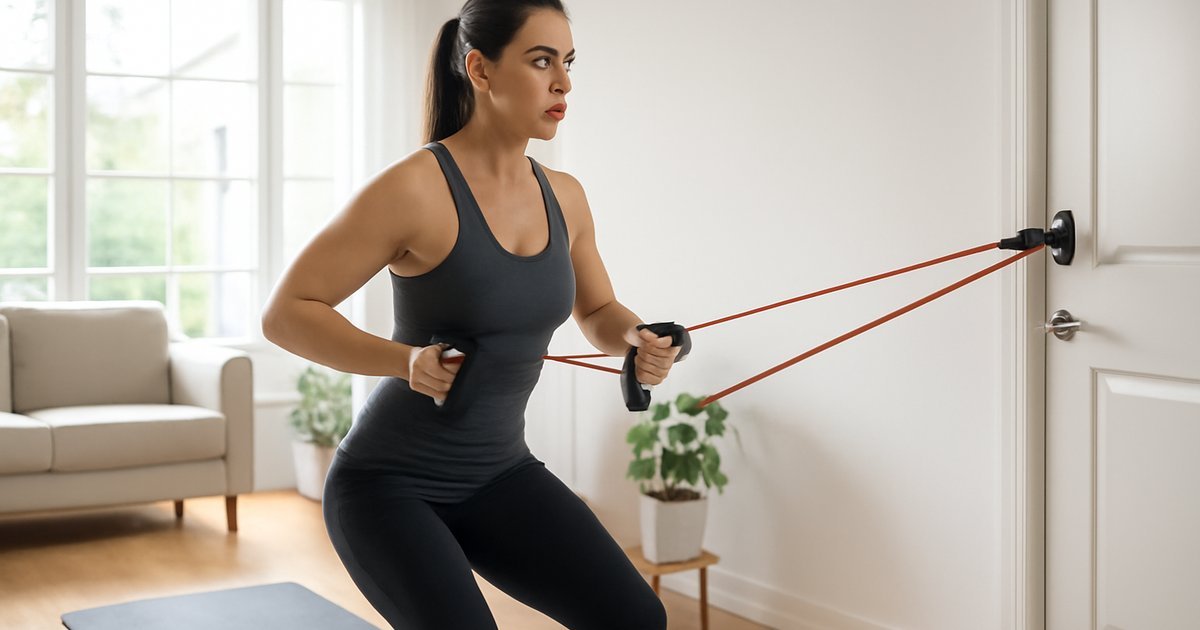
    Resistance bands come in several formats — loop bands, tube bands with handles, and therapy bands (flat sheets). For a full-body training program, a set of tube bands with handles (light, medium, and heavy) or a set of loop bands in varying resistances gives you the most versatility.

    As a beginner, start lighter than you think you need. You can always add resistance — building proper form first protects you from injury and sets you up for long-term progress.

    Step 2: Master These Foundational Movements

    Start with these six exercises that cover your entire body:

    • Banded Squat — step on the band, hold handles at shoulder height, squat to parallel (lower body)
    • Banded Deadlift — hinge at the hips with band under feet for posterior chain strength
    • Banded Chest Press — anchor band behind you, press forward at chest height (chest and triceps)
    • Banded Row — anchor at a low point, row toward your torso for upper back and biceps
    • Banded Overhead Press — step on band, press overhead for shoulders
    • Pallof Press — anchor at chest height, press straight out to challenge core stability

    Beginner routine: 2-3 sets of 12-15 reps per exercise, 3 days per week with at least one rest day between sessions.

    Intermediate option: Increase band tension, slow down the eccentric (lowering) phase to 3-4 seconds, or add supersets for efficiency.

    Advanced option: Combine bands with bodyweight movements (banded push-ups, banded pull-ups), add unilateral exercises (single-leg deadlifts, single-arm rows), and implement periodization — varying volume and intensity week over week. For a structured approach to long-term programming, our article on Build Your Sustainable Workout Routine: A Lifelong Guide walks you through exactly how to do that.

    Common Mistakes That Sabotage Your Results

    Resistance band training looks simple — and in many ways it is. But a few common errors can quietly stall your progress or increase injury risk.

    Mistake #1: Using too little resistance.
    This is the most frequent issue, especially for people who underestimate bands compared to traditional weights. If you can complete 15 reps without any real challenge in the last 3-4 repetitions, the band is too light. Progressive overload applies to bands just as it does to barbells — you need to consistently challenge the muscle for it to adapt and grow stronger.

    Mistake #2: Letting the band snap back uncontrolled.
    The eccentric phase — the return to the starting position — is where a significant portion of muscle growth is stimulated. Letting the band pull you back quickly means you’re skipping half the work. Control the return movement deliberately. This is where gains are often made, not lost.

    Mistake #3: Anchoring improperly.
    Using a door anchor that isn’t secure, wrapping a band around a sharp edge, or anchoring at the wrong height for the exercise can compromise both safety and movement mechanics. Always check that your anchor point is stable before loading the band with full force. Door anchors should be placed on the hinge side and tested before each set.

    Mistake #4: Ignoring full range of motion.
    Because bands feel lighter at the start of a movement, people often rush through the beginning and only work the end range where tension peaks. Moving through the full range — from full extension to full contraction — ensures the whole muscle is being trained and supports flexibility alongside strength.

    Mistake #5: Never replacing worn bands.
    Resistance bands degrade over time, especially with regular use. A band that’s fraying, discolored, or losing elasticity should be retired. Snapped bands during a workout can cause real injury. Inspect bands before each session and replace them every 6-12 months depending on use frequency.

    What to Pair with Resistance Band Training for Best Results

    Bands are incredibly effective on their own, but pairing them with the right nutrition and complementary movement habits amplifies what they can do.

    Protein intake: According to the Academy of Nutrition and Dietetics, adults engaged in regular resistance training benefit from consuming 1.2 to 1.7 grams of protein per kilogram of body weight per day. This supports muscle repair and growth following training sessions. Practical sources include eggs, Greek yogurt, lean poultry, legumes, and cottage cheese.

    Hydration: Even mild dehydration (as little as 1-2% of body weight in fluid loss) has been shown in research from the American College of Sports Medicine to impair muscular endurance and strength output. Aim for at least half your body weight in ounces of water daily — more if you’re training in heat.

    Recovery and mobility: Strength training without adequate recovery is counterproductive. The USDA Physical Activity Guidelines recommend that adults include at least two days of muscle-strengthening activity per week — but recovery days between those sessions are just as important. Light walking, stretching, and sleep are the underrated pillars of any resistance training plan.

    Pairing your resistance training with a solid mobility practice can also help you move better during exercises and reduce injury risk over time. Our Complete Guide to Mobility Training is a great complement to any band-based strength routine.

    How Long Until You See Results — and What to Track

    One of the most common questions: "How long before I actually feel a difference?"

    Here’s an honest, research-grounded answer: most people notice improvements in muscular endurance and energy within 2-3 weeks of consistent training. Visible changes in muscle tone and strength typically begin to emerge between 4 and 8 weeks — depending on training frequency, intensity, nutrition, sleep quality, and your individual starting point.

    Harvard Health Publishing notes that neurological adaptations (your nervous system learning to recruit muscle fibers more efficiently) are responsible for the initial strength gains in the first 4 weeks. Actual muscle hypertrophy — physical growth of muscle tissue — becomes more prominent after that initial adaptation period.

    What to track for progress:

    • Reps and resistance level — can you complete more reps or use a heavier band this week vs. last week?
    • Energy and recovery — are workouts feeling less exhausting over time?
    • Body measurements — waist, hips, arms — more reliable than scale weight for tracking body composition shifts
    • Functional benchmarks — can you carry groceries, climb stairs, or play with your kids without fatigue more easily?

    Results vary significantly based on age, hormonal status, training history, and consistency. If you’ve been training consistently for 8-12 weeks with proper nutrition and sleep and aren’t seeing any progress, it may be time to consult a certified personal trainer or a registered dietitian to assess what might be missing.

    Frequently Asked Questions About Resistance Band Training

    Can resistance bands actually build muscle, or are they only good for toning?
    "Toning" is largely a fitness industry myth — what most people want is a combination of reduced body fat and increased muscle definition. Resistance bands absolutely can build muscle, provided you’re using adequate tension and applying progressive overload over time. The research is clear: elastic resistance produces similar muscle and strength gains as free weights. The key word is consistent progressive challenge.

    Are resistance bands safe for people with joint pain or arthritis?
    Generally, yes — and this is one of the biggest advantages of bands over heavy free weights. The lower compressive forces on joints make them a popular recommendation in physical therapy and rehabilitation. That said, if you have a diagnosed joint condition, always consult your physician or a physical therapist before beginning any new exercise program. They may recommend specific modifications.

    How many days per week should I train with resistance bands?
    For most adults, 3 to 4 days per week is an effective and sustainable frequency. The ACSM recommends at least two days per week of muscle-strengthening activity for general health. If you’re training full-body each session, include at least one rest or active recovery day between sessions to allow muscles to repair and grow.

    Do I need to combine bands with other equipment?
    Not at all. A complete, effective training program can be built entirely around resistance bands. However, if you have access to bodyweight exercises (push-ups, pull-ups, dips), combining them with bands adds useful variety and can address certain muscle groups more effectively. Bands pair especially well with compound movement patterns that train multiple muscle groups at once.

    What’s the best way to progress when a band starts feeling too easy?
    You have several options: move up to a higher resistance band, slow down your reps (especially the eccentric phase), decrease rest time between sets, add more sets or reps, or shift to unilateral (single-limb) variations of the same exercise. All of these apply the principle of progressive overload — the foundation of any lasting strength program.

    Start Where You Are — It’s Enough

    You don’t need to overhaul your entire life to start building real strength. You just need a few bands, 30 minutes three times a week, and the willingness to show up consistently.

    Resistance band training isn’t a compromise — it’s a genuinely powerful training tool that has been validated by research, used by elite athletes, and recommended by rehabilitation specialists worldwide. It fits your schedule, respects your joints, and travels anywhere you do.

    The best workout is always the one you’ll actually do. And the best place to start is exactly where you are right now.

    Pick up a set of bands this week, run through those six foundational movements, and give yourself 30 days of consistent effort. The difference it makes might surprise you.


    Wellness Disclaimer: This article is for informational and educational purposes only. The content is not intended to replace professional medical, nutritional, or fitness advice. Always consult a qualified healthcare provider, registered dietitian, or certified fitness professional before starting a new health program or making significant changes to your lifestyle.

    Content reviewed by our wellness editorial team, with references to peer-reviewed research and guidelines from leading health organizations including the American College of Sports Medicine, Academy of Nutrition and Dietetics, Harvard Health Publishing, and the USDA Physical Activity Guidelines.

  • Strength Training for Beginners: Your Complete Starter Guide

    Strength Training for Beginners: Your Complete Starter Guide

    Strength Training for Beginners: Your Complete Starter Guide

    You don’t need to be an athlete, own a gym membership, or know what a deadlift is to start getting stronger — you just need a plan that actually fits your life.

    Here’s a number that might surprise you: according to the Centers for Disease Control and Prevention, fewer than 25% of American adults meet the recommended guidelines for muscle-strengthening activity. That means three out of four people are missing out on one of the most powerful tools for long-term health — and most of them aren’t skipping it because they don’t care. They’re skipping it because no one ever showed them where to start.

    Strength training has a reputation problem. It sounds intimidating. It looks complicated on social media. And if you’ve ever walked into a weight room and felt completely lost, you know exactly what that wall of confusion feels like.

    But here’s the truth: building strength doesn’t require a personal trainer, expensive equipment, or hours in the gym. What it does require is understanding the basics — and that’s exactly what this guide is for. By the end, you’ll know why strength training matters beyond just looking fit, how your muscles actually adapt to resistance, and how to start safely without burning out in week two.

    Why Strength Training Matters More Than You Think

    Most people start lifting weights because they want to look better. That’s a completely valid reason — but it’s honestly one of the smaller benefits on the list.

    The American College of Sports Medicine (ACSM) recommends that adults engage in resistance training at least two days per week for each major muscle group. That recommendation isn’t just about muscle size. It’s grounded in decades of research linking regular strength work to reduced risk of type 2 diabetes, improved cardiovascular health, stronger bones, better joint stability, and even lower rates of depression and anxiety.

    One landmark finding published in the British Journal of Sports Medicine found that muscle-strengthening activities were associated with a 10 to 17 percent reduction in all-cause mortality, cardiovascular disease, and cancer — independent of aerobic activity. In other words, lifting weights adds value even if you’re already walking or running regularly.

    For adults over 35, there’s another critical factor: sarcopenia. This is the age-related loss of muscle mass that begins in your mid-30s and accelerates through your 40s and 50s if you’re not actively working against it. Strength training is the most effective tool we have to slow that process down.

    And for your daily life? Carrying groceries, climbing stairs, picking up your kids or grandkids — these all become easier when your muscles are trained to handle load. Functional strength is real-life strength.

    How Strength Training Actually Works

    Here’s the basic biology, simplified: when you place a muscle under resistance — whether that’s a dumbbell, a resistance band, your own bodyweight, or a barbell — you create tiny microscopic tears in the muscle fibers. This sounds alarming, but it’s the signal your body needs to rebuild that tissue stronger than before. The process is called muscle protein synthesis, and it happens primarily during rest and recovery.

    One common myth worth busting right away: lifting weights will make you "bulk up" fast. For the vast majority of people — especially women and anyone over 40 — building significant muscle mass takes months to years of consistent, progressive training combined with deliberate nutrition strategies. What you’ll notice in the first 4 to 8 weeks isn’t dramatic size change. It’s improved tone, better posture, and a sense of strength in movements you do every day.

    The key principle behind all strength progress is called progressive overload — the gradual increase of stress placed on the body during exercise over time. This can mean adding more weight, doing more reps, resting less between sets, or increasing range of motion. Research published in the Journal of Strength and Conditioning Research consistently shows that progressive overload is the single most important variable in long-term strength development.

    Your nervous system also adapts. In the early weeks of training, a large portion of your strength gains come not from bigger muscles but from your brain learning to recruit muscle fibers more efficiently. This is why beginners often feel dramatically stronger after just a few weeks, even before significant muscle changes occur.

    How to Get Started: Practical Steps for Every Level

    Starting strong means starting smart. Here’s how to build a foundation that lasts:

    Step 1 — Choose your format. You have three main options: bodyweight training (push-ups, squats, lunges), free weights (dumbbells, kettlebells, barbells), or machines. For most beginners, a combination of bodyweight and light dumbbells is the most accessible starting point — no gym required.

    Step 2 — Focus on compound movements first. Compound exercises work multiple muscle groups at once, giving you the most return on your time. The five foundational movements are: squat, hinge (like a deadlift or Romanian deadlift), push (push-up or chest press), pull (row or lat pulldown), and carry (farmer’s carry or simply walking with weights). These patterns cover nearly every major muscle group.

    Step 3 — Start with 2 days per week, then build to 3. The ACSM recommends two days minimum for beginners, with at least 48 hours of rest between sessions for the same muscle group. Two full-body sessions per week is an excellent starting structure — simple, effective, and sustainable.

    For beginners: 2 sets of 10-12 reps per exercise, moderate weight (you should feel effort on the last 2-3 reps but maintain good form). Rest 60-90 seconds between sets.

    For intermediate lifters (6+ months of consistent training): 3-4 sets of 8-12 reps, progressing weight by 5% when you can complete all reps cleanly. Consider a split routine (upper/lower or push/pull/legs).

    Step 4 — Warm up and cool down. Spend 5-10 minutes on dynamic movement before lifting — leg swings, arm circles, bodyweight squats. After training, 5 minutes of light stretching helps manage soreness and supports recovery.

    Step 5 — Track your sessions. A simple notebook or phone note works fine. Write down what you lifted, how many reps, and how it felt. This is your map for progressive overload.

    Common Mistakes That Sabotage Results

    These are easy to make — and knowing them in advance keeps you ahead of the curve.

    Mistake 1: Skipping the basics to chase advanced moves. Many beginners want to jump straight to Olympic lifts or complex barbell work before mastering fundamental movement patterns. The result is usually poor form, frustration, and injury risk. Spend your first 4-6 weeks building clean, consistent mechanics on simple exercises. The fancy stuff will come — and it will come faster when your foundation is solid.

    Mistake 2: Going too heavy, too fast. Ego lifting — choosing weight that’s too heavy to maintain proper form — is one of the leading causes of beginner injuries. The goal in your first few months is skill acquisition and habit formation, not maximum load. Choose a weight where the last two reps of each set feel genuinely challenging but your form doesn’t break down. As Harvard Health Publishing notes, using proper technique from the start dramatically reduces long-term injury risk.

    Mistake 3: Ignoring recovery. Muscles don’t grow during your workout — they grow during the 24 to 48 hours afterward. Beginners who train every single day without adequate rest often find themselves stalled or chronically sore. Prioritize sleep (7-9 hours is the National Sleep Foundation’s recommendation for adults) and allow at least one full rest day between strength sessions targeting the same muscle groups.

    Mistake 4: Treating nutrition as optional. Strength training without adequate protein is like building a house without enough lumber. You’re creating the stimulus, but not supplying the material. The Academy of Nutrition and Dietetics recommends 1.2 to 1.7 grams of protein per kilogram of body weight per day for active adults engaged in resistance training. Many beginners underestimate how much this matters.

    Mistake 5: Inconsistency disguised as variety. Constantly switching programs every two weeks because you saw something new online is one of the most common reasons people plateau. Consistency in a simple, progressive program almost always beats novelty. Give any well-designed program at least 8 to 12 weeks before evaluating whether it’s working.

    What to Eat to Support Your Strength Training

    You don’t need a complicated diet plan to support your training — but a few nutritional principles make a meaningful difference.

    Protein is the priority. Aim for 25 to 40 grams of protein per meal, spread across 3 to 4 meals daily. High-quality sources include chicken breast (about 30g per 3.5 oz), Greek yogurt (15-20g per cup), eggs (6g per egg), canned tuna (25g per 3 oz), tofu (10g per half-cup), and legumes like lentils (18g per cooked cup). The USDA Dietary Guidelines support a variety of protein sources, including both animal and plant-based options.

    Don’t fear carbohydrates. Carbs are your muscles’ preferred fuel source during resistance training. Complex carbs — oats, sweet potatoes, brown rice, quinoa, whole grain bread — provide sustained energy and support glycogen replenishment after workouts. Cutting carbs aggressively while strength training typically results in low energy, poor performance, and slower recovery.

    Timing matters somewhat — but not as much as total intake. Consuming a meal or snack with both protein and carbohydrates within 1-2 hours after training supports muscle recovery, according to research referenced by the Academy of Nutrition and Dietetics. But if your total daily intake is on track, don’t stress about hitting an exact post-workout window to the minute.

    Hydration is non-negotiable. Even mild dehydration (1-2% of body weight) can significantly impair strength performance. Aim for at least half your body weight in ounces of water daily, with additional intake on training days.

    What to limit: Ultra-processed foods, excessive added sugar, and alcohol — not because they’re forbidden, but because they consistently undercut recovery, sleep quality, and energy levels over time.

    How Long Until You See Results — and What to Track

    This is one of the most searched questions about strength training, and the honest answer involves a realistic timeline.

    Weeks 1-3: You’ll likely feel stronger — but this is mostly neurological adaptation, not muscle growth. Your nervous system is becoming more efficient at recruiting muscle fibers. You may feel more energized after workouts and notice improved posture.

    Weeks 4-8: Muscle tone becomes more visible, especially if you’re also moderating diet. Clothes may fit differently before the scale changes. This is normal and expected — muscle is denser than fat tissue.

    Months 3-6: Meaningful strength gains and visible changes in muscle definition become more noticeable. Research published in the Journal of Physiology shows that measurable hypertrophy (muscle growth) typically becomes statistically significant after 8-12 weeks of consistent resistance training.

    What to track: Rather than relying solely on the scale, track how much weight you’re lifting over time (progressive overload log), how your clothes fit, your energy levels during workouts, and your resting recovery (sleep quality, soreness duration). These are more meaningful early indicators than body weight alone.

    Results vary significantly based on your starting point, age, sleep quality, nutrition, and training consistency. If you’re not seeing any strength progression after 8 weeks, consider consulting a certified personal trainer to assess your program and form.

    Frequently Asked Questions

    Do I need to go to a gym to start strength training?
    No. Bodyweight exercises — push-ups, squats, lunges, glute bridges, planks — can build real functional strength at home with zero equipment. A set of resistance bands or adjustable dumbbells adds significant versatility for under $50. The gym becomes more valuable as you advance and need heavier loads, but it’s not a requirement to get started.

    Is strength training safe for people over 50?
    Yes — and for adults over 50, it’s especially important. The NIH notes that strength training helps preserve bone density, reduce fall risk, maintain joint health, and counteract age-related muscle loss. The approach may need to be modified (lighter starting loads, more emphasis on mobility), ideally with guidance from a certified professional familiar with older adult fitness.

    How sore should I be after a workout?
    Some muscle soreness 24 to 48 hours after training — known as delayed onset muscle soreness (DOMS) — is normal and expected when starting out. Sharp pain during exercise, or soreness that lasts more than 72 hours, is a signal to reduce intensity or check your form. Soreness gradually decreases as your body adapts over the first few weeks.

    How much protein do I really need if I’m strength training?
    The Academy of Nutrition and Dietetics recommends 1.2 to 1.7 grams of protein per kilogram of body weight daily for active adults doing resistance training. For a 160-pound person, that’s roughly 87 to 123 grams per day. Most Americans already get adequate protein — the key is distributing it across meals rather than loading it all at dinner.

    Can strength training help with weight loss?
    Yes, though it works differently than cardio. Resistance training builds lean muscle, which increases your resting metabolic rate over time. A 2022 analysis published in Obesity Reviews found that strength training alone produces modest weight loss, and the effects are significantly enhanced when combined with aerobic activity and appropriate caloric intake. Body composition often improves even when scale weight changes slowly.


    The Bottom Line

    Strength training is one of the most evidence-backed investments you can make in your long-term health — and it genuinely doesn’t require perfection to work. Two honest sessions per week, with basic compound movements, progressive effort, and enough protein and sleep, is enough to change how you feel, move, and age.

    The best program is the one you actually do. Start simple. Start today. Pick two exercises you already know how to do — even just a squat and a push-up — and commit to doing them consistently for three weeks. That’s your foundation.

    Small steps, done consistently, build strength that lasts a lifetime.


    Wellness Disclaimer: This article is for informational and educational purposes only. The content is not intended to replace professional medical, nutritional, or fitness advice. Always consult a qualified healthcare provider, registered dietitian, or certified fitness professional before starting a new health program or making significant changes to your lifestyle.

    Content reviewed by our wellness editorial team, with references to peer-reviewed research and guidelines from leading health organizations.