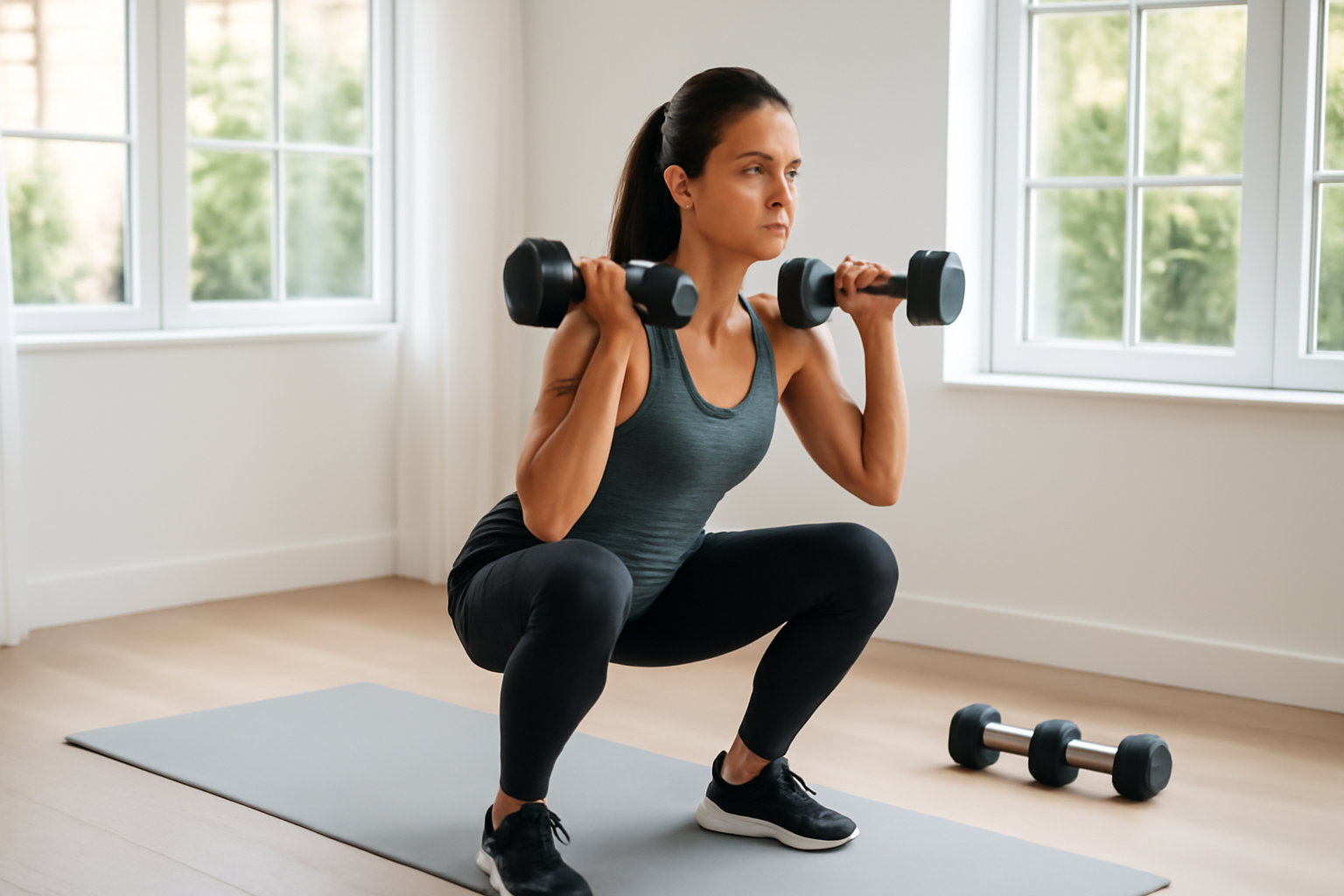
Strength Training for Beginners: Your Complete Starter Guide
You don’t need to be an athlete, own a gym membership, or know what a deadlift is to start getting stronger — you just need a plan that actually fits your life.
Here’s a number that might surprise you: according to the Centers for Disease Control and Prevention, fewer than 25% of American adults meet the recommended guidelines for muscle-strengthening activity. That means three out of four people are missing out on one of the most powerful tools for long-term health — and most of them aren’t skipping it because they don’t care. They’re skipping it because no one ever showed them where to start.
Strength training has a reputation problem. It sounds intimidating. It looks complicated on social media. And if you’ve ever walked into a weight room and felt completely lost, you know exactly what that wall of confusion feels like.
But here’s the truth: building strength doesn’t require a personal trainer, expensive equipment, or hours in the gym. What it does require is understanding the basics — and that’s exactly what this guide is for. By the end, you’ll know why strength training matters beyond just looking fit, how your muscles actually adapt to resistance, and how to start safely without burning out in week two.
Why Strength Training Matters More Than You Think
Most people start lifting weights because they want to look better. That’s a completely valid reason — but it’s honestly one of the smaller benefits on the list.
The American College of Sports Medicine (ACSM) recommends that adults engage in resistance training at least two days per week for each major muscle group. That recommendation isn’t just about muscle size. It’s grounded in decades of research linking regular strength work to reduced risk of type 2 diabetes, improved cardiovascular health, stronger bones, better joint stability, and even lower rates of depression and anxiety.
One landmark finding published in the British Journal of Sports Medicine found that muscle-strengthening activities were associated with a 10 to 17 percent reduction in all-cause mortality, cardiovascular disease, and cancer — independent of aerobic activity. In other words, lifting weights adds value even if you’re already walking or running regularly.
For adults over 35, there’s another critical factor: sarcopenia. This is the age-related loss of muscle mass that begins in your mid-30s and accelerates through your 40s and 50s if you’re not actively working against it. Strength training is the most effective tool we have to slow that process down.
And for your daily life? Carrying groceries, climbing stairs, picking up your kids or grandkids — these all become easier when your muscles are trained to handle load. Functional strength is real-life strength.
How Strength Training Actually Works
Here’s the basic biology, simplified: when you place a muscle under resistance — whether that’s a dumbbell, a resistance band, your own bodyweight, or a barbell — you create tiny microscopic tears in the muscle fibers. This sounds alarming, but it’s the signal your body needs to rebuild that tissue stronger than before. The process is called muscle protein synthesis, and it happens primarily during rest and recovery.
One common myth worth busting right away: lifting weights will make you "bulk up" fast. For the vast majority of people — especially women and anyone over 40 — building significant muscle mass takes months to years of consistent, progressive training combined with deliberate nutrition strategies. What you’ll notice in the first 4 to 8 weeks isn’t dramatic size change. It’s improved tone, better posture, and a sense of strength in movements you do every day.
The key principle behind all strength progress is called progressive overload — the gradual increase of stress placed on the body during exercise over time. This can mean adding more weight, doing more reps, resting less between sets, or increasing range of motion. Research published in the Journal of Strength and Conditioning Research consistently shows that progressive overload is the single most important variable in long-term strength development.
Your nervous system also adapts. In the early weeks of training, a large portion of your strength gains come not from bigger muscles but from your brain learning to recruit muscle fibers more efficiently. This is why beginners often feel dramatically stronger after just a few weeks, even before significant muscle changes occur.
How to Get Started: Practical Steps for Every Level
Starting strong means starting smart. Here’s how to build a foundation that lasts:
Step 1 — Choose your format. You have three main options: bodyweight training (push-ups, squats, lunges), free weights (dumbbells, kettlebells, barbells), or machines. For most beginners, a combination of bodyweight and light dumbbells is the most accessible starting point — no gym required.
Step 2 — Focus on compound movements first. Compound exercises work multiple muscle groups at once, giving you the most return on your time. The five foundational movements are: squat, hinge (like a deadlift or Romanian deadlift), push (push-up or chest press), pull (row or lat pulldown), and carry (farmer’s carry or simply walking with weights). These patterns cover nearly every major muscle group.
Step 3 — Start with 2 days per week, then build to 3. The ACSM recommends two days minimum for beginners, with at least 48 hours of rest between sessions for the same muscle group. Two full-body sessions per week is an excellent starting structure — simple, effective, and sustainable.
For beginners: 2 sets of 10-12 reps per exercise, moderate weight (you should feel effort on the last 2-3 reps but maintain good form). Rest 60-90 seconds between sets.
For intermediate lifters (6+ months of consistent training): 3-4 sets of 8-12 reps, progressing weight by 5% when you can complete all reps cleanly. Consider a split routine (upper/lower or push/pull/legs).
Step 4 — Warm up and cool down. Spend 5-10 minutes on dynamic movement before lifting — leg swings, arm circles, bodyweight squats. After training, 5 minutes of light stretching helps manage soreness and supports recovery.
Step 5 — Track your sessions. A simple notebook or phone note works fine. Write down what you lifted, how many reps, and how it felt. This is your map for progressive overload.
Common Mistakes That Sabotage Results
These are easy to make — and knowing them in advance keeps you ahead of the curve.
Mistake 1: Skipping the basics to chase advanced moves. Many beginners want to jump straight to Olympic lifts or complex barbell work before mastering fundamental movement patterns. The result is usually poor form, frustration, and injury risk. Spend your first 4-6 weeks building clean, consistent mechanics on simple exercises. The fancy stuff will come — and it will come faster when your foundation is solid.
Mistake 2: Going too heavy, too fast. Ego lifting — choosing weight that’s too heavy to maintain proper form — is one of the leading causes of beginner injuries. The goal in your first few months is skill acquisition and habit formation, not maximum load. Choose a weight where the last two reps of each set feel genuinely challenging but your form doesn’t break down. As Harvard Health Publishing notes, using proper technique from the start dramatically reduces long-term injury risk.
Mistake 3: Ignoring recovery. Muscles don’t grow during your workout — they grow during the 24 to 48 hours afterward. Beginners who train every single day without adequate rest often find themselves stalled or chronically sore. Prioritize sleep (7-9 hours is the National Sleep Foundation’s recommendation for adults) and allow at least one full rest day between strength sessions targeting the same muscle groups.
Mistake 4: Treating nutrition as optional. Strength training without adequate protein is like building a house without enough lumber. You’re creating the stimulus, but not supplying the material. The Academy of Nutrition and Dietetics recommends 1.2 to 1.7 grams of protein per kilogram of body weight per day for active adults engaged in resistance training. Many beginners underestimate how much this matters.
Mistake 5: Inconsistency disguised as variety. Constantly switching programs every two weeks because you saw something new online is one of the most common reasons people plateau. Consistency in a simple, progressive program almost always beats novelty. Give any well-designed program at least 8 to 12 weeks before evaluating whether it’s working.
What to Eat to Support Your Strength Training
You don’t need a complicated diet plan to support your training — but a few nutritional principles make a meaningful difference.
Protein is the priority. Aim for 25 to 40 grams of protein per meal, spread across 3 to 4 meals daily. High-quality sources include chicken breast (about 30g per 3.5 oz), Greek yogurt (15-20g per cup), eggs (6g per egg), canned tuna (25g per 3 oz), tofu (10g per half-cup), and legumes like lentils (18g per cooked cup). The USDA Dietary Guidelines support a variety of protein sources, including both animal and plant-based options.
Don’t fear carbohydrates. Carbs are your muscles’ preferred fuel source during resistance training. Complex carbs — oats, sweet potatoes, brown rice, quinoa, whole grain bread — provide sustained energy and support glycogen replenishment after workouts. Cutting carbs aggressively while strength training typically results in low energy, poor performance, and slower recovery.
Timing matters somewhat — but not as much as total intake. Consuming a meal or snack with both protein and carbohydrates within 1-2 hours after training supports muscle recovery, according to research referenced by the Academy of Nutrition and Dietetics. But if your total daily intake is on track, don’t stress about hitting an exact post-workout window to the minute.
Hydration is non-negotiable. Even mild dehydration (1-2% of body weight) can significantly impair strength performance. Aim for at least half your body weight in ounces of water daily, with additional intake on training days.
What to limit: Ultra-processed foods, excessive added sugar, and alcohol — not because they’re forbidden, but because they consistently undercut recovery, sleep quality, and energy levels over time.
How Long Until You See Results — and What to Track
This is one of the most searched questions about strength training, and the honest answer involves a realistic timeline.
Weeks 1-3: You’ll likely feel stronger — but this is mostly neurological adaptation, not muscle growth. Your nervous system is becoming more efficient at recruiting muscle fibers. You may feel more energized after workouts and notice improved posture.
Weeks 4-8: Muscle tone becomes more visible, especially if you’re also moderating diet. Clothes may fit differently before the scale changes. This is normal and expected — muscle is denser than fat tissue.
Months 3-6: Meaningful strength gains and visible changes in muscle definition become more noticeable. Research published in the Journal of Physiology shows that measurable hypertrophy (muscle growth) typically becomes statistically significant after 8-12 weeks of consistent resistance training.
What to track: Rather than relying solely on the scale, track how much weight you’re lifting over time (progressive overload log), how your clothes fit, your energy levels during workouts, and your resting recovery (sleep quality, soreness duration). These are more meaningful early indicators than body weight alone.
Results vary significantly based on your starting point, age, sleep quality, nutrition, and training consistency. If you’re not seeing any strength progression after 8 weeks, consider consulting a certified personal trainer to assess your program and form.
Frequently Asked Questions
Do I need to go to a gym to start strength training?
No. Bodyweight exercises — push-ups, squats, lunges, glute bridges, planks — can build real functional strength at home with zero equipment. A set of resistance bands or adjustable dumbbells adds significant versatility for under $50. The gym becomes more valuable as you advance and need heavier loads, but it’s not a requirement to get started.
Is strength training safe for people over 50?
Yes — and for adults over 50, it’s especially important. The NIH notes that strength training helps preserve bone density, reduce fall risk, maintain joint health, and counteract age-related muscle loss. The approach may need to be modified (lighter starting loads, more emphasis on mobility), ideally with guidance from a certified professional familiar with older adult fitness.
How sore should I be after a workout?
Some muscle soreness 24 to 48 hours after training — known as delayed onset muscle soreness (DOMS) — is normal and expected when starting out. Sharp pain during exercise, or soreness that lasts more than 72 hours, is a signal to reduce intensity or check your form. Soreness gradually decreases as your body adapts over the first few weeks.
How much protein do I really need if I’m strength training?
The Academy of Nutrition and Dietetics recommends 1.2 to 1.7 grams of protein per kilogram of body weight daily for active adults doing resistance training. For a 160-pound person, that’s roughly 87 to 123 grams per day. Most Americans already get adequate protein — the key is distributing it across meals rather than loading it all at dinner.
Can strength training help with weight loss?
Yes, though it works differently than cardio. Resistance training builds lean muscle, which increases your resting metabolic rate over time. A 2022 analysis published in Obesity Reviews found that strength training alone produces modest weight loss, and the effects are significantly enhanced when combined with aerobic activity and appropriate caloric intake. Body composition often improves even when scale weight changes slowly.
The Bottom Line
Strength training is one of the most evidence-backed investments you can make in your long-term health — and it genuinely doesn’t require perfection to work. Two honest sessions per week, with basic compound movements, progressive effort, and enough protein and sleep, is enough to change how you feel, move, and age.
The best program is the one you actually do. Start simple. Start today. Pick two exercises you already know how to do — even just a squat and a push-up — and commit to doing them consistently for three weeks. That’s your foundation.
Small steps, done consistently, build strength that lasts a lifetime.
Wellness Disclaimer: This article is for informational and educational purposes only. The content is not intended to replace professional medical, nutritional, or fitness advice. Always consult a qualified healthcare provider, registered dietitian, or certified fitness professional before starting a new health program or making significant changes to your lifestyle.
Content reviewed by our wellness editorial team, with references to peer-reviewed research and guidelines from leading health organizations.