You don’t always have to move to get stronger — and the research behind isometric training might change how you think about exercise entirely.
Introduction
Picture this: you’re holding a plank and your entire body is shaking, but you’re not moving an inch. Yet somehow, you’re burning muscle energy, building strength, and improving endurance — all while completely still. That’s isometric training in action, and it’s one of the most underrated tools in fitness today.
Most people associate getting stronger with lifting, pushing, or pulling — movements you can see. But isometric exercises, where your muscles contract without changing length or joint angle, offer a surprisingly powerful alternative that fits almost any fitness level, schedule, or training environment.
Whether you’re a beginner looking for a low-impact entry point, a busy professional with limited gym time, or someone returning from injury, isometric training deserves a serious look. In this guide, you’ll learn how it works, what the science actually says, and how to build it into your routine — starting today.
Why Isometric Training Matters More Than You Think
We live in a culture obsessed with visible effort — more reps, more weight, more sweat. Isometric training flies under the radar because it looks, well, boring. But the physiological benefits are anything but.
According to research published in the Journal of Human Hypertension, isometric exercise — particularly wall sits and handgrip exercises — produced greater reductions in resting blood pressure than aerobic training or dynamic resistance exercise in several controlled trials. That’s a significant finding for adults managing cardiovascular risk.
Beyond heart health, isometrics are uniquely effective at building strength in specific joint angles, improving neuromuscular activation, and enhancing postural endurance. Athletes use them to break through strength plateaus. Physical therapists rely on them for safe, early-stage rehabilitation. And for everyday adults, they offer a practical way to maintain muscle mass and joint stability without equipment or high impact.
If you’ve been skipping this method, you’ve been leaving results on the table.
The Science Behind Isometric Training: How It Actually Works
During an isometric contraction, your muscle fibers are fully engaged — they’re generating force — but the muscle length doesn’t change. Think of pushing against a wall that won’t move. You’re working hard, but no joint movement occurs.
This creates a unique training stimulus. Because you’re sustaining tension for a set duration (typically 20–60 seconds), your muscles face prolonged metabolic stress, which drives muscle fiber recruitment and endurance adaptations. Unlike dynamic training, where muscles cycle in and out of peak tension, isometrics force sustained activation throughout the hold.
One important myth to bust: Many people believe isometric training only builds strength at the specific angle you train. While there is a degree of angle-specificity — research from the American College of Sports Medicine (ACSM) confirms strength gains are greatest within about 15 degrees of the trained joint angle — this doesn’t make isometrics less valuable. It just means smart programming uses multiple positions to cover full range of motion.
A study published in the European Journal of Applied Physiology found that isometric training performed at longer muscle lengths (think a deep squat hold vs. a shallow one) produced greater overall muscle hypertrophy and carryover to dynamic strength. This means the angle you choose genuinely matters — and training at a stretched position tends to deliver more transferable results.
Isometrics also have a measurable effect on tendon stiffness and joint stability, which is why they’re commonly used in managing tendinopathies, including patellar tendon issues in runners and rotator cuff rehabilitation, as noted in guidelines from the National Academy of Sports Medicine (NASM).
How to Get Started: Practical Isometric Training Steps
The good news: you need almost nothing to begin. No barbells, no machines, no gym membership. Here’s how to approach isometric training based on your current fitness level.
Beginner: Build the Foundation
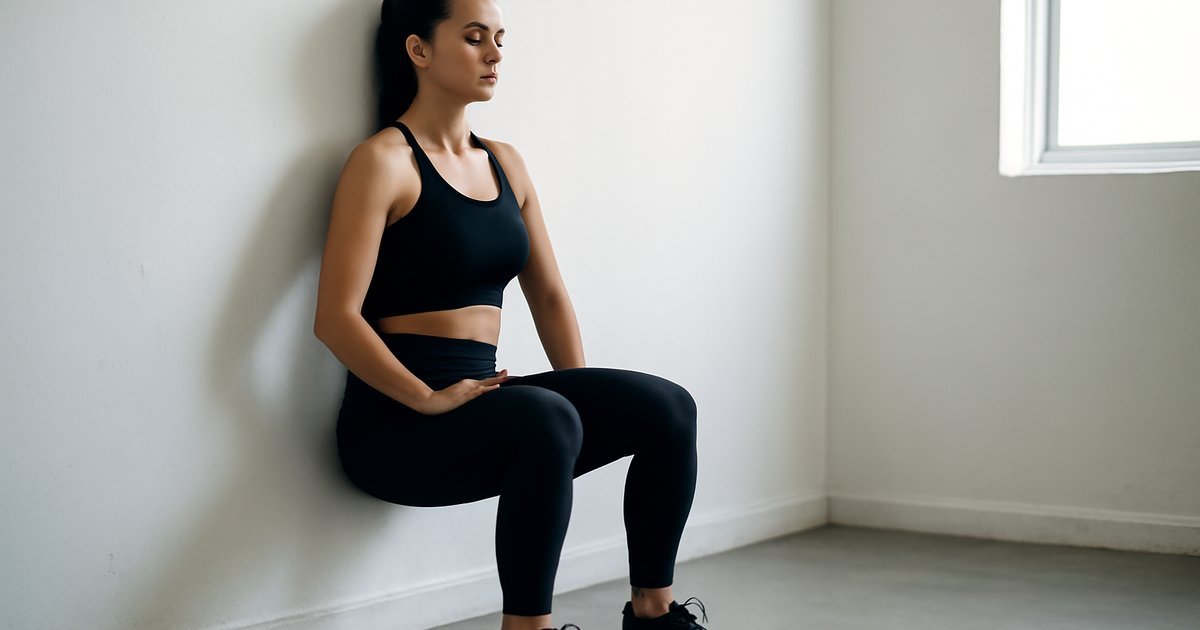
- Wall Sit: Back flat against the wall, thighs parallel to the floor. Hold for 20–30 seconds. This targets quads, glutes, and hamstrings with zero joint stress.
- Dead Hang: Grip a pull-up bar with both hands and simply hang. Builds grip strength, shoulder stability, and spinal decompression. Start with 15–20 seconds.
- Glute Bridge Hold: Hips raised, core braced. Hold at the top for 20–30 seconds. Activates glutes and challenges lower back endurance.
- Plank: Forearms or hands, body in a straight line. 20–40 second holds. Builds deep core stability more effectively than crunches for most beginners.
Aim for 3 rounds of each hold, 3–4 days per week. Rest 30–60 seconds between sets.
Intermediate: Add Intensity and Range
- Single-Leg Wall Sit: Elevate one foot while performing a wall sit. Significantly increases unilateral demand.
- Isometric Push-Up Hold: Lower to 90 degrees and hold for 15–30 seconds. Challenges chest, shoulders, and triceps with intense static tension.
- Copenhagen Plank Hold: Side plank with top leg elevated on a bench. Targets adductors and lateral core — often undertrained.
- Paused Deadlift at the Knee: Use light to moderate weight; pause for 3–5 seconds just below or at the knee. Builds strength in a critical power position.
Advanced: Integrate with Dynamic Training
- Use isometric overcoming contractions: push or pull against an immovable object (a loaded barbell against safety pins) with maximum effort for 5–8 seconds. This activates near-maximal motor unit recruitment and is used by strength coaches for peak force output.
- Program functional isometrics within compound lifts — pause squats, paused bench, or dead stop deadlifts — to improve both strength and technique simultaneously. For more on compound movement programming, check out our guide on Compound Exercises: Your Full-Body Strength Shortcut.
Common Mistakes That Sabotage Isometric Results
Isometric training looks simple — hold still, done. But there are several ways people consistently undermine their results. Here are the most common mistakes and how to fix them.
1. Holding your breath
This is extremely common. When people strain against resistance, the natural tendency is to hold the breath (the Valsalva maneuver). While brief breath-holds are used in advanced strength training, sustained breath-holding during longer isometric holds significantly elevates blood pressure. Fix it: breathe slowly and consistently throughout every hold. Inhale through the nose, exhale through the mouth.
2. Using passive posture instead of active tension
A plank where you’re sagging through the hips or a wall sit where you’re barely activating your glutes gives you a fraction of the benefit. The muscle must be under intentional, active tension. Fix it: squeeze every muscle involved — consciously brace, activate, and generate force even when you’re not moving.
3. Only training one joint angle
If you always hold your plank at the same position or always do your wall sit at a shallow angle, your strength gains plateau quickly. Fix it: cycle through different joint positions. For example, vary your squat hold from 45 degrees to 90 degrees across your training week.
4. Skipping progressive overload
Many people hold the same 30-second plank for months and wonder why nothing changes. Isometrics need progression too. Fix it: increase hold duration, add resistance (a weight plate on your back during a plank), or reduce base support (single-leg variations). For a complete framework on advancing any training method, explore our Progressive Overload Training Guide.
5. Ignoring recovery
Because isometrics don’t feel as demanding as heavy lifting, people sometimes train too frequently without recovery. But the muscular and neurological demand is real. Fix it: treat isometric sessions like resistance training days — allow 24–48 hours of recovery for the targeted muscle groups.
What to Eat to Support Isometric Training Performance
Isometric training may not burn the same caloric load as a high-intensity circuit, but the nutritional demands for muscle recovery and performance are still significant.
Protein: The Academy of Nutrition and Dietetics recommends 1.2–2.0 grams of protein per kilogram of body weight per day for active adults engaged in resistance training. Isometric training creates meaningful muscle protein synthesis demands, especially when training to near-failure on longer holds. Prioritize lean sources: chicken breast, eggs, Greek yogurt, lentils, tofu, and cottage cheese.
Carbohydrates: Even low-intensity isometric sessions deplete glycogen over time, particularly during high-volume holds. A small carbohydrate-containing snack 60–90 minutes before training — like a banana with nut butter or oatmeal — supports performance without spiking blood sugar unnecessarily.
Magnesium: This mineral supports muscle relaxation, reduces cramping, and improves sleep quality for recovery. The NIH Office of Dietary Supplements notes that many adults fall short of the recommended 320–420 mg/day. Foods rich in magnesium include almonds, black beans, spinach, pumpkin seeds, and dark chocolate.
Hydration: Sustained muscle contractions generate heat. Even without visible sweating, you lose fluids during isometric holds. The USDA Dietary Guidelines recommend approximately 3.7 liters of total water intake daily for men and 2.7 liters for women, including water from food sources.
What to limit: High-sodium processed foods can contribute to blood pressure elevation, which matters because isometric exercise already creates a transient blood pressure spike during effort. Keep sodium intake in check, especially if you’re using isometrics for cardiovascular health benefits.
How Long Until You See Results — and What to Track
Realistic expectations matter. Isometric training produces results, but the timeline depends on your baseline fitness, training frequency, and how well you progress your sessions over time.
Weeks 1–2: You’ll notice improved body awareness and postural endurance. Holds that felt impossible at 20 seconds will become manageable at 30. This is primarily neuromuscular — your nervous system learning to recruit muscle fibers more efficiently.
Weeks 3–6: Measurable gains in localized strength at trained angles. You may notice improved stability during dynamic movements (better squat depth, more controlled push-ups). Research from Harvard Health Publishing notes that consistent isometric training shows functional strength improvements within 4–6 weeks for most sedentary to moderately active adults.
Weeks 6–12: Structural adaptations begin — modest but measurable improvements in muscle cross-sectional area, particularly when training at longer muscle lengths. Blood pressure reductions, if applicable, are often measurable at the 6–8 week mark based on the research referenced earlier.
What to track:
- Hold duration per exercise (seconds per set)
- Number of sets completed without form breakdown
- Resting heart rate and, if relevant, blood pressure readings
- Subjective stability and posture improvements during daily activity
- Performance in related dynamic exercises (e.g., squat max after regular pause squat holds)
When to reassess: If you’ve been training consistently for 8 weeks with no progress in hold duration or functional strength, it’s time to reassess your programming. Consider adding variety in joint angles, increasing resistance, or consulting a certified personal trainer or physical therapist for individualized guidance.
For those interested in pairing isometrics with mobility work to maximize joint function, our guide on Mobility Training for Adults provides an excellent complement to this approach.
Frequently Asked Questions
Is isometric training safe for people with high blood pressure?
Isometric exercises cause a temporary spike in blood pressure during the hold itself, so people with uncontrolled hypertension should consult their physician before starting. That said, regular isometric training — particularly grip and leg-based holds — has been associated with meaningful reductions in resting blood pressure over time. If you have diagnosed hypertension, get medical clearance first and start conservatively.
Can isometric training replace my regular strength training?
It can supplement it powerfully, but a complete replacement isn’t ideal for most adults. Dynamic training develops strength across the full range of motion and builds more overall muscle mass. Isometrics are best used alongside dynamic training — as a plateau-breaker, rehabilitation tool, or when access to equipment is limited.
How long should I hold each isometric exercise?
For most adults, holds of 20–60 seconds per set are effective. Beginners should start with 15–20 seconds and build up. Advanced trainees using maximal effort overcoming isometrics (pushing against an immovable object) typically work in 5–10 second bursts. The intensity of the contraction dictates the ideal duration — maximum effort holds are short, submaximal holds are longer.
Will isometric training help with back pain?
For many people, yes — particularly when back pain is related to poor core endurance or muscular weakness rather than structural damage. The Mayo Clinic notes that isometric core exercises like the plank are frequently recommended in physical therapy for back pain management. However, always work with a qualified physical therapist or physician before using exercise as back pain treatment.
Can I do isometrics every day?
Light isometric work — like brief plank holds or dead hangs — can be done daily as part of a warm-up or movement break. But higher-intensity isometric training targeting the same muscle groups should follow the same recovery rules as resistance training: allow 24–48 hours of rest between intense sessions for those muscles.
Conclusion
Isometric training won’t win any dramatic highlight reels — there’s no barbell flying overhead, no dramatic drop set. But what it lacks in visual excitement, it more than makes up for in results. Stronger joints, better posture, improved blood pressure, and measurable gains in functional strength — all with minimal equipment and minimal injury risk.
The best part? You can start today. A 20-second wall sit. A 30-second plank. A dead hang from a door frame bar. Small, still, and surprisingly powerful.
Progress, as always, comes from consistency over perfection. Pick two or three of the exercises from this guide, commit to three sessions per week, and build from there. Still matters.
Wellness Disclaimer: This article is for informational and educational purposes only. The content is not intended to replace professional medical, nutritional, or fitness advice. Always consult a qualified healthcare provider, registered dietitian, or certified fitness professional before starting a new health program or making significant changes to your lifestyle.
Author Line: Content reviewed by our wellness editorial team, with references to peer-reviewed research and guidelines from leading health organizations.
Leave a Reply