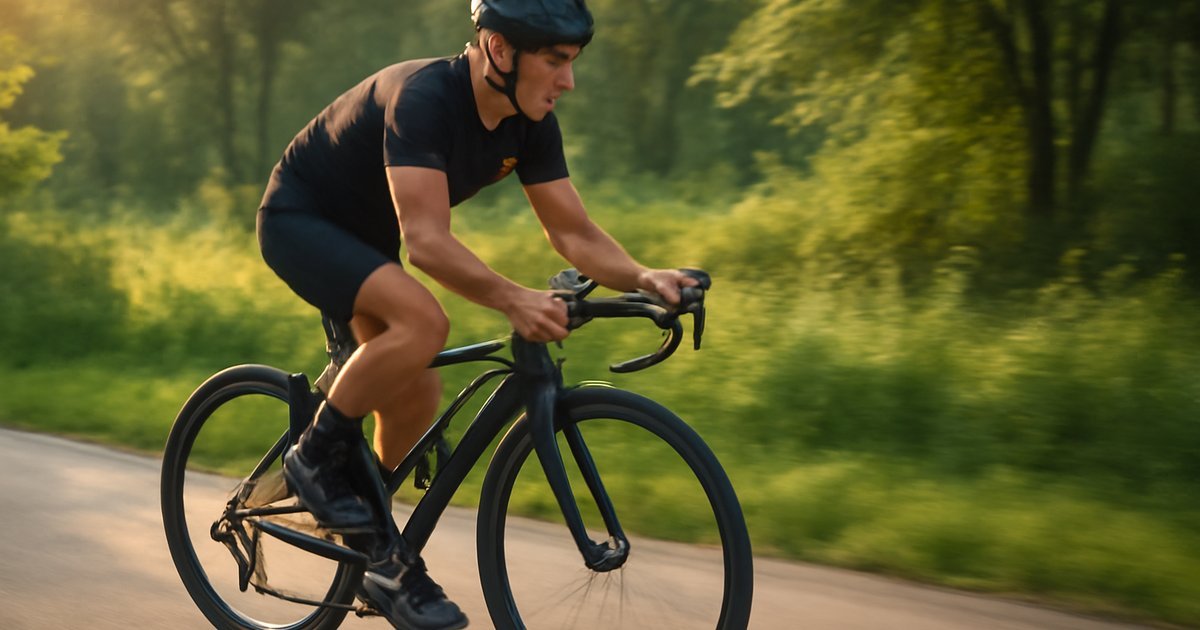
Cycling Training for Adults: Build Endurance, Burn Fat
Whether you haven’t touched a bike in years or you ride casually on weekends, structured cycling training can completely transform your fitness — and it’s more beginner-friendly than most people expect.
Introduction
Picture this: you hop on a bike for what feels like a moderate ride, and ten minutes in, you’re gasping for air, wondering how something that looked so easy on the trail is wiping you out this fast. Sound familiar?
You’re not alone. Millions of American adults cycle occasionally, but very few train with any real structure. The result? Plateaued fitness, frustrating fatigue, and missed results. According to the American College of Sports Medicine, cycling is one of the most effective low-impact cardiovascular activities for adults of all fitness levels — yet most people never tap into its full potential because they don’t know how to train smart.
This guide isn’t about becoming a competitive cyclist or logging 200 miles a week. It’s about using cycling — indoors or outdoors — as a structured fitness tool to build real endurance, burn fat efficiently, strengthen your lower body, and protect your joints for the long haul.
By the end of this article, you’ll understand the science behind cycling fitness, know how to build a beginner-to-intermediate training plan, avoid the most common mistakes, and track your progress in a way that actually motivates you to keep going.
Why Cycling Training Matters More Than You Think
Cycling is often seen as a leisure activity — something you do at the park on a Sunday or on a stationary bike while watching TV. But structured cycling training is a completely different experience, and the health benefits go well beyond burning a few calories.
Research published in the Journal of the American Heart Association found that regular cycling significantly reduces the risk of cardiovascular disease, with habitual cyclists showing lower rates of hypertension, obesity, and metabolic syndrome compared to sedentary adults. The American Heart Association recommends at least 150 minutes of moderate-intensity aerobic activity per week — and cycling is one of the most sustainable ways to hit that target.
Beyond heart health, cycling engages the quadriceps, hamstrings, glutes, calves, and even the core — all without the joint impact of running. For adults over 35 who are navigating knee discomfort, back pain, or post-injury recovery, this makes cycling a genuinely smart training choice.
And here’s what most people miss: cycling outdoors or on a smart trainer also has measurable mental health benefits. A study in JAMA Internal Medicine linked regular moderate exercise — including cycling — to significant reductions in depressive symptoms and perceived stress in adults aged 25 to 60.
In short, if you’re looking for an exercise that builds cardio fitness, burns fat, strengthens your legs, protects your joints, and supports your mental well-being — cycling deserves a serious spot in your weekly routine.
The Science Behind Cycling Fitness: How It Actually Works
One of the biggest myths about cycling is that it’s "mostly legs." While your lower body is definitely doing the heavy lifting, effective cycling training demands full-body engagement — and the physiological adaptations it triggers are impressive.
When you cycle at moderate to vigorous intensity, your body increases cardiac output — the volume of blood your heart pumps per minute — to deliver oxygen to working muscles. Over weeks of consistent training, your heart becomes more efficient: it pumps more blood per beat, your resting heart rate drops, and your VO2 max (the maximum amount of oxygen your body can use during exercise) improves. The American College of Sports Medicine considers VO2 max one of the strongest predictors of long-term health and longevity.
From a fat-burning perspective, cycling at moderate intensity (roughly 60-75% of your maximum heart rate) taps heavily into fat as a fuel source. A study in the Journal of Sports Science and Medicine confirmed that sustained moderate-intensity cycling is highly effective at improving fat oxidation in both trained and untrained adults.
Busting a common myth: Many people believe that going harder and faster always burns more fat. In reality, your body burns a higher percentage of calories from fat at moderate intensities than at very high intensities. This is the principle behind Zone 2 training — a concept worth exploring if you want to train smarter, not just harder. (You can read more about this in our guide on Zone 2 Cardio: The Science-Backed Way to Train Smarter.)
Muscle adaptation is the other side of the equation. Regular cycling builds endurance muscle fibers (Type I), improves neuromuscular efficiency in the legs and hips, and — when combined with resistance work — can contribute to meaningful lower-body strength over time.
How to Get Started: Your Cycling Training Plan
Starting a structured cycling routine doesn’t require expensive gear or hours of free time. What it requires is consistency, a progressive approach, and a basic understanding of intensity.
Step 1: Establish Your Baseline
Before you build a plan, you need to know where you’re starting. Go for a 20-minute easy ride — indoors or outdoors — at a pace where you can hold a conversation but feel slightly breathless. Note how you feel at the end. This is your starting point.
Step 2: Use a Simple 3-Day Weekly Structure (Beginner)
- Day 1 — Easy Endurance Ride: 30-40 minutes at comfortable pace (Zone 2 effort, conversational). Focus on smooth pedaling and breathing.
- Day 2 — Rest or light activity (walking, stretching)
- Day 3 — Interval Ride: 20-30 minutes total. Alternate 2 minutes of moderate effort with 3 minutes easy recovery. Repeat 4-6 times.
- Day 4 — Rest
- Day 5 — Longer Ride: 45-60 minutes at easy to moderate pace. Build this ride by 5-10 minutes each week.
Step 3: Add Intensity Progressively (Intermediate)
Once you’ve completed 4-6 weeks at the beginner level, you can introduce longer intervals (4-5 minutes at moderately hard effort), hill repeats if cycling outdoors, or resistance increases on a stationary bike. Apply the principle of progressive overload — gradually increasing your training stimulus week over week. For a deeper dive on this principle, check out our guide on Progressive Overload: The Key to Never-Ending Fitness Gains.
Indoor vs. Outdoor Cycling
Both have genuine value. Indoor cycling (spin bikes, smart trainers) offers controlled intensity and convenience — ideal for early mornings or bad weather. Outdoor cycling adds terrain variety, balance demands, and mental refreshment. If you can do both, alternate between them. Results depend on your consistency, not your location.
Common Mistakes That Sabotage Your Cycling Progress
Even motivated cyclists fall into the same traps. Here are the most common ones — and exactly how to fix them.
Mistake 1: Always Riding at the Same Pace
This is the number one mistake. Riding at the same moderate intensity every session feels safe and comfortable, but your body adapts quickly and stops progressing. You need variation — easy rides, interval sessions, and longer endurance rides — to keep triggering adaptation.
Fix it: Follow a structured plan that alternates intensity levels. Use the simple 3-day structure above as your framework.
Mistake 2: Skipping Recovery
More miles does not always mean more results. Muscles repair and grow stronger during rest, not during the workout itself. Overtraining in cycling is a real phenomenon — symptoms include persistent fatigue, elevated resting heart rate, irritability, and declining performance.
Fix it: Schedule at least 2 full rest or active recovery days per week. Sleep is part of your training. According to the National Sleep Foundation, adults need 7-9 hours per night for optimal physical recovery.
Mistake 3: Poor Bike Fit
Riding with your seat too low, handlebars too far, or cleats misaligned doesn’t just feel uncomfortable — it increases injury risk and reduces efficiency. A poorly fitted bike forces your body to compensate with every pedal stroke, leading to knee pain, lower back strain, and hip discomfort.
Fix it: Get a professional bike fit if cycling outdoors. On a stationary bike, ensure your knee has a slight bend at the bottom of the pedal stroke (not fully extended or heavily bent). Your hips should not rock side to side.
Mistake 4: Neglecting Fueling and Hydration
Many adults underestimate how much water they lose during cycling, especially in warmer conditions. Dehydration of even 2% of body weight has been shown to measurably reduce aerobic performance, according to research cited by the American College of Sports Medicine.
Fix it: Drink 16-20 oz of water in the hour before your ride. Sip during your ride — aim for 6-8 oz every 15-20 minutes. For rides over 60 minutes, consider adding a small carbohydrate source (banana, energy chews, or sports drink).
What to Eat to Support Cycling Training
Cycling performance is directly tied to what you put in your body — both before and after you ride.
Before Your Ride
For rides under 45 minutes, a light snack 30-60 minutes prior works well. Good options include a banana with a tablespoon of peanut butter, a small bowl of oatmeal with fruit, or a slice of whole-grain toast with honey. Avoid heavy meals or high-fat foods close to your ride.
During Your Ride
For rides under 60 minutes, water is typically sufficient. For rides over 60 minutes at moderate to high intensity, the Academy of Nutrition and Dietetics recommends consuming 30-60 grams of carbohydrates per hour to sustain performance and prevent glycogen depletion.
After Your Ride
Post-ride recovery nutrition is critical for muscle repair and adaptation. Aim to eat within 30-60 minutes of finishing. A combination of protein (20-30 grams) and carbohydrates (30-50 grams) is ideal. Examples: Greek yogurt with fruit and granola, a chicken and rice bowl, or a protein smoothie with banana and oats.
The USDA Dietary Guidelines reinforce that overall dietary quality — adequate protein, complex carbohydrates, healthy fats, and a variety of fruits and vegetables — supports long-term athletic performance and recovery far more than any single supplement or "performance food."
How Long Until You See Results? What to Track
Realistic expectations matter. Cycling fitness doesn’t happen overnight, but the timeline is encouraging if you’re consistent.
Weeks 1-2: Foundation Phase
You’ll likely notice reduced breathlessness during moderate efforts. Your legs may feel heavy after rides — this is normal. Track your average heart rate and perceived effort (1-10 scale) during each session.
Weeks 3-6: Adaptation Phase
Your body is adapting. Most beginners notice they can ride longer at the same intensity or complete intervals that felt impossible at the start. Track your average speed (outdoor) or resistance level (indoor) as a performance benchmark.
Weeks 6-12: Performance Phase
Meaningful cardiovascular improvements, improved fat utilization, and measurable strength gains in the lower body typically emerge in this window. If body composition is a goal, changes often become visible around weeks 8-12 when combined with consistent nutrition.
What to Track
- Resting heart rate (lower over time = improved cardiovascular fitness)
- Perceived exertion at a fixed pace (should decrease as fitness improves)
- Ride duration and distance over time
- Energy levels and sleep quality (often the earliest positive signals)
If you’re not seeing any improvement after 8-10 weeks of consistent training, consider consulting a certified personal trainer or sports medicine professional to reassess your approach. Results vary significantly based on baseline fitness, training consistency, nutrition, and sleep quality.
Frequently Asked Questions
Is cycling enough exercise on its own, or do I need to add strength training?
Cycling is an excellent cardiovascular workout, but it doesn’t fully address upper body strength, bone density, or functional movement patterns. The American College of Sports Medicine recommends combining aerobic training with at least two days of resistance exercise per week for comprehensive health benefits. You don’t need to choose between the two — consider pairing your cycling sessions with a simple bodyweight or dumbbell routine. Check out our guide on Dumbbell Training for Adults: Build Strength and Burn Fat for an easy complement to your cycling plan.
How many days per week should I cycle as a beginner?
Three structured rides per week is an ideal starting point for most beginners. This allows for sufficient training stimulus while leaving room for recovery. As your fitness improves over 4-6 weeks, you can add a fourth session. Rushing to daily riding without adequate recovery is one of the fastest ways to end up burned out or injured.
Can cycling help with weight loss?
Yes — cycling can be an effective part of a weight management strategy when combined with a balanced nutritional approach and adequate recovery. A 155-pound adult burns approximately 260-300 calories during a 30-minute moderate-intensity cycling session, according to Harvard Health Publishing. However, weight loss results depend heavily on your overall caloric balance, diet quality, sleep, and training consistency. There are no guarantees, but cycling consistently does create real caloric expenditure over time.
Is indoor cycling as effective as riding outdoors?
Both can produce excellent results. Indoor cycling offers consistent, controlled intensity and is highly convenient — making it easier to stay consistent in poor weather or with a tight schedule. Outdoor riding adds terrain variety, fresh air, and greater mental engagement. The best choice is whichever one you’ll actually do consistently. If possible, mix both.
I have knee pain. Is cycling safe for me?
Cycling is generally considered a low-impact activity and is often recommended for people managing knee discomfort — but proper bike fit is essential. Riding with your saddle too low can increase compressive forces on the knee. If you have an existing knee condition, consult your healthcare provider or a physical therapist before starting. They can help determine the appropriate intensity, bike setup, and any modifications needed for your specific situation.
Your Next Pedal Stroke Starts Today
Cycling training is one of the most accessible, joint-friendly, and genuinely enjoyable ways to build real cardiovascular fitness — and you don’t have to be an athlete to benefit. Whether you ride outdoors on early mornings or spin indoors during your lunch break, the key is structure, consistency, and patience.
You don’t need to ride hard every day. You don’t need fancy gear. You need a simple plan, the willingness to show up three times a week, and enough self-compassion to keep going when progress feels slow.
The best cycling training is the kind you’ll actually do. Start with one ride this week. Keep it easy. Notice how you feel. Then do it again.
Wellness Disclaimer: This article is for informational and educational purposes only. The content is not intended to replace professional medical, nutritional, or fitness advice. Always consult a qualified healthcare provider, registered dietitian, or certified fitness professional before starting a new health program or making significant changes to your lifestyle.
Author Line: Content reviewed by our wellness editorial team, with references to peer-reviewed research and guidelines from leading health organizations.
Leave a Reply