Tag: muscle building

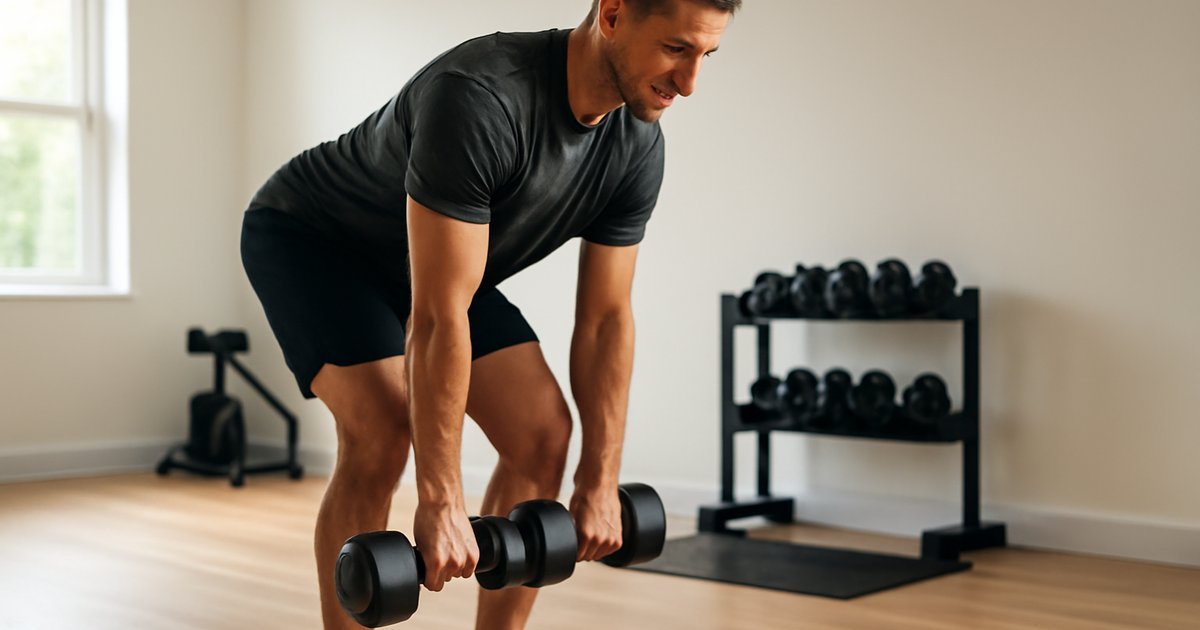
  • Dumbbell Training for Adults: Build Strength and Burn Fat

    Dumbbell Training for Adults: Build Strength and Burn Fat

    Dumbbell Training for Adults: Build Strength and Burn Fat

    You don’t need a fancy gym setup or expensive machines — two dumbbells and a plan can completely change your body and energy levels.

    If you’ve ever walked into a gym and felt overwhelmed by all the equipment, you’re not alone. Rows of machines, cable setups, and complicated racks can make the idea of strength training feel inaccessible. But here’s what most people don’t realize: dumbbells are one of the most versatile, science-supported tools in all of fitness — and they work just as well at home as they do in a gym.

    Dumbbell training for adults is having a well-deserved moment, and the research backs it up. Whether your goal is to build lean muscle, improve your metabolic health, reduce joint pain, or simply feel stronger moving through daily life, a well-designed dumbbell workout program can deliver meaningful, lasting results.

    In this guide, you’ll learn exactly how dumbbell training works, why it’s especially effective for adults over 25, how to get started safely, and what common mistakes to avoid. No fluff — just practical, evidence-backed guidance you can apply starting today.

    Why Dumbbell Training Matters More Than You Think

    Here’s a stat that puts things in perspective: according to the American College of Sports Medicine (ACSM), adults begin losing 3 to 5 percent of muscle mass per decade after age 30 — a process called sarcopenia. By age 60, some individuals have lost as much as 30 percent of their total muscle mass if they haven’t been actively training.

    That’s not just a cosmetic issue. Muscle loss is directly tied to reduced metabolism, increased risk of type 2 diabetes, poor bone density, and a higher likelihood of injury from everyday activities. Resistance training — including dumbbell work — is one of the most effective interventions known to slow this decline.

    What makes dumbbells particularly valuable is the way they engage your stabilizer muscles. Unlike fixed machines, which lock your body into a guided path, dumbbells require your joints, tendons, and smaller muscle groups to work together to control the movement. This means you’re building functional strength — the kind that translates to carrying groceries, playing with kids, or staying injury-free on the trail.

    Research published in the Journal of Strength and Conditioning Research found that free-weight training produced significantly greater activation of stabilizer muscles compared to machine-based training, without sacrificing overall strength gains. That’s a compelling reason to grab a pair of dumbbells and get to work.

    How Dumbbell Training Actually Works

    Let’s clear up a common myth first: lifting weights won’t make you bulky unless you’re eating a significant caloric surplus and training specifically for hypertrophy over many months. For most adults, consistent dumbbell training leads to a leaner, more defined physique — not an oversized one.

    Here’s what’s actually happening inside your body when you train with dumbbells. When you create mechanical tension by lifting a load — say, performing a dumbbell row — you create microscopic damage to your muscle fibers. Your body responds by repairing those fibers stronger than before, a process driven by satellite cells and protein synthesis. Over time, this leads to increased muscle density, improved neuromuscular coordination, and a higher resting metabolic rate.

    According to Harvard Health Publishing, adding just 10 pounds of lean muscle can increase your resting metabolism by approximately 100 calories per day. That may not sound like much, but over weeks and months, it adds up considerably.

    Dumbbell training also supports cardiovascular health when structured correctly. Circuit-style dumbbell workouts — where you move from one exercise to the next with minimal rest — can keep your heart rate elevated and deliver metabolic conditioning benefits similar to moderate-intensity cardio. This dual-purpose efficiency is one reason busy adults often prefer it over isolated cardio sessions.

    One thing to keep in mind: results vary significantly based on your starting point, training frequency, recovery quality, and nutrition. Dumbbell training is a powerful tool, but it works best as part of a broader wellness approach.

    How to Get Started: A Practical Step-by-Step Plan

    Getting started with dumbbell training doesn’t require perfection — it requires consistency and a sensible structure. Here’s how to build a foundation that sticks.

    Step 1 — Choose your starting weights wisely.
    For most beginners, a range of two to three dumbbell pairs works well: a lighter set (8–12 lbs), a moderate set (15–20 lbs), and a heavier set (25–35 lbs). Adjustable dumbbells are a space-efficient and cost-effective option if you’re training at home. The right weight for any given exercise is one where the last 2–3 reps feel challenging but your form remains solid.

    Step 2 — Start with a 3-day-per-week full-body program.
    Beginners benefit most from training the full body each session rather than splitting by muscle group. A simple structure might look like this: Day 1 (Monday), Day 2 (Wednesday), Day 3 (Friday), with rest or light activity on the days in between. This frequency allows adequate recovery while building the motor patterns you need to progress.

    Step 3 — Master the foundational movement patterns first.
    Before chasing heavy weights, focus on learning five essential movement patterns:

    • Push — Dumbbell chest press, overhead press
    • Pull — Dumbbell rows, reverse fly
    • Hinge — Romanian deadlift, single-leg deadlift
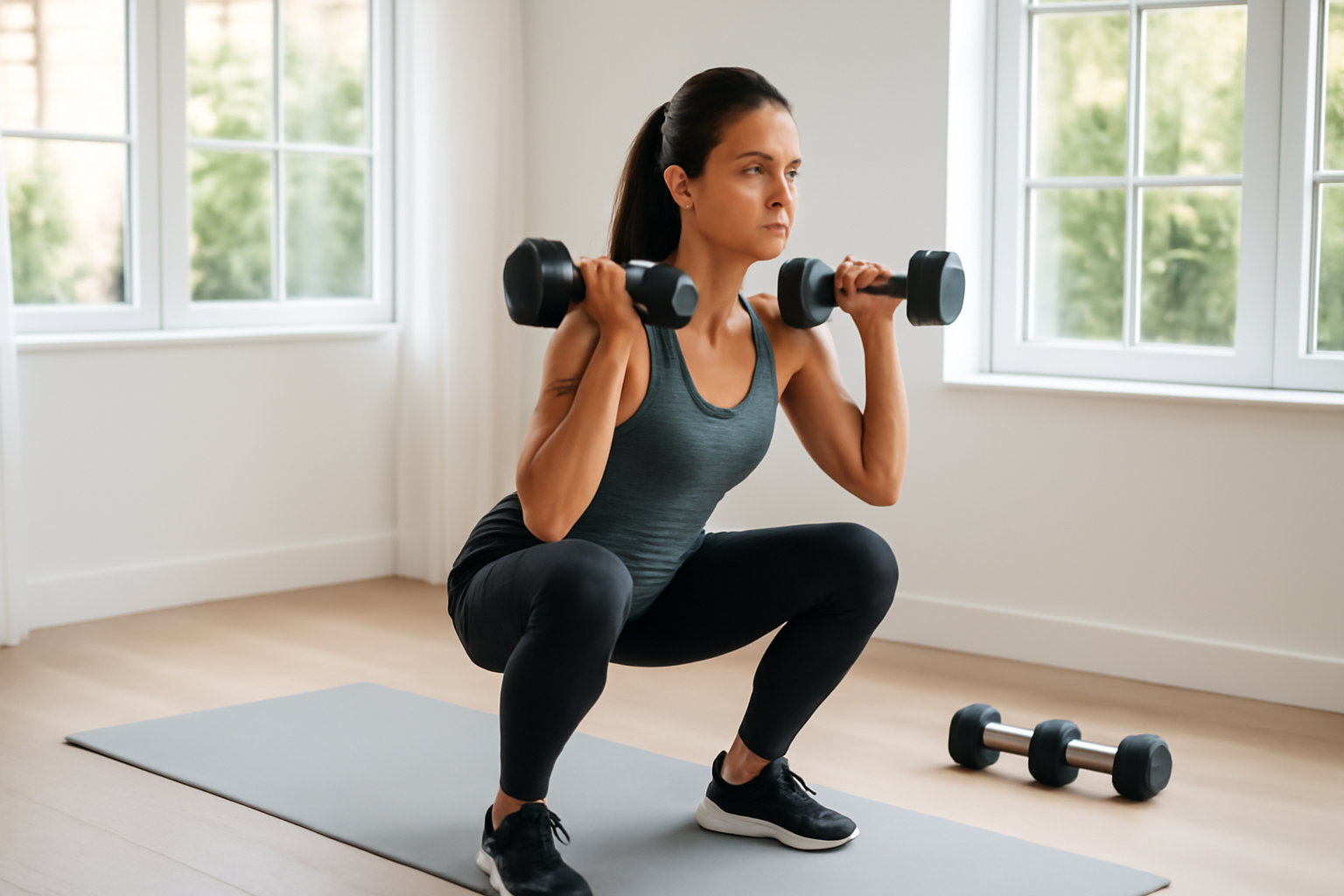
    • Squat — Goblet squat, split squat
    • Carry — Farmer’s carry, suitcase carry

    A well-rounded dumbbell session includes at least one exercise from each category, hitting your upper and lower body while keeping the core engaged throughout. For a strong foundation in total-body movement, our guide on compound exercises for full-body strength pairs perfectly with this approach.

    Beginner sample session (30–40 minutes):

    • Goblet Squat — 3 sets x 10 reps
    • Dumbbell Romanian Deadlift — 3 sets x 10 reps
    • Dumbbell Chest Press — 3 sets x 10 reps
    • Bent-Over Row — 3 sets x 10 reps per arm
    • Farmer’s Carry — 3 sets x 30 seconds

    Intermediate upgrade: Add supersets (pairing a push with a pull), increase weight by 5% when you can complete all reps with clean form, and incorporate unilateral movements (single-arm, single-leg) to address muscle imbalances. For those ready to challenge their endurance alongside strength, the principles in Zone 2 cardio training can complement your dumbbell sessions effectively.

    Common Mistakes That Sabotage Your Dumbbell Training Results

    Even motivated adults make these missteps — and they can stall progress faster than you’d expect.

    Mistake #1 — Using weight that’s too light for too long.
    This is by far the most common issue, especially among women who are concerned about getting bulky. If your last rep of a set feels effortless, the weight isn’t creating enough stimulus to trigger adaptation. The fix: apply progressive overload — gradually increase your resistance, reps, or sets over time. Our detailed guide on progressive overload training walks you through how to do this systematically without risking injury.

    Mistake #2 — Skipping the warm-up.
    Jumping straight into heavy sets with cold muscles and stiff joints dramatically raises your injury risk. A 5–8 minute dynamic warm-up — think leg swings, arm circles, hip hinges, and bodyweight squats — prepares your nervous system and increases range of motion. This matters even more as you get into your 30s, 40s, and beyond.

    Mistake #3 — Neglecting the posterior chain.
    Most people instinctively train what they can see in the mirror — chest, biceps, quads. But your posterior chain (glutes, hamstrings, upper back, rear delts) is just as important for posture, injury prevention, and total-body strength. Make sure every training week includes Romanian deadlifts, rows, and reverse flies.

    Mistake #4 — Training without adequate rest between sessions.
    Muscle isn’t built in the gym — it’s built during recovery. According to the ACSM, most adults need 48 to 72 hours of recovery between sessions targeting the same muscle groups. Training the same muscles daily without rest can lead to overtraining, elevated cortisol, and regression rather than progress.

    Mistake #5 — Inconsistent breathing.
    Holding your breath during lifts (especially heavier ones) spikes internal pressure and reduces stability. The general rule: exhale on the exertion phase (when you lift or press), inhale on the return. Practicing this deliberately makes it automatic over time.

    What to Eat to Support Dumbbell Training Results

    Training without adequate nutrition is like building a house without materials. Your muscles need specific fuel to repair, grow, and perform.

    Protein is your top priority. The Academy of Nutrition and Dietetics recommends that adults engaged in regular resistance training consume 1.2 to 1.7 grams of protein per kilogram of body weight per day. For a 160-pound adult, that’s roughly 87 to 123 grams of protein daily. High-quality sources include lean chicken and turkey, eggs, Greek yogurt, cottage cheese, canned tuna, legumes, and tofu.

    Don’t neglect carbohydrates. Carbs are your muscles’ primary energy source. Low-carb approaches may blunt performance and recovery, particularly if you’re training at moderate to high intensity. Focus on whole-food carbs: oats, brown rice, sweet potatoes, quinoa, and fruit.

    Healthy fats support hormonal balance. Dietary fat plays a direct role in testosterone and estrogen regulation — hormones that affect muscle-building capacity. The USDA Dietary Guidelines recommend 20–35% of total calories from fat, prioritizing unsaturated sources like olive oil, avocados, nuts, and fatty fish.

    Timing matters — a little. While total daily protein intake is the bigger lever, consuming a protein-rich meal or snack within 1–2 hours post-workout can support muscle protein synthesis. A Greek yogurt with berries, a protein shake with milk, or eggs on whole-grain toast are all solid options.

    Hydration: Even mild dehydration (1–2% of body weight) can reduce strength output and cognitive performance during training. Aim for at least half your body weight in ounces of water daily, and more on training days.

    How Long Until You See Results — and What to Track

    Honest answer: noticeable physical changes typically take 6 to 12 weeks of consistent training and adequate nutrition. But that doesn’t mean nothing is happening before that.

    In the first 2–4 weeks, the primary adaptations are neurological. Your brain is learning to recruit muscle fibers more efficiently, which is why many beginners feel stronger before they look different. Strength gains during this phase can be significant — sometimes 10 to 20 percent increases in working weight — even without visible muscle growth.

    Visible changes in muscle definition and body composition typically become apparent after 8–12 weeks when training is combined with adequate protein and a reasonable caloric intake. Research published in Sports Medicine confirms that untrained adults can expect meaningful improvements in strength, lean mass, and functional capacity within a 12-week progressive resistance program.

    What to track:

    • Working weights per exercise (are they going up over time?)
    • Reps completed at a given weight
    • Energy levels and recovery quality
    • Body measurements (waist, hips, arms) — more reliable than scale weight alone
    • How everyday tasks feel (climbing stairs, carrying bags, posture)

    If you’ve been training consistently for 12 weeks with no perceptible improvement in any of these areas, consider reassessing your program, nutrition, sleep quality, or consulting a certified personal trainer or registered dietitian for personalized guidance.

    Frequently Asked Questions About Dumbbell Training

    Can I build serious muscle with just dumbbells?
    Absolutely — especially in the beginner to intermediate range. Dumbbells allow for a wide range of loads, movements, and tempos that can drive significant muscle and strength gains. Advanced lifters may eventually benefit from adding barbells or other tools for maximal loading, but most adults can achieve excellent results with dumbbells alone.

    How heavy should my dumbbells be?
    This depends entirely on the exercise and your current fitness level. A general rule: if you can complete more than 15 reps with perfect form and feel minimal fatigue, go heavier. If you can’t complete 8 reps with proper technique, drop down. Investing in an adjustable set or two to three pairs of different weights gives you the most flexibility.

    Is dumbbell training safe for people with joint issues?
    For many people with mild to moderate joint concerns, dumbbell training can actually improve joint stability and reduce pain over time by strengthening the muscles that support the joint. That said, this depends on the specific condition. If you have a diagnosed joint issue — knee osteoarthritis, shoulder impingement, or similar — consult a physical therapist or sports medicine physician before starting a program.

    How many days per week should I train with dumbbells?
    For most adults, 3 full-body sessions per week is an excellent starting point and sustainable long-term. As you advance, you might move to a 4-day upper/lower split. More than 5 days per week of resistance training is generally unnecessary for general health and wellness goals, and recovery becomes increasingly important with age.

    Do I need to stretch after dumbbell workouts?
    Post-workout stretching can support flexibility and reduce muscle soreness — and it’s a good habit to build. Spend 5–10 minutes on static stretches targeting the muscles you just worked. For a deeper approach to improving mobility alongside your strength training, explore our guide on flexibility training for adults.

    Start Simple, Stay Consistent, and Let the Results Follow

    Dumbbell training isn’t a shortcut or a trend — it’s one of the most time-tested, research-supported methods for building strength, improving body composition, and protecting your long-term health. The barrier to entry is low, the equipment is affordable, and the benefits compound over time in ways that go far beyond aesthetics.

    You don’t need to overhaul your entire life to start. Pick up a pair of dumbbells. Learn the five foundational movement patterns. Train three days a week. Eat enough protein. Sleep well. Track your progress. Then do it again next week.

    Small, consistent actions are what separate people who transform their health from those who stay stuck. Today is a great day to take the first step.


    This article is for informational and educational purposes only. The content is not intended to replace professional medical, nutritional, or fitness advice. Always consult a qualified healthcare provider, registered dietitian, or certified fitness professional before starting a new health program or making significant changes to your lifestyle.

    Content reviewed by our wellness editorial team, with references to peer-reviewed research and guidelines from leading health organizations.


  • Resistance Band Training: Build Strength Anywhere

    Resistance Band Training: Build Strength Anywhere

    You don’t need a gym membership, expensive equipment, or hours of free time to build real, lasting strength — and resistance bands might be the most underestimated tool in modern fitness.

    Why Resistance Band Training Matters More Than You Think

    Most people assume that serious strength training requires barbells, dumbbells, and a gym locker. But here’s the thing: a set of resistance bands that fits in your gym bag can deliver a workout that challenges your muscles just as effectively — and in some cases, even more safely — than traditional free weights.

    According to the American College of Sports Medicine (ACSM), resistance training is one of the most important forms of exercise for adults, associated with improved muscle mass, metabolic health, bone density, and functional independence as we age. The problem? Millions of adults skip it entirely because access feels complicated.

    That’s where resistance bands change the game. Research published in the Journal of Human Kinetics found that elastic resistance training produces muscle strength and mass gains comparable to those achieved with conventional weight training. Same results, lower barrier to entry.

    Whether you’re a complete beginner or someone returning to fitness after a break, resistance band training offers a practical, joint-friendly, and genuinely effective path to building strength — on your schedule, in your living room, hotel room, or backyard.

    The Science Behind Resistance Bands: How They Actually Work

    Understanding why resistance bands work so well starts with a concept called variable resistance. Unlike dumbbells or barbells — which provide a constant load throughout a movement — resistance bands increase tension as they stretch. This means your muscles face the greatest challenge at the peak of contraction, exactly where they’re strongest and most capable of handling load.

    This progressive tension mirrors the natural strength curve of your muscles, which is one reason bands feel different (and sometimes harder) than free weights at equivalent resistance levels.

    A 2019 meta-analysis published in the SAGE Open Medicine journal reviewed 23 studies and concluded that elastic resistance training is equally effective as conventional resistance training for improving strength in both younger and older adults. For older populations especially, the lower compressive joint forces make bands a particularly smart option.

    The common myth to bust here: “Bands are only for warm-ups or physical therapy.” In reality, when used with proper tension and progressive loading, resistance bands can challenge even experienced athletes. Powerlifters and elite coaches have been using them for decades to build explosive strength and overcome sticking points.

    Bands also engage your stabilizer muscles more actively than machines — because there’s no fixed path of motion, your body has to work harder to control the movement. That translates into better real-world functional strength. For a deeper understanding of how progressive challenge drives results, check out our guide on Progressive Overload: The Key to Never-Ending Fitness Gains.

    How to Get Started with Resistance Band Training

    Getting started is simpler than most people expect. Here’s a clear, step-by-step path organized by experience level.

    Step 1: Choose the Right Bands

    Resistance bands come in several formats — loop bands, tube bands with handles, and therapy bands (flat sheets). For a full-body training program, a set of tube bands with handles (light, medium, and heavy) or a set of loop bands in varying resistances gives you the most versatility.

    As a beginner, start lighter than you think you need. You can always add resistance — building proper form first protects you from injury and sets you up for long-term progress.

    Step 2: Master These Foundational Movements

    Start with these six exercises that cover your entire body:

    • Banded Squat — step on the band, hold handles at shoulder height, squat to parallel (lower body)
    • Banded Deadlift — hinge at the hips with band under feet for posterior chain strength
    • Banded Chest Press — anchor band behind you, press forward at chest height (chest and triceps)
    • Banded Row — anchor at a low point, row toward your torso for upper back and biceps
    • Banded Overhead Press — step on band, press overhead for shoulders
    • Pallof Press — anchor at chest height, press straight out to challenge core stability

    Beginner routine: 2-3 sets of 12-15 reps per exercise, 3 days per week with at least one rest day between sessions.

    Intermediate option: Increase band tension, slow down the eccentric (lowering) phase to 3-4 seconds, or add supersets for efficiency.

    Advanced option: Combine bands with bodyweight movements (banded push-ups, banded pull-ups), add unilateral exercises (single-leg deadlifts, single-arm rows), and implement periodization — varying volume and intensity week over week. For a structured approach to long-term programming, our article on Build Your Sustainable Workout Routine: A Lifelong Guide walks you through exactly how to do that.

    Common Mistakes That Sabotage Your Results

    Resistance band training looks simple — and in many ways it is. But a few common errors can quietly stall your progress or increase injury risk.

    Mistake #1: Using too little resistance.
    This is the most frequent issue, especially for people who underestimate bands compared to traditional weights. If you can complete 15 reps without any real challenge in the last 3-4 repetitions, the band is too light. Progressive overload applies to bands just as it does to barbells — you need to consistently challenge the muscle for it to adapt and grow stronger.

    Mistake #2: Letting the band snap back uncontrolled.
    The eccentric phase — the return to the starting position — is where a significant portion of muscle growth is stimulated. Letting the band pull you back quickly means you’re skipping half the work. Control the return movement deliberately. This is where gains are often made, not lost.

    Mistake #3: Anchoring improperly.
    Using a door anchor that isn’t secure, wrapping a band around a sharp edge, or anchoring at the wrong height for the exercise can compromise both safety and movement mechanics. Always check that your anchor point is stable before loading the band with full force. Door anchors should be placed on the hinge side and tested before each set.

    Mistake #4: Ignoring full range of motion.
    Because bands feel lighter at the start of a movement, people often rush through the beginning and only work the end range where tension peaks. Moving through the full range — from full extension to full contraction — ensures the whole muscle is being trained and supports flexibility alongside strength.

    Mistake #5: Never replacing worn bands.
    Resistance bands degrade over time, especially with regular use. A band that’s fraying, discolored, or losing elasticity should be retired. Snapped bands during a workout can cause real injury. Inspect bands before each session and replace them every 6-12 months depending on use frequency.

    What to Pair with Resistance Band Training for Best Results

    Bands are incredibly effective on their own, but pairing them with the right nutrition and complementary movement habits amplifies what they can do.

    Protein intake: According to the Academy of Nutrition and Dietetics, adults engaged in regular resistance training benefit from consuming 1.2 to 1.7 grams of protein per kilogram of body weight per day. This supports muscle repair and growth following training sessions. Practical sources include eggs, Greek yogurt, lean poultry, legumes, and cottage cheese.

    Hydration: Even mild dehydration (as little as 1-2% of body weight in fluid loss) has been shown in research from the American College of Sports Medicine to impair muscular endurance and strength output. Aim for at least half your body weight in ounces of water daily — more if you’re training in heat.

    Recovery and mobility: Strength training without adequate recovery is counterproductive. The USDA Physical Activity Guidelines recommend that adults include at least two days of muscle-strengthening activity per week — but recovery days between those sessions are just as important. Light walking, stretching, and sleep are the underrated pillars of any resistance training plan.

    Pairing your resistance training with a solid mobility practice can also help you move better during exercises and reduce injury risk over time. Our Complete Guide to Mobility Training is a great complement to any band-based strength routine.

    How Long Until You See Results — and What to Track

    One of the most common questions: "How long before I actually feel a difference?"

    Here’s an honest, research-grounded answer: most people notice improvements in muscular endurance and energy within 2-3 weeks of consistent training. Visible changes in muscle tone and strength typically begin to emerge between 4 and 8 weeks — depending on training frequency, intensity, nutrition, sleep quality, and your individual starting point.

    Harvard Health Publishing notes that neurological adaptations (your nervous system learning to recruit muscle fibers more efficiently) are responsible for the initial strength gains in the first 4 weeks. Actual muscle hypertrophy — physical growth of muscle tissue — becomes more prominent after that initial adaptation period.

    What to track for progress:

    • Reps and resistance level — can you complete more reps or use a heavier band this week vs. last week?
    • Energy and recovery — are workouts feeling less exhausting over time?
    • Body measurements — waist, hips, arms — more reliable than scale weight for tracking body composition shifts
    • Functional benchmarks — can you carry groceries, climb stairs, or play with your kids without fatigue more easily?

    Results vary significantly based on age, hormonal status, training history, and consistency. If you’ve been training consistently for 8-12 weeks with proper nutrition and sleep and aren’t seeing any progress, it may be time to consult a certified personal trainer or a registered dietitian to assess what might be missing.

    Frequently Asked Questions About Resistance Band Training

    Can resistance bands actually build muscle, or are they only good for toning?
    "Toning" is largely a fitness industry myth — what most people want is a combination of reduced body fat and increased muscle definition. Resistance bands absolutely can build muscle, provided you’re using adequate tension and applying progressive overload over time. The research is clear: elastic resistance produces similar muscle and strength gains as free weights. The key word is consistent progressive challenge.

    Are resistance bands safe for people with joint pain or arthritis?
    Generally, yes — and this is one of the biggest advantages of bands over heavy free weights. The lower compressive forces on joints make them a popular recommendation in physical therapy and rehabilitation. That said, if you have a diagnosed joint condition, always consult your physician or a physical therapist before beginning any new exercise program. They may recommend specific modifications.

    How many days per week should I train with resistance bands?
    For most adults, 3 to 4 days per week is an effective and sustainable frequency. The ACSM recommends at least two days per week of muscle-strengthening activity for general health. If you’re training full-body each session, include at least one rest or active recovery day between sessions to allow muscles to repair and grow.

    Do I need to combine bands with other equipment?
    Not at all. A complete, effective training program can be built entirely around resistance bands. However, if you have access to bodyweight exercises (push-ups, pull-ups, dips), combining them with bands adds useful variety and can address certain muscle groups more effectively. Bands pair especially well with compound movement patterns that train multiple muscle groups at once.

    What’s the best way to progress when a band starts feeling too easy?
    You have several options: move up to a higher resistance band, slow down your reps (especially the eccentric phase), decrease rest time between sets, add more sets or reps, or shift to unilateral (single-limb) variations of the same exercise. All of these apply the principle of progressive overload — the foundation of any lasting strength program.

    Start Where You Are — It’s Enough

    You don’t need to overhaul your entire life to start building real strength. You just need a few bands, 30 minutes three times a week, and the willingness to show up consistently.

    Resistance band training isn’t a compromise — it’s a genuinely powerful training tool that has been validated by research, used by elite athletes, and recommended by rehabilitation specialists worldwide. It fits your schedule, respects your joints, and travels anywhere you do.

    The best workout is always the one you’ll actually do. And the best place to start is exactly where you are right now.

    Pick up a set of bands this week, run through those six foundational movements, and give yourself 30 days of consistent effort. The difference it makes might surprise you.


    Wellness Disclaimer: This article is for informational and educational purposes only. The content is not intended to replace professional medical, nutritional, or fitness advice. Always consult a qualified healthcare provider, registered dietitian, or certified fitness professional before starting a new health program or making significant changes to your lifestyle.

    Content reviewed by our wellness editorial team, with references to peer-reviewed research and guidelines from leading health organizations including the American College of Sports Medicine, Academy of Nutrition and Dietetics, Harvard Health Publishing, and the USDA Physical Activity Guidelines.

  • Progressive Overload: The Key to Never-Ending Fitness Gains

    Progressive Overload: The Key to Never-Ending Fitness Gains

    If your workouts feel exactly the same as they did three months ago, that’s not consistency — that’s a plateau in disguise.

    Here’s a stat that might surprise you: research from the American College of Sports Medicine (ACSM) shows that the majority of recreational gym-goers stop making meaningful strength or endurance gains within 6 to 8 weeks of starting a new program — not because they’re lazy, but because they never change what they’re doing. The body is incredibly adaptive. Give it the same stimulus long enough, and it simply stops responding.

    That’s where progressive overload comes in — arguably the single most important concept in fitness, and yet one of the most misunderstood.

    Whether you’re lifting weights, doing bodyweight training, running, or cycling, progressive overload is the engine behind every meaningful result. It’s what separates people who keep improving from those who spin their wheels for months. In this guide, you’ll learn exactly what progressive overload is, how it works in your body, how to apply it smartly — and how to avoid the mistakes that stall your progress or lead to injury.

    Why Progressive Overload Matters More Than You Think

    Most people think fitness progress is about working hard. And yes, effort matters. But the real driver of improvement isn’t just how hard you work — it’s whether your body is being challenged progressively. This is the difference between doing 3 sets of 10 push-ups every day for a year and actually getting stronger versus staying exactly the same.

    Your body adapts to stress. When you expose your muscles, cardiovascular system, or connective tissue to a challenge slightly beyond their current capacity, they respond by growing stronger, more efficient, and more resilient. But once your body adapts, that same challenge no longer provides enough stimulus to trigger further change.

    A landmark review published in the Journal of Strength and Conditioning Research confirmed that progressive overload is one of the foundational principles of effective resistance training, alongside specificity and recovery. Without progressive overload, your workouts become maintenance — not growth.

    This matters daily because many busy adults settle into a comfortable routine. The same 30-minute treadmill walk at the same speed. The same dumbbells for the same reps. Comfort feels productive, but physiologically, it’s neutral. Your body has already paid its adaptation dues and is simply cruising.

    The good news: you don’t need to dramatically increase intensity to keep progressing. Small, consistent increases — applied strategically — are all it takes.

    The Science Behind Progressive Overload: How It Actually Works

    When you challenge a muscle or your cardiovascular system beyond its current capacity, a process called mechanotransduction begins. Muscle fibers experience microscopic damage, triggering an inflammatory repair response. Over the following 24 to 72 hours, your body rebuilds those fibers slightly thicker and stronger than before — a process known as muscle protein synthesis.

    Repeat this cycle consistently — with slightly more challenge each time — and you have the foundation of all strength and endurance gains.

    A common myth is that progressive overload only means adding weight to the bar. In reality, there are multiple dimensions of overload:

    • Load (weight): Increasing the amount of resistance
    • Volume: Doing more sets or reps at the same weight
    • Frequency: Training the same muscle group more often
    • Density: Doing the same work in less time
    • Range of motion: Deepening the movement pattern
    • Tempo: Slowing down reps to increase time under tension

    Research from Harvard Health Publishing and sports science literature consistently reinforces that beginners can progress rapidly through multiple dimensions simultaneously, while intermediate and advanced individuals need more specific and calculated overload strategies.

    One important nuance: more overload is not always better. The NIH’s National Institute on Aging notes that excessive overload without adequate recovery — especially in adults over 40 — significantly increases injury risk. The goal is the minimum effective dose of overload, not the maximum possible stress.

    How to Apply Progressive Overload: Practical Steps for Every Level

    The beauty of progressive overload is that it can be applied regardless of where you’re starting. Here’s how to make it work across different fitness levels:

    Beginner (0–6 months of consistent training)

    1. Start with form mastery. Before increasing anything, own your movement patterns. A properly executed squat at a manageable weight beats sloppy form at a heavy load every time.
    2. Add reps first. If your program calls for 3 sets of 8, aim to reach 3 sets of 12 over 2 to 3 weeks before increasing weight.
    3. Increase weight in small increments. For upper body, increase by 2.5 lbs at a time. For lower body, 5 lbs is a reasonable jump. Resist the temptation to leap ahead.
    4. Track everything. Write down your sets, reps, and weight every session. Memory isn’t reliable — a training journal or app is your accountability partner.

    Intermediate (6 months to 2 years)

    1. Use periodization. Alternate between phases of higher volume (more reps, moderate weight) and higher intensity (fewer reps, heavier weight) over 3 to 6 week blocks.
    2. Manipulate tempo. Try a 3-second lowering phase (eccentric) to increase time under tension without adding load.
    3. Add training frequency. If you’re training a muscle group once a week, consider twice. The ACSM recommends training each major muscle group 2 to 3 times per week for ongoing strength adaptation.

    Advanced (2+ years of consistent training)

    1. Work with a periodized mesocycle plan. Progress in 4 to 8 week blocks with planned deload weeks (lighter loads to allow full recovery).
    2. Focus on rate of perceived exertion (RPE) and proximity to failure. Advanced lifters need to train closer to their limit to drive adaptation.
    3. Consider single-leg, unilateral, and variation work to address asymmetries and stimulate new neuromuscular patterns.

    If you’re building your routine around these principles, our guide on how to Build a Sustainable Workout Routine can help you structure each training block with intention.

    Common Mistakes That Sabotage Progressive Overload

    Even people who know about progressive overload often undermine their own results. Here are the most common errors — and how to correct them:

    1. Jumping weights too fast

    Ego loading is real. Adding 20 lbs to a lift because you “feel strong” without actually being ready for it leads to form breakdown, injury, and setbacks that cost weeks of training. Fix it by using the rep range as your guide — only increase load when you can complete all sets with good form and 2 to 3 reps still in the tank.

    2. Ignoring non-weight variables

    Many people think progressive overload is exclusively about lifting heavier. But as outlined earlier, volume, tempo, density, and frequency are all valid levers. If adding weight isn’t appropriate, manipulate another variable. This keeps training productive without unnecessary strain.

    3. Skipping deload weeks

    Pushing harder every week without recovery is a direct path to overtraining syndrome — a documented condition recognized by the Mayo Clinic that causes fatigue, performance decline, mood disturbances, and increased injury risk. Plan one deload week every 4 to 6 weeks: reduce volume or load by 40 to 50 percent to allow full systemic recovery.

    4. Not tracking workouts

    You cannot progressively overload what you’re not measuring. Without a log, you’ll likely repeat the same weights and reps week after week without realizing it. Use a notebook, spreadsheet, or a free app like Strong or Jefit to record every session.

    5. Neglecting sleep and nutrition

    Progressive overload is a stimulus — your actual adaptation happens during recovery. Research from the National Sleep Foundation shows that muscle protein synthesis peaks during deep sleep. If you’re averaging under 6 hours a night or not eating adequate protein, you’re applying overload without the recovery infrastructure to benefit from it.

    Nutrition to Support Progressive Overload

    You can’t outwork poor nutrition — and this is especially true when your goal is ongoing adaptation. Here’s what the evidence says:

    Protein is non-negotiable. The Academy of Nutrition and Dietetics recommends 1.2 to 2.0 grams of protein per kilogram of body weight per day for active adults aiming to build or maintain muscle. That’s roughly 0.55 to 0.9 grams per pound. Good sources include chicken breast, eggs, Greek yogurt, cottage cheese, salmon, lentils, and tofu.

    Carbohydrates fuel your training. Many people undercut their carb intake in the name of fat loss, leaving their muscles without sufficient glycogen for high-effort sessions. The USDA Dietary Guidelines recommend that 45 to 65 percent of your daily calories come from carbohydrates — with a focus on whole grains, legumes, fruits, and vegetables.

    Timing matters somewhat — but not as much as totals. Research published in the Journal of the International Society of Sports Nutrition suggests that consuming 20 to 40 grams of protein within two hours post-workout supports muscle protein synthesis, though total daily protein intake remains the primary driver of adaptation.

    Don’t skip calories to extremes. A moderate calorie deficit (around 300 to 500 calories below maintenance) is sustainable for fat loss while preserving muscle mass, especially when protein intake is high. Extreme restriction slows recovery and undermines the overload response. For a full picture of combining fat loss with muscle building, check out our article on Body Recomposition: Lose Fat and Build Muscle Together.

    How Long Until You See Results — and What to Track

    One of the most common frustrations in fitness is expecting fast results and getting discouraged when they don’t appear quickly. Here’s what the research actually tells us:

    Strength gains: Beginners can notice measurable strength improvements within 2 to 4 weeks, primarily due to neuromuscular adaptations (your nervous system learns to recruit muscle fibers more efficiently). Actual muscle hypertrophy — visible size changes — typically requires 6 to 12 weeks of consistent progressive overload training.

    Endurance improvements: Cardiovascular adaptations are faster — many people notice improved stamina within 2 to 3 weeks of consistent progressive cardio work.

    Body composition: This is the most variable metric and depends heavily on your nutrition, sleep, and starting point. Research in the American Journal of Clinical Nutrition suggests that meaningful changes in lean mass and body fat percentage typically take 8 to 16 weeks with consistent training and adequate protein.

    What to track:

    • Weight lifted per exercise (weekly)
    • Total weekly volume (sets × reps × weight)
    • Rate of perceived exertion (RPE) at the end of working sets
    • Recovery quality: sleep hours, soreness levels, energy during training
    • Performance benchmarks: time to complete a standard workout, max reps at a given weight

    If you’re not seeing progress after 6 to 8 weeks of consistent tracking, it may be time to reassess your program design, recovery habits, or consult a certified personal trainer for a programming audit. For reinforcing the foundational movements that respond best to progressive overload, revisiting Compound Exercises: Your Full-Body Strength Shortcut is a great starting point.

    Frequently Asked Questions About Progressive Overload

    Can I apply progressive overload without weights?

    Absolutely. Bodyweight training responds just as well to progressive overload principles. You can increase difficulty by adding reps, reducing rest time, elevating your feet, slowing tempo, or advancing to harder movement variations (like moving from a standard push-up to a decline push-up or archer push-up). The principle is the same — the challenge must increase over time.

    How often should I increase weight or reps?

    For most beginners, every 1 to 2 weeks is appropriate. For intermediate trainees, every 2 to 4 weeks is realistic. There’s no universal schedule — your readiness, recovery, and how close you are to your genetic ceiling all influence this. The safest rule: only progress when you can complete all prescribed sets with clean form and at least 2 reps left in reserve.

    Is progressive overload safe for people over 50?

    Yes — and arguably more important. The ACSM strongly advocates resistance training with progressive overload for older adults to combat age-related muscle loss (sarcopenia), maintain bone density, and support metabolic health. The key adjustment is being more conservative with load increases, prioritizing recovery, and working with a qualified trainer to ensure safe programming.

    What if I miss a week of training? Do I lose my progress?

    One missed week rarely sets you back significantly. Research suggests that measurable detraining in trained individuals begins after about 2 to 3 weeks of complete inactivity. Return to training at slightly reduced loads and volume, and most people recapture previous levels within 1 to 2 weeks. The body has a "muscle memory" effect supported by epigenetic research that speeds re-adaptation.

    Can I apply progressive overload to cardio?

    Yes. For running, increase weekly mileage by no more than 10 percent per week — a guideline widely endorsed by running coaches and sports medicine specialists to reduce overuse injury risk. For cycling or rowing, you can increase duration, resistance, or intensity (like interval structure) progressively using the same principles.

    Your Next Step Starts This Week

    Progressive overload isn’t a complex system reserved for competitive athletes. It’s a simple, science-backed principle that works for anyone willing to pay attention to what they’re doing and make small, intentional upgrades over time.

    You don’t need to transform your entire program overnight. Start this week by writing down what you lift, how many reps you do, and how hard it felt. Then, next week, do just a little more. Add one rep. Rest 10 seconds less between sets. Slow your tempo by one second. These micro-adjustments compound into real, lasting results.

    Consistency with progressive intent always beats sporadic intensity. Show up, track it, and trust the process — your body is remarkably good at adapting when you give it the right signals.


    Wellness Disclaimer: This article is for informational and educational purposes only. The content is not intended to replace professional medical, nutritional, or fitness advice. Always consult a qualified healthcare provider, registered dietitian, or certified fitness professional before starting a new health program or making significant changes to your lifestyle.

    Author Line: Content reviewed by our wellness editorial team, with references to peer-reviewed research and guidelines from leading health organizations.

  • Compound Exercises: Your Full-Body Strength Shortcut

    Compound Exercises: Your Full-Body Strength Shortcut

    Many people walk into the gym with a desire to get stronger, feel fitter, and look better. Often, they gravitate towards machines or exercises that target one muscle at a time – bicep curls today, triceps extensions tomorrow, followed by leg extensions. It’s a common approach, but it can leave you feeling like you’re spending endless hours working out with minimal returns on your overall strength and functional ability. You might be building individual muscles, but are you building a truly strong, coordinated body?

    The truth is, while isolation exercises have their place, they often miss the bigger picture of how your body moves in the real world. Think about it: when do you ever use just one muscle group in isolation outside of a gym? Lifting groceries, playing with kids, climbing stairs, or simply moving through your day – these all demand multiple muscles working together. This is where the profound power of compound exercises comes into play.

    This comprehensive guide will revolutionize your approach to fitness. We’ll dive deep into what compound exercises are, why they are a cornerstone of any effective training program, and how you can seamlessly integrate them into your routine. Prepare to discover how to build maximal strength, boost calorie burn, and cultivate real-world functional fitness, all while making your workouts more efficient and rewarding. Forget endless isolated movements; it’s time to train smarter, not just harder.

    Why Compound Exercises Matter More Than You Think

    When you boil down human movement, it’s almost always a symphony of muscles and joints working in concert. Compound exercises are the conductors of this symphony. They are movements that involve the coordinated action of multiple joints and engage several major muscle groups simultaneously. Think about iconic movements like squats, deadlifts, overhead presses, or pull-ups.

    These aren’t just exercises; they’re fundamental human movement patterns. By training them, you’re not just strengthening individual muscles; you’re teaching your body to move as an integrated, powerful unit. This functional strength is what truly translates to improved performance in daily life, whether you’re carrying heavy bags, moving furniture, or engaging in sports.

    The American College of Sports Medicine (ACSM) consistently emphasizes the importance of multi-joint exercises for comprehensive strength development. They highlight that these movements are superior for improving athletic performance, enhancing daily functional capacity, and promoting overall fitness compared to single-joint movements. This isn’t just theory; it’s a principle backed by decades of exercise science.

    Beyond the gym, this integrated strength impacts your longevity and independence. As we age, maintaining the ability to stand from a chair (a squat pattern), lift objects off the floor (a deadlift pattern), or reach overhead (an overhead press pattern) becomes crucial for quality of life. Compound exercises are your proactive investment in a strong, capable future, helping to train your body for real life.

    The Science Behind How Compound Exercises Actually Work

    The magic of compound exercises lies in their efficiency and the unique physiological response they elicit. When you perform a movement like a barbell squat, your hip, knee, and ankle joints all articulate. This simultaneous movement engages your quadriceps, hamstrings, glutes, core, and even your back muscles as stabilizers. Compare this to a leg extension, which only moves the knee joint and isolates the quads.

    This extensive muscle activation during compound movements demands significantly more energy from your body. More muscles working means a higher caloric expenditure during the workout itself. But the benefits extend far beyond the session. The metabolic stress and muscle damage (the good kind, that leads to growth) from compound lifts are greater, leading to an elevated post-exercise oxygen consumption (EPOC), often called the “afterburn effect.” This means you continue to burn more calories even after your workout is over.

    A common misconception is that you need separate workout days for every single muscle group to achieve a balanced physique. While body part splits can be effective for advanced bodybuilders, for most people, this approach is often inefficient and unnecessary. Compound exercises bust this myth by hitting multiple muscles effectively and synergistically, allowing for highly efficient full-body workouts that can deliver superior results in less time.

    Furthermore, research published in the Journal of Strength and Conditioning Research has demonstrated that multi-joint exercises, like the squat and deadlift, can elicit a greater acute hormonal response compared to single-joint exercises. This includes higher levels of anabolic hormones such as testosterone and growth hormone. While the direct impact of these acute spikes on long-term muscle growth is still debated, it underscores the intense systemic demand and adaptational potential that compound movements place on the body, contributing to greater overall muscle growth and strength adaptations over time.

    How to Get Started: Practical Steps for Incorporating Compound Exercises

    Ready to unlock the power of compound movements? Here’s a progressive guide to integrating them into your routine:

    Beginner-Friendly Entry Points:

    1. Master Bodyweight Basics: Before adding external load, become proficient with your own body weight. Start with exercises like bodyweight squats, lunges (forward and reverse), push-ups (on your knees or incline if needed), and planks. Focus intently on proper form and control. This builds a crucial foundation of stability and movement patterns.
    2. Learn Proper Form: This is non-negotiable. Watch high-quality instructional videos from certified personal trainers. Consider investing in a few sessions with a qualified coach to learn the fundamental movement patterns safely and effectively. Good form is your best insurance against injury and your most direct path to maximizing results.
    3. Start Light, Stay Safe: When you’re ready to introduce weights, always begin with very light dumbbells, kettlebells, or even just an empty barbell. The goal initially is to groove the movement pattern under light resistance, not to lift heavy. Focus on feeling the right muscles work and maintaining impeccable form throughout the entire range of motion.

    Intermediate Options:

    1. Embrace Progressive Overload: Once you’ve mastered the basic forms with light weights, it’s time to systematically challenge your body. This is the principle of progressive overload – gradually increasing the weight, reps, or sets over time. Without it, your body has no reason to adapt and get stronger. Track your progress to ensure you’re consistently challenging yourself. This is a critical component of any sustainable workout routine.
    2. Incorporate Key Lifts: Build your workouts around the classic compound lifts: barbell squats (back or front), deadlifts (conventional or Romanian), overhead presses, bench presses, and bent-over rows. These movements form the backbone of a comprehensive strength program.
    3. Full-Body Split: A highly effective way to structure your training is through a 2-3 day per week full-body split. This allows you to hit all major muscle groups with compound exercises, followed by adequate recovery days. For example, Monday, Wednesday, Friday workouts with Tuesday, Thursday, Saturday, Sunday for rest or active recovery.

    Advanced Options:

    1. Vary Intensity and Rep Ranges: To continue making progress, manipulate your training variables. Utilize lower rep ranges (e.g., 3-5 reps) for pure strength development, and higher rep ranges (e.g., 8-12 reps) for muscle hypertrophy (growth). Periodically change your rep schemes to keep your body adapting.
    2. Explore Advanced Variations: With a solid foundation, you can explore more complex compound movements like power cleans, snatches, or plyometric variations. However, these require significant technical proficiency and are best learned under the direct supervision of an experienced coach.
    3. Implement Periodization: Advanced lifters often benefit from periodization, which involves structuring training into specific blocks with varying intensity and volume goals. This helps prevent plateaus, optimizes recovery, and prepares the body for peak performance.

    Common Mistakes That Sabotage Results

    While compound exercises are incredibly effective, they also require attention to detail. Many enthusiastic lifters make common errors that can derail progress or even lead to injury. Acknowledging these pitfalls is the first step toward correcting them.

    1. Sacrificing Form for Weight: This is arguably the most prevalent and damaging mistake. The allure of lifting heavier can be strong, but attempting weights you can’t control with proper technique is counterproductive. Poor form reduces the effectiveness of the exercise by shifting tension away from the target muscles and dramatically increases your risk of injury.
    2. Fix: Leave your ego at the door. Drop the weight to a level where you can perform every repetition with perfect form, maintaining control throughout the entire movement. Focus on the muscle connection and the quality of each rep, not just the number on the barbell.

    3. Skipping Warm-ups and Cool-downs: Many individuals jump straight into heavy lifting or abruptly finish their workout, neglecting the crucial bookends of a training session. A proper warm-up prepares your body for the demands of the workout, increasing blood flow, raising core temperature, and improving joint mobility. A cool-down aids in recovery and flexibility.
    4. Fix: Dedicate 5-10 minutes to dynamic stretches (e.g., leg swings, arm circles, torso twists) before your workout. After your session, spend another 5-10 minutes on static stretches, holding each stretch for 20-30 seconds, focusing on the muscles you’ve worked.

    5. Lack of Progressive Overload: Your body is an incredible adapter. If you consistently perform the same exercises with the same weight and the same number of reps, your body will eventually stop seeing a reason to get stronger or grow. This leads to frustrating plateaus.
    6. Fix: Implement systematic progressive overload. This means periodically increasing the weight, performing more repetitions with the same weight, adding an extra set, or even reducing rest times. Small, consistent increases over time are more effective and sustainable than trying to make huge leaps.

    7. Neglecting Core Engagement: For virtually all compound movements, a strong and stable core is paramount. It acts as the bridge between your upper and lower body, transferring force and protecting your spine. A weak or disengaged core can compromise your form, reduce your power output, and significantly increase your risk of back injury, particularly in lifts like squats and deadlifts.

      Fix: Consciously brace your core before and throughout each repetition. Imagine preparing for a punch to your stomach – this creates intra-abdominal pressure that stabilizes your torso. Supplement your compound lifts with specific core work like planks, dead bugs, and bird-dogs to build foundational core strength.

    Fueling Your Compound Exercise Progress

    Training effectively with compound exercises is only half the battle; your nutrition plays an equally critical role in supporting muscle growth, recovery, and energy levels. You can’t out-train a poor diet, especially when demanding multi-joint movements. Here’s what to focus on:

    • Adequate Protein Intake: Protein is the building block of muscle. To repair muscle fibers broken down during intense training and to synthesize new ones, you need sufficient protein. Aim for approximately 0.7 to 1 gram of protein per pound of body weight per day, distributing your intake across all your meals. Excellent sources include lean meats (chicken, turkey, beef), fish, eggs, dairy products (Greek yogurt, cottage cheese), legumes, and tofu.
    • Complex Carbohydrates: These are your primary energy source. Complex carbohydrates provide sustained energy for your demanding workouts and are crucial for replenishing muscle glycogen stores afterward, aiding in recovery. Prioritize whole grains (oats, brown rice, quinoa), sweet potatoes, fruits, and vegetables. The USDA Dietary Guidelines for Americans typically recommend that carbohydrates make up 45-65% of your daily caloric intake, a range that active individuals often find beneficial for performance.
    • Healthy Fats: Don’t shy away from fats; they are essential for hormone production, nutrient absorption, and overall health. Focus on unsaturated fats found in avocados, nuts, seeds, olive oil, and fatty fish (like salmon, rich in Omega-3s). These healthy fats contribute to satiety and provide a concentrated energy source.
    • Hydration is Key: Often overlooked, water is absolutely critical for performance, recovery, and preventing fatigue and cramps. Even mild dehydration can significantly impair your strength and endurance. The National Academies of Sciences, Engineering, and Medicine suggest about 15.5 cups (3.7 liters) of fluids a day for men and about 11.5 cups (2.7 liters) of fluids a day for women. However, your individual needs will vary based on activity level, climate, and overall health. Keep a water bottle handy and sip throughout the day, not just during workouts.

    Conversely, minimize your intake of processed foods, excessive added sugars, and unhealthy trans fats. These offer little nutritional value, can contribute to inflammation, and ultimately hinder your progress and recovery from the rigorous demands of compound training.

    How Long Until You See Results & What to Track

    One of the most common questions in fitness is, “How long until I see results?” The answer, while not always straightforward, can be broken down into realistic timelines based on scientific understanding.

    Realistic Timelines:

    • Initial Strength Gains (Neurological Adaptations): Within the first 2-4 weeks of consistent compound training, you’ll likely notice a significant increase in your ability to lift more weight or perform more repetitions. This initial surge in strength is largely due to your nervous system becoming more efficient at recruiting and coordinating muscle fibers. You’re essentially getting better at using the strength you already have.
    • Muscle Hypertrophy (Visible Growth): While strength gains can appear quickly, visible changes in muscle size (hypertrophy) typically take a bit longer. Expect to see noticeable changes after 6-12 weeks of consistent, challenging training, coupled with proper nutrition and adequate recovery. It’s important to remember that results vary significantly among individuals due to genetics, training history, age, and adherence to the program.

    Specific Metrics to Monitor:

    • Workout Log: This is your most powerful tool. Keep a detailed log of every workout, recording the exercises performed, the weight lifted, the number of sets, and repetitions for each set. This allows you to track your progress, ensure you’re applying progressive overload, and identify areas for improvement.
    • Perceived Exertion (RPE): Use a simple scale of 1-10 (1 being no effort, 10 being maximal effort) to rate how challenging each set feels. This helps you gauge your effort level and fatigue, ensuring you’re working hard enough but not overdoing it.
    • Form Check-ins: Regularly film yourself performing key lifts or ask a knowledgeable spotter/trainer to observe your form. Small deviations can creep in over time, and regular checks help maintain proper technique.
    • Body Composition (Optional but Informative): If specific goals like weight loss or muscle gain are central to your journey, tracking body measurements (e.g., waist, hips, arms) or periodically assessing body fat percentage (via methods like DEXA scans, bioelectrical impedance analysis, or calipers) every 4-8 weeks can provide objective feedback on your physical changes.
    • How You Feel: Don’t underestimate subjective markers. Pay attention to your energy levels, sleep quality, mood, and recovery between sessions. These are excellent indicators of whether your training and recovery are balanced. Persistent fatigue, poor sleep, or chronic soreness might signal overtraining or inadequate recovery.

    When to Seek Professional Guidance: If you encounter persistent pain that isn’t typical muscle soreness, hit a prolonged plateau despite consistent effort and adjustments, or simply feel uncertain about your form or programming, do not hesitate to consult a certified personal trainer, physical therapist, or other qualified healthcare provider. Their expertise can provide invaluable insights and corrective strategies.

    Frequently Asked Questions

    1. Are compound exercises enough for a complete workout?
      Yes, for most individuals aiming for general strength, fitness, and muscle development, a well-rounded program built primarily on compound exercises is highly effective. They challenge your body holistically. While isolation exercises can be added to address specific muscle weaknesses or aesthetic preferences, they are not strictly necessary for overall fitness.
    2. Can beginners do compound exercises?
      Absolutely! In fact, beginners should prioritize learning compound movements. Starting with bodyweight variations (like squats and push-ups) or very light resistance, focusing intently on proper form, builds a strong foundational movement pattern. This approach teaches your body efficient movement from the outset, serving you well as you progress to heavier loads.
    3. How often should I do compound exercises?
      For optimal results and adequate recovery, aim for 2-4 full-body compound exercise sessions per week. It’s crucial to allow at least one rest day between demanding full-body workouts to enable muscle repair and growth. Listen to your body and adjust frequency based on your recovery capacity and energy levels.
    4. Do compound exercises help with weight loss?
      Yes, significantly. Because they engage multiple large muscle groups and demand more energy, compound exercises lead to a higher calorie expenditure during your workout compared to isolation movements. Furthermore, building muscle through compound training increases your resting metabolic rate, meaning your body burns more calories even when at rest, which is a powerful advantage for sustainable weight management.
    5. What’s the difference between compound and isolation exercises?
      Compound exercises involve movement at multiple joints and engage several major muscle groups simultaneously (e.g., squat, deadlift). Isolation exercises, in contrast, target a single joint and primarily work one muscle group (e.g., bicep curl, leg extension). Both types have their place in a comprehensive fitness plan, but compound exercises offer greater efficiency and functional carryover.

    Conclusion

    Integrating compound exercises into your fitness routine is one of the most powerful and efficient shifts you can make for comprehensive strength, efficiency, and overall well-being. They challenge your body in a way that directly translates to real-world demands, building not just muscle and physical strength, but also coordination, resilience, and confidence in your body’s capabilities.

    Remember, the journey to greater strength and fitness isn’t about perfection; it’s about consistency, commitment to proper form, and the willingness to progressively challenge yourself. Start with the foundational movements, focus on mastering their technique, and trust the process.

    Choose one compound exercise from this guide – perhaps a bodyweight squat or a push-up – and incorporate it thoughtfully into your next workout. Feel the power of your body working as one, and take the first step towards a stronger, more functional you today.

    WELLNESS DISCLAIMER:

    This article is for informational and educational purposes only. The content is not intended to replace professional medical, nutritional, or fitness advice. Always consult a qualified healthcare provider, registered dietitian, or certified fitness professional before starting a new health program or making significant changes to your lifestyle.

    AUTHOR LINE:

    Content reviewed by our wellness editorial team, with references to peer-reviewed research and guidelines from leading health organizations.
  • Strength Training for Beginners: Your Complete Starter Guide

    Strength Training for Beginners: Your Complete Starter Guide

    Strength Training for Beginners: Your Complete Starter Guide

    You don’t need to be an athlete, own a gym membership, or know what a deadlift is to start getting stronger — you just need a plan that actually fits your life.

    Here’s a number that might surprise you: according to the Centers for Disease Control and Prevention, fewer than 25% of American adults meet the recommended guidelines for muscle-strengthening activity. That means three out of four people are missing out on one of the most powerful tools for long-term health — and most of them aren’t skipping it because they don’t care. They’re skipping it because no one ever showed them where to start.

    Strength training has a reputation problem. It sounds intimidating. It looks complicated on social media. And if you’ve ever walked into a weight room and felt completely lost, you know exactly what that wall of confusion feels like.

    But here’s the truth: building strength doesn’t require a personal trainer, expensive equipment, or hours in the gym. What it does require is understanding the basics — and that’s exactly what this guide is for. By the end, you’ll know why strength training matters beyond just looking fit, how your muscles actually adapt to resistance, and how to start safely without burning out in week two.

    Why Strength Training Matters More Than You Think

    Most people start lifting weights because they want to look better. That’s a completely valid reason — but it’s honestly one of the smaller benefits on the list.

    The American College of Sports Medicine (ACSM) recommends that adults engage in resistance training at least two days per week for each major muscle group. That recommendation isn’t just about muscle size. It’s grounded in decades of research linking regular strength work to reduced risk of type 2 diabetes, improved cardiovascular health, stronger bones, better joint stability, and even lower rates of depression and anxiety.

    One landmark finding published in the British Journal of Sports Medicine found that muscle-strengthening activities were associated with a 10 to 17 percent reduction in all-cause mortality, cardiovascular disease, and cancer — independent of aerobic activity. In other words, lifting weights adds value even if you’re already walking or running regularly.

    For adults over 35, there’s another critical factor: sarcopenia. This is the age-related loss of muscle mass that begins in your mid-30s and accelerates through your 40s and 50s if you’re not actively working against it. Strength training is the most effective tool we have to slow that process down.

    And for your daily life? Carrying groceries, climbing stairs, picking up your kids or grandkids — these all become easier when your muscles are trained to handle load. Functional strength is real-life strength.

    How Strength Training Actually Works

    Here’s the basic biology, simplified: when you place a muscle under resistance — whether that’s a dumbbell, a resistance band, your own bodyweight, or a barbell — you create tiny microscopic tears in the muscle fibers. This sounds alarming, but it’s the signal your body needs to rebuild that tissue stronger than before. The process is called muscle protein synthesis, and it happens primarily during rest and recovery.

    One common myth worth busting right away: lifting weights will make you "bulk up" fast. For the vast majority of people — especially women and anyone over 40 — building significant muscle mass takes months to years of consistent, progressive training combined with deliberate nutrition strategies. What you’ll notice in the first 4 to 8 weeks isn’t dramatic size change. It’s improved tone, better posture, and a sense of strength in movements you do every day.

    The key principle behind all strength progress is called progressive overload — the gradual increase of stress placed on the body during exercise over time. This can mean adding more weight, doing more reps, resting less between sets, or increasing range of motion. Research published in the Journal of Strength and Conditioning Research consistently shows that progressive overload is the single most important variable in long-term strength development.

    Your nervous system also adapts. In the early weeks of training, a large portion of your strength gains come not from bigger muscles but from your brain learning to recruit muscle fibers more efficiently. This is why beginners often feel dramatically stronger after just a few weeks, even before significant muscle changes occur.

    How to Get Started: Practical Steps for Every Level

    Starting strong means starting smart. Here’s how to build a foundation that lasts:

    Step 1 — Choose your format. You have three main options: bodyweight training (push-ups, squats, lunges), free weights (dumbbells, kettlebells, barbells), or machines. For most beginners, a combination of bodyweight and light dumbbells is the most accessible starting point — no gym required.

    Step 2 — Focus on compound movements first. Compound exercises work multiple muscle groups at once, giving you the most return on your time. The five foundational movements are: squat, hinge (like a deadlift or Romanian deadlift), push (push-up or chest press), pull (row or lat pulldown), and carry (farmer’s carry or simply walking with weights). These patterns cover nearly every major muscle group.

    Step 3 — Start with 2 days per week, then build to 3. The ACSM recommends two days minimum for beginners, with at least 48 hours of rest between sessions for the same muscle group. Two full-body sessions per week is an excellent starting structure — simple, effective, and sustainable.

    For beginners: 2 sets of 10-12 reps per exercise, moderate weight (you should feel effort on the last 2-3 reps but maintain good form). Rest 60-90 seconds between sets.

    For intermediate lifters (6+ months of consistent training): 3-4 sets of 8-12 reps, progressing weight by 5% when you can complete all reps cleanly. Consider a split routine (upper/lower or push/pull/legs).

    Step 4 — Warm up and cool down. Spend 5-10 minutes on dynamic movement before lifting — leg swings, arm circles, bodyweight squats. After training, 5 minutes of light stretching helps manage soreness and supports recovery.

    Step 5 — Track your sessions. A simple notebook or phone note works fine. Write down what you lifted, how many reps, and how it felt. This is your map for progressive overload.

    Common Mistakes That Sabotage Results

    These are easy to make — and knowing them in advance keeps you ahead of the curve.

    Mistake 1: Skipping the basics to chase advanced moves. Many beginners want to jump straight to Olympic lifts or complex barbell work before mastering fundamental movement patterns. The result is usually poor form, frustration, and injury risk. Spend your first 4-6 weeks building clean, consistent mechanics on simple exercises. The fancy stuff will come — and it will come faster when your foundation is solid.

    Mistake 2: Going too heavy, too fast. Ego lifting — choosing weight that’s too heavy to maintain proper form — is one of the leading causes of beginner injuries. The goal in your first few months is skill acquisition and habit formation, not maximum load. Choose a weight where the last two reps of each set feel genuinely challenging but your form doesn’t break down. As Harvard Health Publishing notes, using proper technique from the start dramatically reduces long-term injury risk.

    Mistake 3: Ignoring recovery. Muscles don’t grow during your workout — they grow during the 24 to 48 hours afterward. Beginners who train every single day without adequate rest often find themselves stalled or chronically sore. Prioritize sleep (7-9 hours is the National Sleep Foundation’s recommendation for adults) and allow at least one full rest day between strength sessions targeting the same muscle groups.

    Mistake 4: Treating nutrition as optional. Strength training without adequate protein is like building a house without enough lumber. You’re creating the stimulus, but not supplying the material. The Academy of Nutrition and Dietetics recommends 1.2 to 1.7 grams of protein per kilogram of body weight per day for active adults engaged in resistance training. Many beginners underestimate how much this matters.

    Mistake 5: Inconsistency disguised as variety. Constantly switching programs every two weeks because you saw something new online is one of the most common reasons people plateau. Consistency in a simple, progressive program almost always beats novelty. Give any well-designed program at least 8 to 12 weeks before evaluating whether it’s working.

    What to Eat to Support Your Strength Training

    You don’t need a complicated diet plan to support your training — but a few nutritional principles make a meaningful difference.

    Protein is the priority. Aim for 25 to 40 grams of protein per meal, spread across 3 to 4 meals daily. High-quality sources include chicken breast (about 30g per 3.5 oz), Greek yogurt (15-20g per cup), eggs (6g per egg), canned tuna (25g per 3 oz), tofu (10g per half-cup), and legumes like lentils (18g per cooked cup). The USDA Dietary Guidelines support a variety of protein sources, including both animal and plant-based options.

    Don’t fear carbohydrates. Carbs are your muscles’ preferred fuel source during resistance training. Complex carbs — oats, sweet potatoes, brown rice, quinoa, whole grain bread — provide sustained energy and support glycogen replenishment after workouts. Cutting carbs aggressively while strength training typically results in low energy, poor performance, and slower recovery.

    Timing matters somewhat — but not as much as total intake. Consuming a meal or snack with both protein and carbohydrates within 1-2 hours after training supports muscle recovery, according to research referenced by the Academy of Nutrition and Dietetics. But if your total daily intake is on track, don’t stress about hitting an exact post-workout window to the minute.

    Hydration is non-negotiable. Even mild dehydration (1-2% of body weight) can significantly impair strength performance. Aim for at least half your body weight in ounces of water daily, with additional intake on training days.

    What to limit: Ultra-processed foods, excessive added sugar, and alcohol — not because they’re forbidden, but because they consistently undercut recovery, sleep quality, and energy levels over time.

    How Long Until You See Results — and What to Track

    This is one of the most searched questions about strength training, and the honest answer involves a realistic timeline.

    Weeks 1-3: You’ll likely feel stronger — but this is mostly neurological adaptation, not muscle growth. Your nervous system is becoming more efficient at recruiting muscle fibers. You may feel more energized after workouts and notice improved posture.

    Weeks 4-8: Muscle tone becomes more visible, especially if you’re also moderating diet. Clothes may fit differently before the scale changes. This is normal and expected — muscle is denser than fat tissue.

    Months 3-6: Meaningful strength gains and visible changes in muscle definition become more noticeable. Research published in the Journal of Physiology shows that measurable hypertrophy (muscle growth) typically becomes statistically significant after 8-12 weeks of consistent resistance training.

    What to track: Rather than relying solely on the scale, track how much weight you’re lifting over time (progressive overload log), how your clothes fit, your energy levels during workouts, and your resting recovery (sleep quality, soreness duration). These are more meaningful early indicators than body weight alone.

    Results vary significantly based on your starting point, age, sleep quality, nutrition, and training consistency. If you’re not seeing any strength progression after 8 weeks, consider consulting a certified personal trainer to assess your program and form.

    Frequently Asked Questions

    Do I need to go to a gym to start strength training?
    No. Bodyweight exercises — push-ups, squats, lunges, glute bridges, planks — can build real functional strength at home with zero equipment. A set of resistance bands or adjustable dumbbells adds significant versatility for under $50. The gym becomes more valuable as you advance and need heavier loads, but it’s not a requirement to get started.

    Is strength training safe for people over 50?
    Yes — and for adults over 50, it’s especially important. The NIH notes that strength training helps preserve bone density, reduce fall risk, maintain joint health, and counteract age-related muscle loss. The approach may need to be modified (lighter starting loads, more emphasis on mobility), ideally with guidance from a certified professional familiar with older adult fitness.

    How sore should I be after a workout?
    Some muscle soreness 24 to 48 hours after training — known as delayed onset muscle soreness (DOMS) — is normal and expected when starting out. Sharp pain during exercise, or soreness that lasts more than 72 hours, is a signal to reduce intensity or check your form. Soreness gradually decreases as your body adapts over the first few weeks.

    How much protein do I really need if I’m strength training?
    The Academy of Nutrition and Dietetics recommends 1.2 to 1.7 grams of protein per kilogram of body weight daily for active adults doing resistance training. For a 160-pound person, that’s roughly 87 to 123 grams per day. Most Americans already get adequate protein — the key is distributing it across meals rather than loading it all at dinner.

    Can strength training help with weight loss?
    Yes, though it works differently than cardio. Resistance training builds lean muscle, which increases your resting metabolic rate over time. A 2022 analysis published in Obesity Reviews found that strength training alone produces modest weight loss, and the effects are significantly enhanced when combined with aerobic activity and appropriate caloric intake. Body composition often improves even when scale weight changes slowly.


    The Bottom Line

    Strength training is one of the most evidence-backed investments you can make in your long-term health — and it genuinely doesn’t require perfection to work. Two honest sessions per week, with basic compound movements, progressive effort, and enough protein and sleep, is enough to change how you feel, move, and age.

    The best program is the one you actually do. Start simple. Start today. Pick two exercises you already know how to do — even just a squat and a push-up — and commit to doing them consistently for three weeks. That’s your foundation.

    Small steps, done consistently, build strength that lasts a lifetime.


    Wellness Disclaimer: This article is for informational and educational purposes only. The content is not intended to replace professional medical, nutritional, or fitness advice. Always consult a qualified healthcare provider, registered dietitian, or certified fitness professional before starting a new health program or making significant changes to your lifestyle.

    Content reviewed by our wellness editorial team, with references to peer-reviewed research and guidelines from leading health organizations.