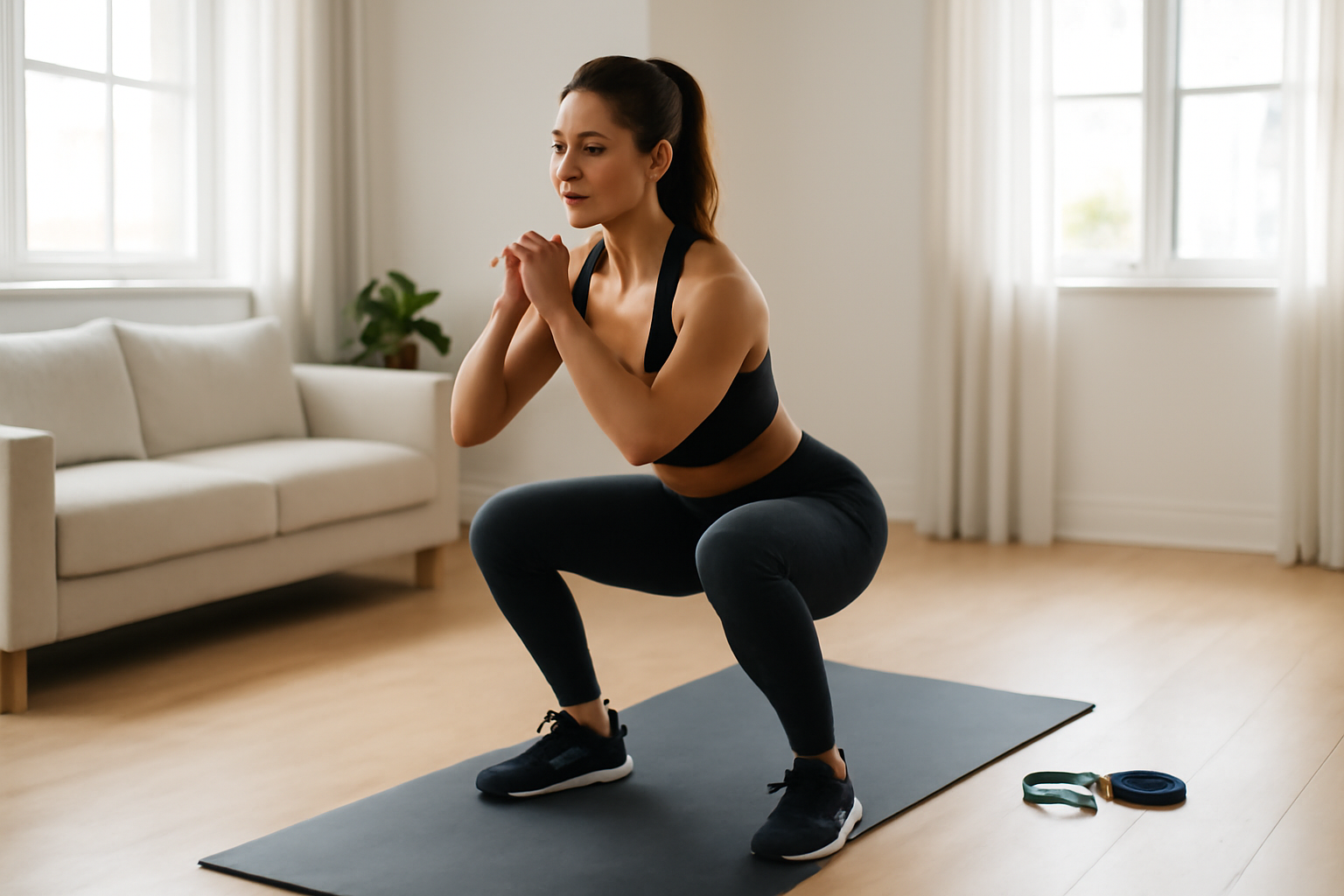
Home Workout Plans: Get Fit Without the Gym
You don’t need a gym membership, fancy equipment, or two free hours to build real fitness — you just need a plan that actually works with your life.
It’s 6:45 AM. You have 30 minutes before the kids wake up or the work calls start rolling in. The gym is 20 minutes away, and the idea of commuting just to exercise feels impossible. Sound familiar? You’re not alone — and here’s the truth: that 30-minute window at home can be more effective than you think.
According to the American College of Sports Medicine (ACSM), adults need at least 150 minutes of moderate-intensity exercise per week for meaningful cardiovascular and muscular health benefits. The barrier isn’t always effort — it’s logistics. And home workout plans solve exactly that problem.
In this guide, you’ll learn how to build an effective home workout routine from scratch, understand the science behind why home training works, avoid the most common mistakes that keep people spinning their wheels, and get a clear, realistic picture of when you’ll start seeing results. Whether you’re a complete beginner or someone returning after a long break, this is your practical starting point.
Why Home Workouts Matter More Than You Think
There’s a stubborn belief that "real" fitness only happens in commercial gyms — surrounded by machines, mirrors, and monthly fees. But the research tells a different story.
A landmark study published in PLOS ONE found that home-based exercise programs produced comparable improvements in cardiovascular fitness, muscular endurance, and body composition to gym-based training when exercise frequency, duration, and intensity were matched. The gym isn’t the magic ingredient — consistency is.
From a practical standpoint, home training removes three of the biggest barriers to regular exercise: travel time, cost, and scheduling inflexibility. The ACSM notes that convenience is one of the strongest predictors of long-term exercise adherence. When your workout space is steps away, the likelihood of actually doing it increases significantly.
Home workouts also give you full control. You choose the time, the music, the temperature, and the pace. For adults managing work stress, family responsibilities, or social anxiety around gyms, that autonomy matters. It lowers the psychological friction that turns "I’ll work out tomorrow" into weeks of inactivity.
The bottom line: a home workout plan isn’t a compromise — for many people, it’s the smarter, more sustainable choice.
The Science Behind Effective Home Training
Here’s the myth worth busting immediately: bodyweight training is only for beginners or people who want to "tone up." In reality, bodyweight and minimal-equipment exercises can build significant strength, improve cardiovascular health, and support healthy body composition — at any fitness level.
The principle at work is called progressive overload — the gradual increase of stress placed on muscles over time. In a gym setting, you add weight to the bar. At home, you progress by increasing reps, adjusting leverage, slowing tempo, reducing rest periods, or moving to harder exercise variations. The physiological stimulus is the same.
Research published in the Journal of Strength and Conditioning Research showed that bodyweight squats, push-ups, and hip hinge movements activate the same primary muscle groups — quads, glutes, chest, shoulders, and back — as their barbell counterparts when performed with adequate intensity and volume.
Compound movements (exercises that engage multiple muscle groups simultaneously) are the backbone of effective home training. Squats, lunges, push-ups, planks, mountain climbers, and hip bridges are not "easy alternatives" — they are legitimate exercises with decades of evidence behind them.
One important nuance: home training has real limits for advanced strength athletes pursuing maximal hypertrophy or powerlifting goals. But for the vast majority of adults focused on health, functional fitness, and looking and feeling better — home workouts deliver meaningful results.
How to Build Your Home Workout Plan: Practical Steps
Building an effective home workout plan doesn’t require a personal trainer, an app subscription, or hours of research. It requires structure, progression, and a clear understanding of your starting point.
Step 1: Define Your Goal and Time Budget
Before picking exercises, be honest about two things: what you’re training for, and how many minutes per day you can realistically commit. Three 30-minute sessions per week is enough to drive meaningful change. Don’t plan for daily 60-minute workouts if your life doesn’t support that — you’ll quit within two weeks.
Step 2: Choose a Training Structure
Three structures work well at home:
- Full-body training (3x/week): Ideal for beginners. Train every major muscle group each session. Rest at least one day between sessions.
- Upper/Lower split (4x/week): Two upper-body days, two lower-body days. Good for intermediate trainees wanting more volume.
- Push/Pull/Legs (5-6x/week): Advanced option. High frequency, high volume. Not recommended unless you already have a solid base.
Step 3: Build Each Session Around These Core Movements
- Push: Push-up variations (standard, wide, close-grip, incline, decline)
- Pull: Resistance band rows, doorframe rows, or inverted rows under a sturdy table
- Hinge: Hip bridges, single-leg deadlifts (bodyweight or with a backpack)
- Squat: Bodyweight squats, sumo squats, split squats, Bulgarian split squats
- Core: Planks, dead bugs, mountain climbers, hollow body holds
- Cardio: Jumping jacks, high knees, burpees, jump rope, stair climbing
Step 4: Beginner Sample Week
Monday / Wednesday / Friday — Full Body (30 minutes)
- Warm-up: 5 minutes of light movement (arm circles, leg swings, marching in place)
- 3 rounds: 10 push-ups, 15 bodyweight squats, 10 hip bridges, 30-second plank
- Cardio finisher: 3 x 1-minute high knees or jumping jacks
- Cool-down: 5 minutes of gentle stretching
Step 5: Intermediate Progression
Once you can complete 3 sets of 15 reps with good form on any exercise, it’s time to progress. Options include: elevating feet during push-ups, adding a resistance band, slowing the tempo to 3-4 seconds on the way down, or adding a weighted backpack for squats and hinges.
If you’re interested in pairing your home workouts with a gym-based strength approach, our Strength Training for Beginners: Your Complete Starter Guide covers the fundamentals you need to know before picking up a barbell.
Common Mistakes That Sabotage Home Workout Results
Home workouts are accessible — but that accessibility can work against you if you fall into these traps. These are easy mistakes to make, and recognizing them is the first step to fixing them.
Mistake #1: No Structure or Progression Plan
Doing random YouTube videos every day with no consistent programming is fun, but it won’t build strength or fitness in any meaningful direction. The body adapts to repeated stress — but only when that stress increases systematically. Fix it: follow a structured plan for at least 6-8 weeks before switching things up.
Mistake #2: Skipping the Warm-Up
Jumping straight into squats and push-ups cold increases your injury risk and reduces performance. A 5-minute dynamic warm-up — leg swings, hip circles, arm rotations, and light marching — primes your joints and nervous system. It takes five minutes. It matters.
Mistake #3: Training Too Hard, Too Soon
Soreness after your first week isn’t a badge of honor — it’s a sign your body wasn’t ready for that volume. Extreme soreness often leads to skipped sessions, which breaks your momentum. According to the ACSM, beginners should start with 2-3 days per week at moderate intensity and build gradually over 4-6 weeks.
Mistake #4: Neglecting Recovery
Rest days are not wasted days. Muscle repair and adaptation happen during recovery, not during the workout itself. Chronic underrecovery leads to fatigue, declining performance, and elevated injury risk. Build at least 1-2 full rest days into every week.
Mistake #5: Ignoring Nutrition and Sleep
Exercise is only one piece of the puzzle. Harvard Health Publishing consistently emphasizes that sleep deprivation and poor nutrition blunt the physiological response to training. If you’re exercising consistently but not seeing progress, your kitchen and your sleep schedule are worth examining before you increase workout volume.
What to Eat to Support Your Home Workout Plan
You don’t need a rigid meal plan to fuel your workouts effectively — but a few strategic habits make a measurable difference.
The Academy of Nutrition and Dietetics recommends that physically active adults consume 0.7 to 1.0 grams of protein per pound of body weight daily to support muscle repair and growth. For a 160-pound adult, that’s roughly 112-160 grams of protein per day. Prioritize whole-food protein sources: chicken breast, eggs, Greek yogurt, cottage cheese, lentils, tofu, and canned fish.
Pre-workout nutrition: Eat a small meal or snack 60-90 minutes before exercising if possible. A banana with nut butter, oatmeal with berries, or a small portion of rice with chicken provides carbohydrates for energy and protein to protect muscle tissue.
Post-workout nutrition: The 30-60 minute window after exercise is a good time to consume protein and carbohydrates. A protein shake with fruit, eggs on toast, or yogurt with granola are practical options. This isn’t mandatory for casual workouts, but it supports recovery when training with higher intensity.
Hydration: The ACSM recommends drinking 17-20 ounces of water 2-3 hours before exercise and 7-10 ounces every 10-20 minutes during activity. Dehydration — even mild — impairs strength, endurance, and cognitive focus.
Avoid extreme restriction on training days. Under-fueling leads to fatigue, muscle breakdown, and poor performance. The goal is to support your body, not punish it.
How Long Until You See Results — and What to Track
One of the most common reasons people quit is expecting results too quickly. Here’s the honest, research-backed timeline.
Weeks 1-2: You won’t see visible changes, but your nervous system is adapting. You’ll feel exercises getting slightly easier — this is neurological adaptation, not muscle growth. Energy levels and sleep quality may already begin to improve.
Weeks 3-6: Endurance improves noticeably. You can complete workouts that felt impossible in week one. Some people begin to notice subtle changes in how clothes fit. Body composition shifts are starting, though often not yet visible in the mirror.
Weeks 8-12: This is where visible progress typically begins for consistent trainees. Muscle definition increases, cardiovascular capacity improves significantly, and many people report measurable changes in waist circumference, resting heart rate, and energy levels throughout the day.
Research from the Journal of Applied Physiology confirms that meaningful muscle hypertrophy requires at least 6-8 weeks of consistent, progressive training — and that’s true whether you’re training at home or in a gym.
What to track:
- Exercise performance: reps, sets, time, and perceived effort — not just how you look
- Energy levels and sleep quality: often the first improvements to notice
- Body measurements (waist, hips, chest) rather than scale weight alone
- Progress photos every 3-4 weeks under consistent lighting
- Resting heart rate over time — a declining resting HR is a reliable marker of improving cardiovascular fitness
When to seek professional guidance: if you’ve trained consistently for 12 weeks with no measurable changes, consult a certified fitness professional (NASM, ACE, or ACSM-certified trainer) or your healthcare provider to rule out nutritional deficiencies or hormonal factors.
If you want to complement your home routine with lower-intensity activity on recovery days, our Walking for Weight Loss: The Science-Backed Guide is a great companion read — walking is genuinely underrated as an active recovery tool.
Frequently Asked Questions
Can I really build muscle at home without weights?
Yes — with caveats. Bodyweight training can absolutely build muscle, especially for beginners and intermediate trainees. The key is applying progressive overload over time: harder variations, more volume, slower tempo, and reduced rest. Advanced athletes may eventually need external resistance (resistance bands, weighted vests, or dumbbells) to keep progressing, but most people won’t hit that ceiling for months or even years.
How many days per week should I work out at home?
For most adults, 3 to 4 days per week is the sweet spot — enough stimulus for consistent progress without overtraining. The ACSM recommends at least 2 days of strength-focused activity and 150 minutes of moderate cardio per week. These can absolutely overlap in a well-designed home workout plan.
What if I don’t have any equipment at all?
You can make substantial progress with zero equipment. Push-ups, squats, lunges, hip bridges, planks, and mountain climbers require nothing but floor space. Once you want more resistance, a single set of resistance bands (under $25) opens up a dramatically wider range of exercises. A jump rope is another high-value, low-cost addition for cardio work.
Is a home workout plan effective for weight loss?
Exercise supports weight management primarily by increasing energy expenditure and preserving lean muscle mass during a calorie deficit. Home workouts are effective for this purpose — but the Academy of Nutrition and Dietetics emphasizes that nutrition remains the dominant factor in body weight change. Exercise and diet work best as partners, not substitutes for each other.
How do I stay motivated working out at home?
Motivation is unreliable — habits are not. Build consistency by scheduling your workouts like appointments, keeping your workout space visually accessible, and tracking your progress week to week. Research from the American Psychological Association shows that identity-based motivation ("I’m someone who exercises regularly") is more durable than outcome-based motivation ("I want to lose weight"). Start small, stay consistent, and let the results reinforce the habit.
Final Thoughts: Your Living Room Is Already a Gym
The best workout plan is the one you’ll actually do. And for millions of busy adults, that plan lives at home — between the kitchen and the couch, before the workday starts or after the kids go to bed.
You don’t need to overhaul your life to get fit. You need a clear structure, a commitment to progressive overload, and the patience to let results accumulate over weeks, not days. Start with three 30-minute sessions this week. Choose five movements. Write down your reps. Show up next session and try to beat them by one.
That’s it. That’s the whole system. Consistency over perfection — every single time.
And if you ever want to expand beyond home training, our HIIT vs Steady-State Cardio guide can help you decide what style of training to layer in next.
Wellness Disclaimer: This article is for informational and educational purposes only. The content is not intended to replace professional medical, nutritional, or fitness advice. Always consult a qualified healthcare provider, registered dietitian, or certified fitness professional before starting a new health program or making significant changes to your lifestyle.
Author Line: Content reviewed by our wellness editorial team, with references to peer-reviewed research and guidelines from leading health organizations including the American College of Sports Medicine, Academy of Nutrition and Dietetics, and Harvard Health Publishing.
Leave a Reply