Tag: fitness for adults

  • Functional Fitness: Train Your Body for Real Life

    Functional Fitness: Train Your Body for Real Life

    Functional Fitness: Train Your Body for Real Life

    Most people work out to look better — but the real game-changer is training to move better every single day.

    Picture this: you’re carrying groceries up three flights of stairs, and halfway up, your lower back tightens up. Or you reach across the car seat for your bag and feel a pull in your shoulder. Or you simply squat down to pick something up off the floor and your knees protest the entire way.

    These aren’t signs that you’re out of shape in the traditional gym sense. They’re signs that your fitness routine — however dedicated you are — might not be preparing your body for the movements that actually matter most.

    That’s exactly where functional fitness training comes in. Unlike isolated machine exercises that target one muscle at a time, functional fitness builds the kind of strength, stability, and coordination your body uses in real-life situations. In this guide, you’ll learn what functional fitness really means, what the research says about it, how to start (no matter your current fitness level), and the mistakes that keep most people from seeing results.

    Why Functional Fitness Matters More Than You Think

    Here’s a striking reality: according to the American College of Sports Medicine (ACSM), musculoskeletal injuries — many of which are preventable — are among the most common reasons adults miss work, reduce activity levels, and experience a declining quality of life as they age. A significant portion of those injuries happen during everyday activities, not intense exercise.

    Functional fitness trains the movement patterns your body relies on constantly: pushing, pulling, hinging, squatting, rotating, and carrying. When these patterns are strong and coordinated, your body handles daily demands with less strain and far fewer injuries.

    Research published in the Journal of Strength and Conditioning Research found that functional movement training significantly improved balance, mobility, and lower-body strength in adults across age groups — with particularly notable benefits in those over 40. That matters because after age 30, adults naturally begin losing muscle mass and neuromuscular coordination at a rate of roughly 1% per year if left untrained.

    The payoff isn’t just physical. Functional fitness connects directly to your daily confidence — moving through your day without pain, keeping up with your kids, lifting without wincing, and aging with strength rather than limitation.

    The Science Behind Functional Fitness and How It Actually Works

    Functional fitness is rooted in one key idea: your body is designed to move in integrated patterns, not isolated muscle contractions. Traditional gym machines — like the leg extension or seated chest press — isolate individual muscles in controlled planes of motion. That has its place. But real-world movement is almost always multi-joint, multi-plane, and requires your core, stabilizers, and primary movers to all coordinate at once.

    When you perform a deadlift, for example, your glutes, hamstrings, spinal erectors, lats, and core all activate simultaneously. That mirrors what happens when you lift a heavy box off the floor. A leg extension machine doesn’t replicate that integration.

    One common myth: functional fitness means avoiding weights entirely and just doing bodyweight or balance work. Not true. Functional training can and often should include barbells, kettlebells, dumbbells, and resistance bands. The defining factor isn’t the equipment — it’s whether the movement pattern translates to real-life function.

    A study published in JAMA Internal Medicine reinforced this point, showing that resistance training focused on compound, multi-joint movements produced superior improvements in physical performance and activities of daily living compared to isolated machine-based training — particularly in adults over 50.

    Functional fitness also places a strong emphasis on core stability, which the Mayo Clinic defines as the coordinated activation of the muscles surrounding the spine and pelvis — not just the six-pack muscles. A stable core is the foundation for nearly every movement your body performs.

    How to Get Started with Functional Fitness

    The beauty of functional training is that it scales. You can start with zero equipment and no gym membership, then progress steadily as your body adapts.

    The 6 foundational movement patterns to train:

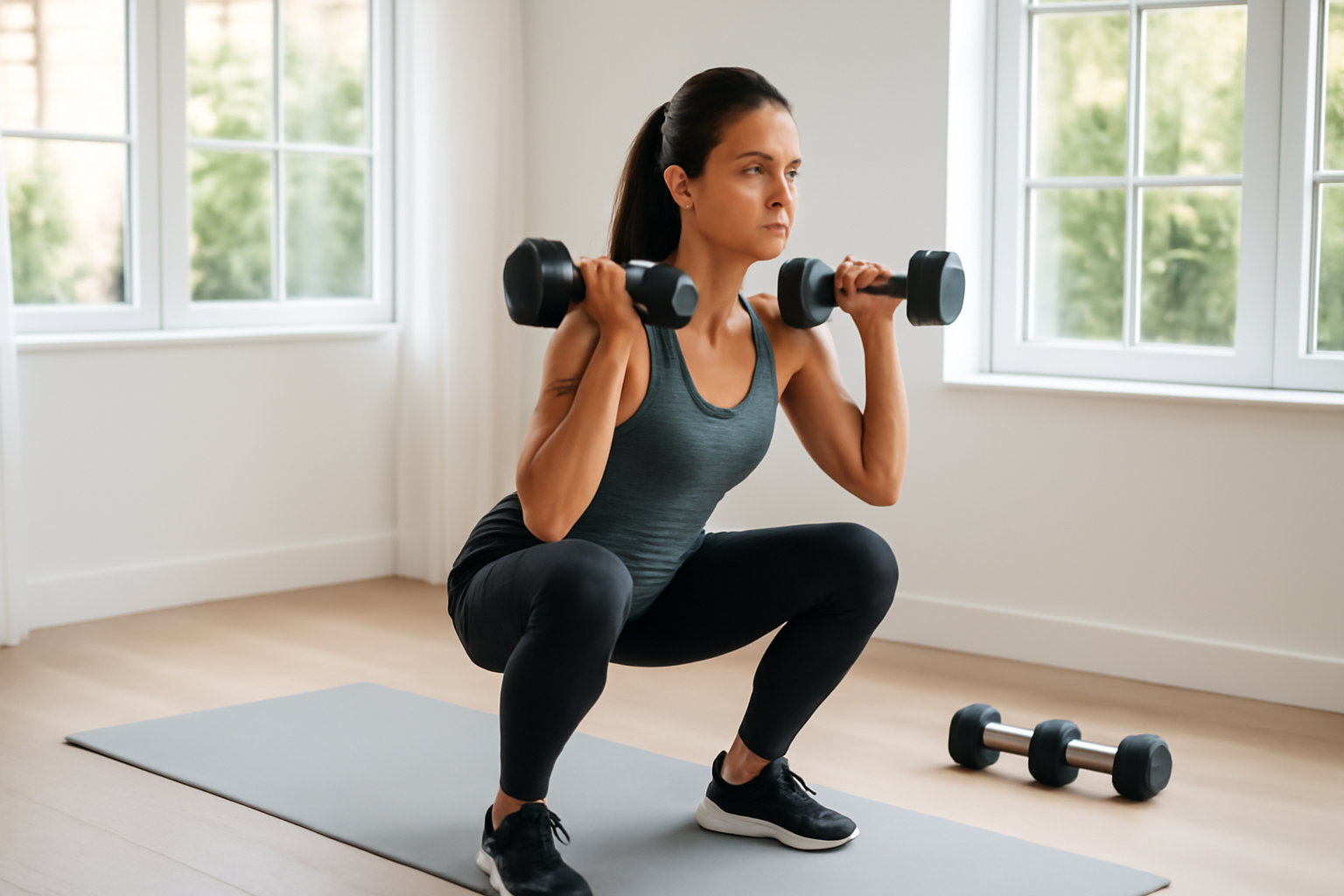
    1. Squat — Sit-to-stand, bodyweight squat, goblet squat, barbell back squat
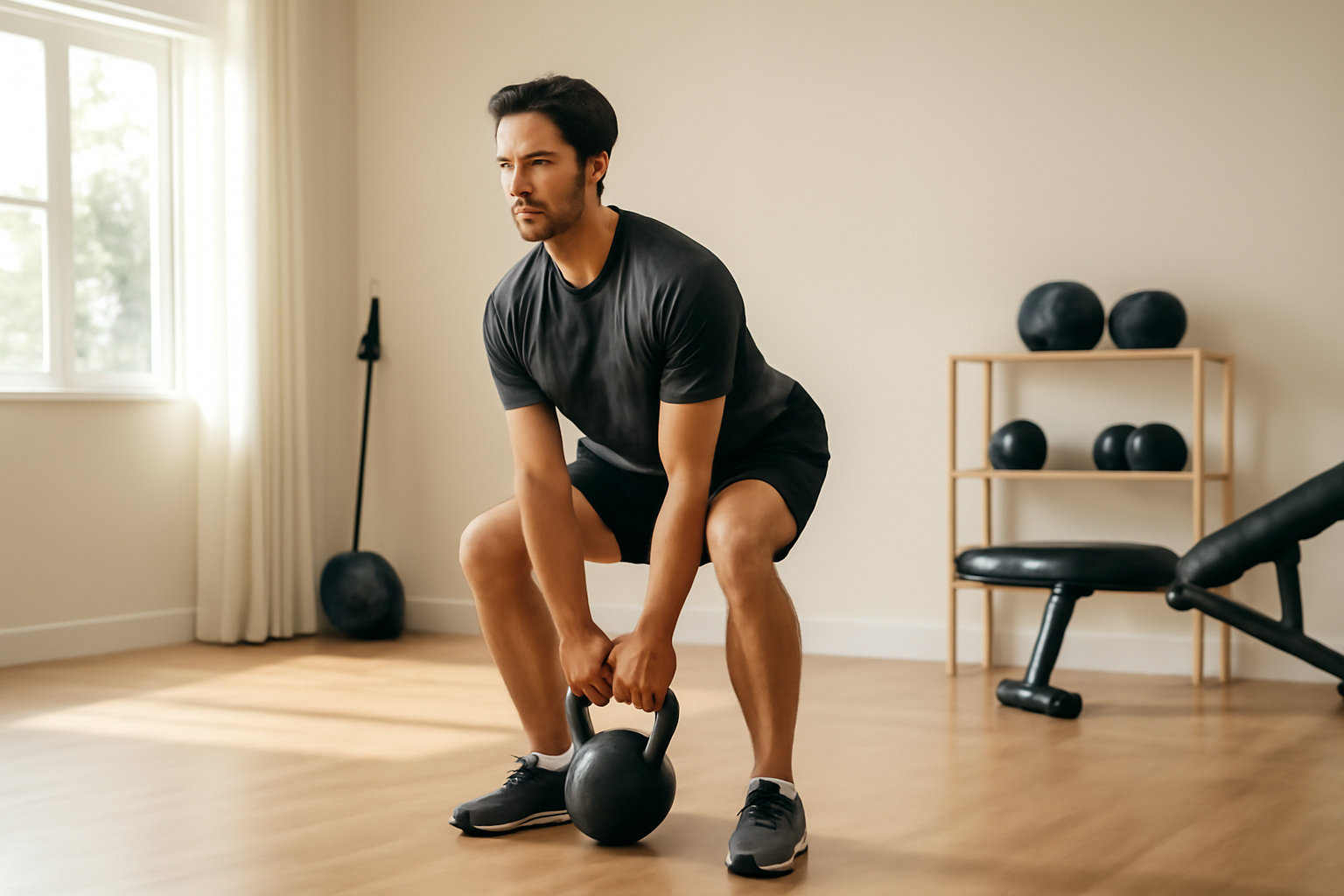
    2. Hinge — Romanian deadlift, kettlebell swing, conventional deadlift
    3. Push — Push-up, dumbbell press, overhead press
    4. Pull — Resistance band row, dumbbell row, pull-up or lat pulldown
    5. Carry — Farmer’s carry with dumbbells or kettlebells
    6. Rotate / Anti-rotate — Pallof press, woodchop, cable rotation

    Beginner entry point (2-3 days per week):

    • Bodyweight squats — 3 sets of 10
    • Glute bridges — 3 sets of 12 (hinge pattern foundation)
    • Push-ups (on knees if needed) — 3 sets of 8-10
    • Resistance band rows — 3 sets of 12
    • Farmer’s carry with light dumbbells — 3 sets of 30 seconds
    • Dead bug (core anti-rotation) — 3 sets of 8 per side

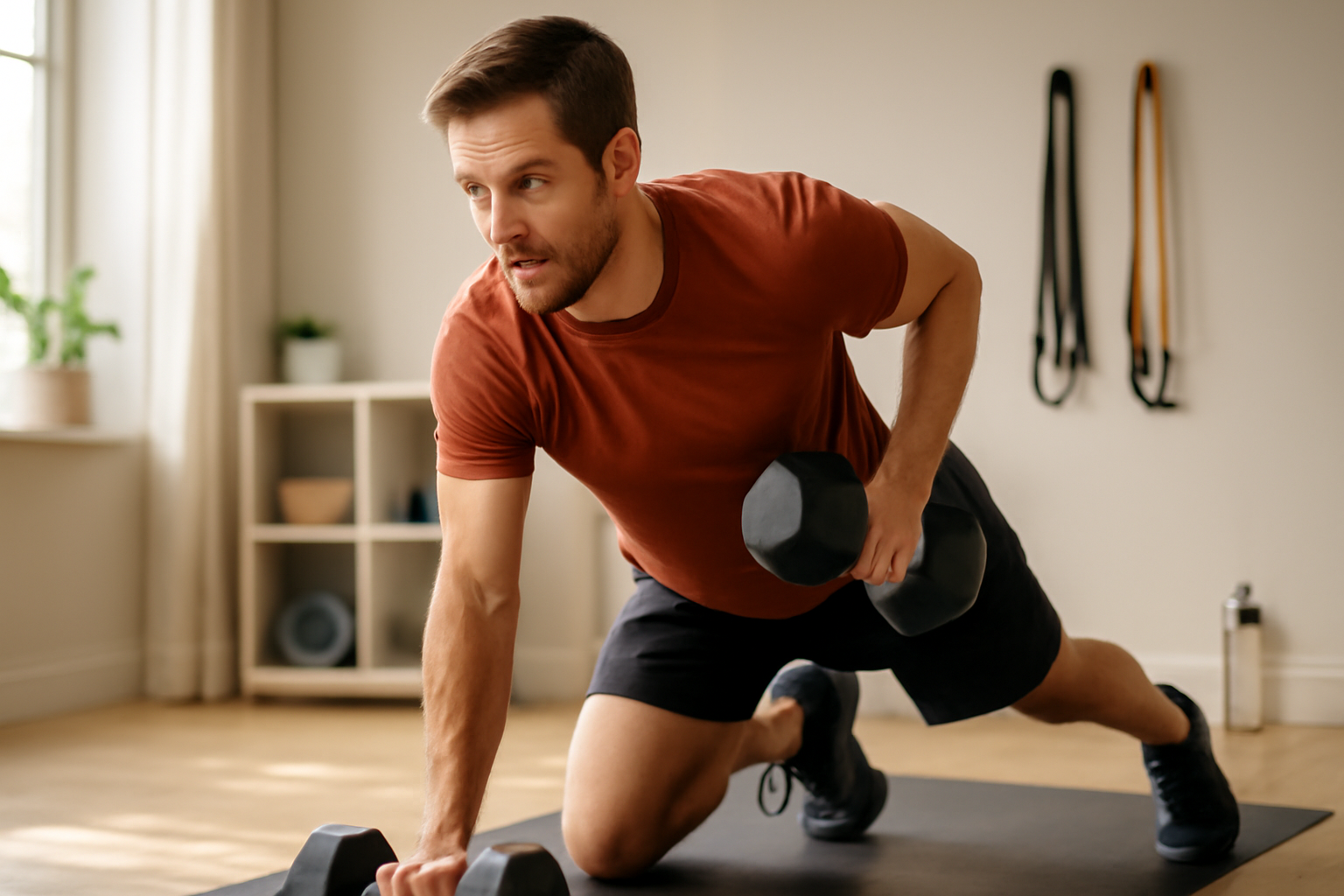
    Intermediate option (3-4 days per week): Add goblet squats, single-leg Romanian deadlifts, dumbbell overhead press, and renegade rows. Increase load gradually — the ACSM recommends increasing resistance by no more than 10% per week to reduce injury risk.

    Advanced progression: Barbell deadlifts, barbell squats, Turkish get-ups, and loaded carries with heavier implements. Consider working with a certified strength and conditioning specialist (CSCS) to fine-tune form at heavier loads.

    If you’re building your routine at home, check out this resource on Home Workout Plans: Get Fit Without the Gym for equipment-free approaches that integrate beautifully with functional training principles.

    Common Mistakes That Sabotage Functional Fitness Results

    Even motivated adults consistently make a handful of errors when starting functional fitness. Recognizing them upfront can save you months of frustration.

    Mistake #1: Skipping the mobility work
    Functional fitness demands a baseline of mobility to perform movements safely. Jumping into loaded squats or hinges when your hips and ankles are tight is a setup for compensation patterns that lead to injury. The fix: spend 5-10 minutes before each session on targeted mobility work — hip 90/90 stretches, ankle circles, thoracic rotations. Our Stretching Routines: Flexibility, Recovery and Daily Mobility guide is a perfect companion here.

    Mistake #2: Prioritizing load over movement quality
    Adding weight before your movement pattern is solid is one of the fastest routes to injury. A wobbly squat with 135 lbs is far less valuable — and far more dangerous — than a crisp, controlled bodyweight squat. The fix: film yourself from the side occasionally, or work with a coach even for a session or two to get baseline form feedback.

    Mistake #3: Neglecting the carry pattern
    The farmer’s carry is arguably the most underrated functional exercise in existence. It trains grip strength, core stability, shoulder positioning, and gait — all at once. Yet most people never do it. The fix: add farmer’s carries to every session. Even 20-30 seconds with moderate dumbbells delivers serious functional carry-over to daily life.

    Mistake #4: Training only in one plane of motion
    Real life happens in all directions — sideways, diagonally, rotationally. Most gym routines only train forward-back movements. The fix: include lateral band walks, side lunges, rotational cable exercises, or even simple medicine ball throws to train your body in multiple planes.

    Mistake #5: Ignoring single-leg and single-arm work
    Your body almost never uses both limbs equally at the same time in real life. Walking, climbing stairs, reaching — these are unilateral movements. The fix: integrate split squats, single-leg deadlifts, and single-arm rows into your training at least once per week.

    What to Eat to Support Functional Fitness Training

    Functional fitness places real demands on your muscles, joints, and nervous system. Nutrition isn’t optional — it’s a core part of the result.

    Protein: The Academy of Nutrition and Dietetics recommends 1.2 to 2.0 grams of protein per kilogram of body weight per day for active adults. For a 165-lb adult, that’s roughly 90-150g of protein daily. Prioritize lean sources: chicken, turkey, fish, eggs, Greek yogurt, legumes, and cottage cheese.

    Carbohydrates: Functional training sessions — especially those incorporating compound lifts and carries — are glycogen-demanding. Don’t under-fuel. The USDA Dietary Guidelines recommend that 45-65% of daily calories come from carbohydrates for active individuals. Opt for whole grains, sweet potatoes, oats, and fruit.

    Anti-inflammatory foods: Joint health is central to functional training longevity. Harvard Health Publishing highlights omega-3 fatty acids (found in salmon, sardines, walnuts, and flaxseed) and polyphenol-rich foods (berries, leafy greens, olive oil) as key supporters of reducing systemic inflammation that can slow recovery and increase injury risk.

    Hydration: Even mild dehydration — as little as 2% of body weight — can impair muscle coordination and increase perceived exertion, according to research cited by the NIH. Aim for at least half your body weight in ounces of water daily, more on training days.

    What to limit: Ultra-processed foods high in refined sugars and trans fats contribute to chronic inflammation that undermines recovery. The AHA recommends keeping added sugar under 36g/day for men and 25g/day for women.

    How Long Until You See Results — and What to Track

    Results from functional fitness training are different from traditional fitness metrics — and that’s actually a good thing. You’re not just watching a number on a scale or a bicep measurement. You’re tracking how you function.

    Weeks 1-3: You’ll likely notice improved body awareness — better posture, less lower back tightness after sitting, smoother movement in daily tasks. This is neuromuscular adaptation: your nervous system learning to recruit muscles more efficiently. Don’t be discouraged if the mirror hasn’t changed yet.

    Weeks 4-8: Strength gains become measurable. You’ll be able to carry more, squat deeper, and hinge without pain. Research published in the Journal of Aging and Physical Activity found that significant improvements in functional movement scores occur within 6-8 weeks of consistent training in previously sedentary adults.

    Months 3-6: Body composition changes become visible. Lean muscle develops, posture improves noticeably, and activities of daily living feel dramatically easier. This is also when injury rates typically drop in people who train consistently.

    What to track:

    • Movement quality (how does your squat feel vs. week 1?)
    • Load progression (are you lifting more with the same or better form?)
    • Daily energy levels and recovery speed
    • Pain or discomfort during daily activities (ideally, this decreases)
    • Balance and stability (can you stand on one leg for 30+ seconds?)

    If you’re also interested in how functional strength training intersects with body composition goals, the article on Body Recomposition: Lose Fat and Build Muscle Together is a valuable next read.

    When to reassess: If you’re not seeing any improvement in movement quality or strength after 6-8 weeks, consider consulting a certified personal trainer or physical therapist to evaluate your movement baseline and programming.

    Frequently Asked Questions

    Is functional fitness better than traditional weight training?
    It’s not an either/or. Functional fitness prioritizes movement patterns over isolated muscles, which offers superior carry-over to daily life. That said, traditional strength training has immense value — especially for building foundational muscle mass. The most effective approach for most adults combines both. Results vary based on your goals, age, and starting point.

    Can older adults safely do functional fitness training?
    Absolutely — and in many ways, older adults stand to benefit most. The ACSM specifically recommends functional movement training as a priority for adults over 50 to preserve independence, reduce fall risk, and maintain quality of life. Start at an appropriate intensity and progress gradually. Working with a professional familiar with older adult fitness is always a smart move.

    How many days per week should I do functional fitness training?
    Two to three days per week is an effective and sustainable starting point, with at least one rest or active recovery day between sessions. As you progress, three to four days per week allows for greater adaptation. Overtraining is a real risk — more is not always better, and recovery is where adaptation actually happens.

    Do I need special equipment for functional fitness?
    No. Many of the most effective functional exercises — squats, lunges, push-ups, planks, carries — can be done with minimal or no equipment. Resistance bands, a pair of dumbbells, and a kettlebell or two cover a huge range of functional training options. A full commercial gym is helpful but absolutely not required.

    Can functional fitness help with lower back pain?
    For many people, yes — but with an important caveat. Strengthening the posterior chain (glutes, hamstrings, spinal erectors) and improving core stability are well-established strategies for reducing non-specific lower back pain, according to research from Harvard Health Publishing and the NIH. However, if you have a diagnosed spinal condition, always consult your physician or physical therapist before starting a new program.

    Start Moving Like Your Life Depends On It — Because It Does

    Functional fitness isn’t a trend or a gym marketing concept. It’s the most honest form of training there is: preparing your body to handle the life you actually live, not just the one you live in a gym.

    You don’t need to overhaul everything at once. Pick one movement pattern — start with a squat or a hinge — and do it well, three times a week. Add a carry. Work on your core stability. Over weeks and months, the cumulative effect is real, measurable, and deeply practical.

    Small, consistent steps built on good movement beat sporadic intensity every single time. Your body is built to move. Give it the training it was designed for.

    This article is for informational and educational purposes only. The content is not intended to replace professional medical, nutritional, or fitness advice. Always consult a qualified healthcare provider, registered dietitian, or certified fitness professional before starting a new health program or making significant changes to your lifestyle.

    Content reviewed by our wellness editorial team, with references to peer-reviewed research and guidelines from leading health organizations.
  • Body Recomposition: Lose Fat and Build Muscle Together

    Body Recomposition: Lose Fat and Build Muscle Together

    Body Recomposition: Lose Fat and Build Muscle Together

    You don't always have to choose between getting leaner and getting stronger — here's what the science actually says.

    Most people walk into a gym with one of two goals: lose fat or build muscle. Trainers, fitness apps, and even well-meaning friends usually treat these as separate journeys — bulk first, cut later. But what if you're not chasing extremes? What if you just want to look and feel better, move stronger, and shed the extra weight that crept on over the last few years?

    That's where body recomposition comes in — and it's more achievable than most people realize.

    Body recomposition refers to the process of simultaneously reducing body fat and increasing lean muscle mass. It sounds like it defies basic biology (aren't those two opposite goals?), but research shows it's entirely possible — especially for certain groups of people.

    In this guide, you'll learn what body recomposition really means, who benefits most, how to structure your training and nutrition, and what realistic timelines look like. No extreme diets, no conflicting advice — just an evidence-based roadmap you can actually follow.

    Why Body Recomposition Matters More Than You Think

    Here's a number that puts things in perspective: according to the Centers for Disease Control and Prevention (CDC), over 73% of American adults are overweight or obese — yet many of them also have low muscle mass. This condition, sometimes called "skinny fat" by fitness professionals or more clinically described as "normal-weight obesity," means people can have excess fat and insufficient muscle even at a seemingly average weight.

    The scale alone doesn't tell the full story. Two people at 160 pounds can have dramatically different body compositions — and that difference matters enormously for metabolic health, strength, energy levels, and long-term disease risk.

    Research published in the American Journal of Clinical Nutrition has consistently linked higher muscle mass with better insulin sensitivity, reduced cardiovascular risk, and improved mobility as we age. Meanwhile, excess body fat — particularly visceral fat around the midsection — is associated with chronic inflammation and metabolic dysfunction.

    Body recomposition addresses both sides of the equation at once. It's not just about aesthetics — it's about building a body that functions well, resists disease, and supports your quality of life for decades.

    And for adults in the 25–60 age range, this approach is often more sustainable than aggressive cutting or bulking cycles that require dramatic caloric swings and significant lifestyle disruption.

    The Science Behind Body Recomposition: How It Actually Works

    The common belief is that fat loss requires a calorie deficit and muscle gain requires a calorie surplus — making them mutually exclusive. That logic holds in extremes (elite bodybuilders, for example), but it doesn't apply to most everyday people.

    Body recomposition works through a process called substrate partitioning — your body's ability to use stored body fat as fuel for building and repairing muscle tissue. When you train with resistance exercise while eating adequate protein, your body can pull energy from fat stores to power muscle protein synthesis.

    A landmark study published in the American Journal of Physiology — Endocrinology and Metabolism found that participants who ate a high-protein diet and performed resistance training simultaneously lost fat and gained muscle over a 4-week period — even while in a modest caloric deficit. This challenged the long-held notion that you can't do both at once.

    The myth worth busting: Body recomposition doesn't require eating at maintenance calories. A small deficit (around 200–300 calories below your TDEE — total daily energy expenditure) combined with high protein intake and consistent resistance training creates the conditions for simultaneous fat loss and muscle gain.

    Who benefits most? Research suggests body recomposition is most effective for:

    • Beginners to resistance training (sometimes called "newbie gains")
    • People returning to exercise after a long break
    • Individuals with higher body fat percentages
    • Those who have been sedentary but maintain adequate protein intake

    Advanced athletes with already-low body fat percentages will find simultaneous recomposition much harder — though not impossible. Results vary significantly depending on genetics, training history, hormonal status, and sleep quality.

    How to Get Started: Practical Steps for Body Recomposition

    Getting started doesn't require a complicated program or expensive equipment. Here's a practical framework organized by experience level.

    Step 1: Set Your Protein Target First

    Protein is the non-negotiable foundation of body recomposition. The Academy of Nutrition and Dietetics recommends 1.2–2.0 grams of protein per kilogram of body weight for active adults. For recomposition specifically, research supports aiming toward the higher end — roughly 0.7–1.0 gram per pound of bodyweight daily.

    If you weigh 170 pounds, that's approximately 120–170 grams of protein per day, spread across meals.

    Step 2: Create a Modest Caloric Deficit

    Use a TDEE calculator to estimate your daily calorie burn, then subtract 200–300 calories. This small deficit supports fat loss without compromising muscle protein synthesis or leaving you chronically fatigued.

    Step 3: Prioritize Resistance Training

    This is the engine of body recomposition. The American College of Sports Medicine (ACSM) recommends resistance training at least 2–3 days per week for general health — but for recomposition, 3–4 sessions per week targeting all major muscle groups tends to produce better results.

    For beginners, full-body workouts 3x per week using compound movements (squats, deadlifts, rows, presses) are highly effective. If you're new to strength training, our Strength Training for Beginners: Your Complete Starter Guide is a great place to start.

    Step 4: Add Strategic Cardio

    Cardio supports fat loss and cardiovascular health without undermining muscle gains — as long as it's not excessive. Aim for 2–3 moderate-intensity cardio sessions per week (20–40 minutes each). Walking, cycling, and swimming are excellent low-impact options that don't tax recovery. For a deeper comparison of cardio styles, check out our article on HIIT vs Steady-State Cardio: Which One Is Right for You?

    Intermediate & Advanced Note: If you've been training for over a year, consider periodized programming — alternating phases of slightly higher and slightly lower calorie intake — to continue progressing. At this stage, working with a certified personal trainer or registered dietitian can help fine-tune your approach.

    Common Mistakes That Sabotage Body Recomposition Results

    Body recomposition is a slower, steadier process than aggressive bulk-and-cut cycles — and that slower pace can lead people to make mistakes that stall progress entirely. Here are the most common ones:

    Mistake 1: Not Eating Enough Protein

    This is the single most common reason people fail to gain muscle while losing fat. Without sufficient amino acids, your body can't repair and build muscle tissue — even if your training is perfect. Many people underestimate how much protein they're actually eating. Tracking intake for even 2–3 weeks using a free app like MyFitnessPal can be eye-opening.

    Mistake 2: Doing Too Much Cardio, Too Little Lifting

    Many people default to running or cycling for fat loss while treating weights as optional. But cardio alone doesn't stimulate muscle protein synthesis. For body recomposition, resistance training must be the priority — cardio is the support, not the star.

    Mistake 3: Being Too Aggressive with the Caloric Deficit

    Cutting calories too drastically (more than 500–700 per day) puts your body in a state where muscle tissue becomes a fuel source. This is the opposite of what you want. A conservative deficit protects lean mass while still promoting fat loss. If you feel exhausted, constantly hungry, or your workouts are suffering, your deficit may be too steep.

    Mistake 4: Judging Progress Only by the Scale

    During body recomposition, the scale can stay flat or even go up slightly — even while you're losing fat and gaining muscle. Muscle is denser than fat, so body composition can improve significantly without a dramatic change in bodyweight. Track progress using measurements, progress photos, how your clothes fit, and strength benchmarks in your workouts.

    Mistake 5: Skipping Recovery and Sleep

    Muscle is built during rest, not during workouts. According to the National Sleep Foundation, adults need 7–9 hours of sleep per night for optimal hormonal function — including testosterone and growth hormone, both of which are critical for muscle repair. Chronic poor sleep impairs fat-burning capacity and increases cortisol, which can promote fat storage.

    What to Eat to Support Body Recomposition

    You don't need a rigid meal plan — but you do need a nutritional framework that supports both fat loss and muscle growth simultaneously.

    Protein Sources (prioritize these):

    • Chicken breast, turkey, lean beef (4–6 oz per meal)
    • Eggs and egg whites (2–4 whole eggs or egg white combinations)
    • Greek yogurt (1 cup = 15–20g protein)
    • Cottage cheese, low-fat ricotta
    • Salmon, tuna, cod, tilapia
    • Legumes: lentils, black beans, edamame (good plant-based options)
    • Whey or plant-based protein powder when whole food intake falls short

    Carbohydrates (time them strategically):

    Carbs are not the enemy — they fuel resistance training performance. The USDA Dietary Guidelines recommend that carbohydrates make up 45–65% of total caloric intake for most adults. For recomposition, focus on complex, fiber-rich carbs and time them around workouts.

    • Oats, brown rice, quinoa, sweet potatoes
    • Fruits (berries, apples, bananas pre-workout)
    • Whole grain bread and pasta in moderate portions

    Healthy Fats (don't eliminate them):

    • Avocado, olive oil, nuts, seeds
    • Fatty fish (salmon, mackerel) for omega-3 anti-inflammatory benefits
    • Keep fat intake at roughly 25–35% of total calories

    What to Limit: Ultra-processed foods, alcohol, and added sugars don't just add empty calories — they actively interfere with recovery, sleep quality, and hormonal balance. You don't need to eliminate them entirely, but reducing their frequency will make your body recomposition efforts noticeably more effective.

    How Long Until You See Results — and What to Track

    This is where realistic expectations matter most. Body recomposition is slower than either aggressive fat loss or dedicated muscle-building phases — and that's by design. You're doing two things at once, after all.

    Realistic Timelines:

    • Weeks 1–4: Neuromuscular adaptations (you get stronger without much visible change). Bloating may decrease. Energy during workouts improves.
    • Weeks 4–8: Noticeable strength gains. Some people begin to see changes in how clothes fit. Scale may remain relatively stable.
    • Months 3–6: Visible changes in muscle definition and fat reduction become more apparent, especially with consistent training and nutrition adherence.
    • 6–12+ months: Significant body composition changes for most people who remain consistent.

    Research in the Journal of Strength and Conditioning Research found that meaningful body composition changes typically require at least 8–12 weeks of consistent resistance training and adequate protein intake to be measurable by body composition testing.

    What to Track:

    • Waist, hip, and thigh circumference (monthly)
    • Progress photos (every 4 weeks, same lighting and time of day)
    • Strength benchmarks (can you lift heavier? More reps?)
    • Energy levels and sleep quality (weekly self-check)
    • Body fat percentage if accessible via DEXA scan or reliable skinfold testing

    When to Reassess: If you've been consistent for 12 weeks and see zero measurable changes in any metric, it's worth consulting a registered dietitian or certified personal trainer to review your program. Hormonal imbalances, thyroid issues, or other health factors can sometimes interfere — and a professional can help identify what's happening.

    Frequently Asked Questions

    Can I do body recomposition without going to a gym?

    Yes — resistance training at home using bodyweight exercises, resistance bands, or dumbbells can absolutely support body recomposition, especially for beginners. The key is progressive overload: consistently challenging your muscles with increasing difficulty over time. Check out our guide on Home Workout Plans: Get Fit Without the Gym for practical options.

    Is body recomposition possible after 40?

    Absolutely — though it may progress more slowly due to hormonal changes, particularly declining testosterone and estrogen levels. Research published in the Journal of Gerontology confirms that adults over 40 can still build muscle and lose fat with resistance training. Protein intake becomes even more important with age to offset age-related muscle loss (sarcopenia).

    Do I need protein supplements for body recomposition?

    Not necessarily. Whole food protein sources are always preferable. However, if you consistently struggle to hit your protein target through food alone, a quality whey or plant-based protein supplement can help fill the gap. Supplements are not a replacement for a balanced diet — they're a convenience tool.

    How do I know if I'm losing fat and gaining muscle at the same time?

    The most reliable methods are DEXA scans or hydrostatic weighing, which measure body fat percentage and lean mass separately. More practically, pay attention to whether you're getting stronger in your workouts (a sign of muscle growth) while your waist circumference is shrinking (a sign of fat loss) — even if the scale doesn't move much.

    Can women do body recomposition?

    Yes — and research consistently shows women respond very well to resistance training for body recomposition. Women won't develop bulky muscle mass from typical resistance training due to lower baseline testosterone levels. What they do gain is strength, definition, metabolic efficiency, and improved bone density — all significant health benefits backed by the American College of Sports Medicine.

    Start Where You Are, Stay Consistent

    Body recomposition isn't a quick fix — and that's actually good news. It's a sustainable approach that builds the body you want while supporting real, long-term health. No extreme calorie slashing, no eliminating food groups, no grueling two-a-day workouts required.

    The formula is genuinely simple, even if it takes time: lift weights consistently, eat enough protein, stay in a modest caloric deficit, sleep well, and track the right metrics. Small, consistent steps will always outperform intense, unsustainable sprints.

    Start today by calculating your protein target and planning three resistance training sessions this week. That's it. Build from there.


    This article is for informational and educational purposes only. The content is not intended to replace professional medical, nutritional, or fitness advice. Always consult a qualified healthcare provider, registered dietitian, or certified fitness professional before starting a new health program or making significant changes to your lifestyle.

    Content reviewed by our wellness editorial team, with references to peer-reviewed research and guidelines from leading health organizations.

  • Strength Training for Beginners: Your Complete Starter Guide

    Strength Training for Beginners: Your Complete Starter Guide

    Strength Training for Beginners: Your Complete Starter Guide

    You don’t need to be an athlete, own a gym membership, or know what a deadlift is to start getting stronger — you just need a plan that actually fits your life.

    Here’s a number that might surprise you: according to the Centers for Disease Control and Prevention, fewer than 25% of American adults meet the recommended guidelines for muscle-strengthening activity. That means three out of four people are missing out on one of the most powerful tools for long-term health — and most of them aren’t skipping it because they don’t care. They’re skipping it because no one ever showed them where to start.

    Strength training has a reputation problem. It sounds intimidating. It looks complicated on social media. And if you’ve ever walked into a weight room and felt completely lost, you know exactly what that wall of confusion feels like.

    But here’s the truth: building strength doesn’t require a personal trainer, expensive equipment, or hours in the gym. What it does require is understanding the basics — and that’s exactly what this guide is for. By the end, you’ll know why strength training matters beyond just looking fit, how your muscles actually adapt to resistance, and how to start safely without burning out in week two.

    Why Strength Training Matters More Than You Think

    Most people start lifting weights because they want to look better. That’s a completely valid reason — but it’s honestly one of the smaller benefits on the list.

    The American College of Sports Medicine (ACSM) recommends that adults engage in resistance training at least two days per week for each major muscle group. That recommendation isn’t just about muscle size. It’s grounded in decades of research linking regular strength work to reduced risk of type 2 diabetes, improved cardiovascular health, stronger bones, better joint stability, and even lower rates of depression and anxiety.

    One landmark finding published in the British Journal of Sports Medicine found that muscle-strengthening activities were associated with a 10 to 17 percent reduction in all-cause mortality, cardiovascular disease, and cancer — independent of aerobic activity. In other words, lifting weights adds value even if you’re already walking or running regularly.

    For adults over 35, there’s another critical factor: sarcopenia. This is the age-related loss of muscle mass that begins in your mid-30s and accelerates through your 40s and 50s if you’re not actively working against it. Strength training is the most effective tool we have to slow that process down.

    And for your daily life? Carrying groceries, climbing stairs, picking up your kids or grandkids — these all become easier when your muscles are trained to handle load. Functional strength is real-life strength.

    How Strength Training Actually Works

    Here’s the basic biology, simplified: when you place a muscle under resistance — whether that’s a dumbbell, a resistance band, your own bodyweight, or a barbell — you create tiny microscopic tears in the muscle fibers. This sounds alarming, but it’s the signal your body needs to rebuild that tissue stronger than before. The process is called muscle protein synthesis, and it happens primarily during rest and recovery.

    One common myth worth busting right away: lifting weights will make you "bulk up" fast. For the vast majority of people — especially women and anyone over 40 — building significant muscle mass takes months to years of consistent, progressive training combined with deliberate nutrition strategies. What you’ll notice in the first 4 to 8 weeks isn’t dramatic size change. It’s improved tone, better posture, and a sense of strength in movements you do every day.

    The key principle behind all strength progress is called progressive overload — the gradual increase of stress placed on the body during exercise over time. This can mean adding more weight, doing more reps, resting less between sets, or increasing range of motion. Research published in the Journal of Strength and Conditioning Research consistently shows that progressive overload is the single most important variable in long-term strength development.

    Your nervous system also adapts. In the early weeks of training, a large portion of your strength gains come not from bigger muscles but from your brain learning to recruit muscle fibers more efficiently. This is why beginners often feel dramatically stronger after just a few weeks, even before significant muscle changes occur.

    How to Get Started: Practical Steps for Every Level

    Starting strong means starting smart. Here’s how to build a foundation that lasts:

    Step 1 — Choose your format. You have three main options: bodyweight training (push-ups, squats, lunges), free weights (dumbbells, kettlebells, barbells), or machines. For most beginners, a combination of bodyweight and light dumbbells is the most accessible starting point — no gym required.

    Step 2 — Focus on compound movements first. Compound exercises work multiple muscle groups at once, giving you the most return on your time. The five foundational movements are: squat, hinge (like a deadlift or Romanian deadlift), push (push-up or chest press), pull (row or lat pulldown), and carry (farmer’s carry or simply walking with weights). These patterns cover nearly every major muscle group.

    Step 3 — Start with 2 days per week, then build to 3. The ACSM recommends two days minimum for beginners, with at least 48 hours of rest between sessions for the same muscle group. Two full-body sessions per week is an excellent starting structure — simple, effective, and sustainable.

    For beginners: 2 sets of 10-12 reps per exercise, moderate weight (you should feel effort on the last 2-3 reps but maintain good form). Rest 60-90 seconds between sets.

    For intermediate lifters (6+ months of consistent training): 3-4 sets of 8-12 reps, progressing weight by 5% when you can complete all reps cleanly. Consider a split routine (upper/lower or push/pull/legs).

    Step 4 — Warm up and cool down. Spend 5-10 minutes on dynamic movement before lifting — leg swings, arm circles, bodyweight squats. After training, 5 minutes of light stretching helps manage soreness and supports recovery.

    Step 5 — Track your sessions. A simple notebook or phone note works fine. Write down what you lifted, how many reps, and how it felt. This is your map for progressive overload.

    Common Mistakes That Sabotage Results

    These are easy to make — and knowing them in advance keeps you ahead of the curve.

    Mistake 1: Skipping the basics to chase advanced moves. Many beginners want to jump straight to Olympic lifts or complex barbell work before mastering fundamental movement patterns. The result is usually poor form, frustration, and injury risk. Spend your first 4-6 weeks building clean, consistent mechanics on simple exercises. The fancy stuff will come — and it will come faster when your foundation is solid.

    Mistake 2: Going too heavy, too fast. Ego lifting — choosing weight that’s too heavy to maintain proper form — is one of the leading causes of beginner injuries. The goal in your first few months is skill acquisition and habit formation, not maximum load. Choose a weight where the last two reps of each set feel genuinely challenging but your form doesn’t break down. As Harvard Health Publishing notes, using proper technique from the start dramatically reduces long-term injury risk.

    Mistake 3: Ignoring recovery. Muscles don’t grow during your workout — they grow during the 24 to 48 hours afterward. Beginners who train every single day without adequate rest often find themselves stalled or chronically sore. Prioritize sleep (7-9 hours is the National Sleep Foundation’s recommendation for adults) and allow at least one full rest day between strength sessions targeting the same muscle groups.

    Mistake 4: Treating nutrition as optional. Strength training without adequate protein is like building a house without enough lumber. You’re creating the stimulus, but not supplying the material. The Academy of Nutrition and Dietetics recommends 1.2 to 1.7 grams of protein per kilogram of body weight per day for active adults engaged in resistance training. Many beginners underestimate how much this matters.

    Mistake 5: Inconsistency disguised as variety. Constantly switching programs every two weeks because you saw something new online is one of the most common reasons people plateau. Consistency in a simple, progressive program almost always beats novelty. Give any well-designed program at least 8 to 12 weeks before evaluating whether it’s working.

    What to Eat to Support Your Strength Training

    You don’t need a complicated diet plan to support your training — but a few nutritional principles make a meaningful difference.

    Protein is the priority. Aim for 25 to 40 grams of protein per meal, spread across 3 to 4 meals daily. High-quality sources include chicken breast (about 30g per 3.5 oz), Greek yogurt (15-20g per cup), eggs (6g per egg), canned tuna (25g per 3 oz), tofu (10g per half-cup), and legumes like lentils (18g per cooked cup). The USDA Dietary Guidelines support a variety of protein sources, including both animal and plant-based options.

    Don’t fear carbohydrates. Carbs are your muscles’ preferred fuel source during resistance training. Complex carbs — oats, sweet potatoes, brown rice, quinoa, whole grain bread — provide sustained energy and support glycogen replenishment after workouts. Cutting carbs aggressively while strength training typically results in low energy, poor performance, and slower recovery.

    Timing matters somewhat — but not as much as total intake. Consuming a meal or snack with both protein and carbohydrates within 1-2 hours after training supports muscle recovery, according to research referenced by the Academy of Nutrition and Dietetics. But if your total daily intake is on track, don’t stress about hitting an exact post-workout window to the minute.

    Hydration is non-negotiable. Even mild dehydration (1-2% of body weight) can significantly impair strength performance. Aim for at least half your body weight in ounces of water daily, with additional intake on training days.

    What to limit: Ultra-processed foods, excessive added sugar, and alcohol — not because they’re forbidden, but because they consistently undercut recovery, sleep quality, and energy levels over time.

    How Long Until You See Results — and What to Track

    This is one of the most searched questions about strength training, and the honest answer involves a realistic timeline.

    Weeks 1-3: You’ll likely feel stronger — but this is mostly neurological adaptation, not muscle growth. Your nervous system is becoming more efficient at recruiting muscle fibers. You may feel more energized after workouts and notice improved posture.

    Weeks 4-8: Muscle tone becomes more visible, especially if you’re also moderating diet. Clothes may fit differently before the scale changes. This is normal and expected — muscle is denser than fat tissue.

    Months 3-6: Meaningful strength gains and visible changes in muscle definition become more noticeable. Research published in the Journal of Physiology shows that measurable hypertrophy (muscle growth) typically becomes statistically significant after 8-12 weeks of consistent resistance training.

    What to track: Rather than relying solely on the scale, track how much weight you’re lifting over time (progressive overload log), how your clothes fit, your energy levels during workouts, and your resting recovery (sleep quality, soreness duration). These are more meaningful early indicators than body weight alone.

    Results vary significantly based on your starting point, age, sleep quality, nutrition, and training consistency. If you’re not seeing any strength progression after 8 weeks, consider consulting a certified personal trainer to assess your program and form.

    Frequently Asked Questions

    Do I need to go to a gym to start strength training?
    No. Bodyweight exercises — push-ups, squats, lunges, glute bridges, planks — can build real functional strength at home with zero equipment. A set of resistance bands or adjustable dumbbells adds significant versatility for under $50. The gym becomes more valuable as you advance and need heavier loads, but it’s not a requirement to get started.

    Is strength training safe for people over 50?
    Yes — and for adults over 50, it’s especially important. The NIH notes that strength training helps preserve bone density, reduce fall risk, maintain joint health, and counteract age-related muscle loss. The approach may need to be modified (lighter starting loads, more emphasis on mobility), ideally with guidance from a certified professional familiar with older adult fitness.

    How sore should I be after a workout?
    Some muscle soreness 24 to 48 hours after training — known as delayed onset muscle soreness (DOMS) — is normal and expected when starting out. Sharp pain during exercise, or soreness that lasts more than 72 hours, is a signal to reduce intensity or check your form. Soreness gradually decreases as your body adapts over the first few weeks.

    How much protein do I really need if I’m strength training?
    The Academy of Nutrition and Dietetics recommends 1.2 to 1.7 grams of protein per kilogram of body weight daily for active adults doing resistance training. For a 160-pound person, that’s roughly 87 to 123 grams per day. Most Americans already get adequate protein — the key is distributing it across meals rather than loading it all at dinner.

    Can strength training help with weight loss?
    Yes, though it works differently than cardio. Resistance training builds lean muscle, which increases your resting metabolic rate over time. A 2022 analysis published in Obesity Reviews found that strength training alone produces modest weight loss, and the effects are significantly enhanced when combined with aerobic activity and appropriate caloric intake. Body composition often improves even when scale weight changes slowly.


    The Bottom Line

    Strength training is one of the most evidence-backed investments you can make in your long-term health — and it genuinely doesn’t require perfection to work. Two honest sessions per week, with basic compound movements, progressive effort, and enough protein and sleep, is enough to change how you feel, move, and age.

    The best program is the one you actually do. Start simple. Start today. Pick two exercises you already know how to do — even just a squat and a push-up — and commit to doing them consistently for three weeks. That’s your foundation.

    Small steps, done consistently, build strength that lasts a lifetime.


    Wellness Disclaimer: This article is for informational and educational purposes only. The content is not intended to replace professional medical, nutritional, or fitness advice. Always consult a qualified healthcare provider, registered dietitian, or certified fitness professional before starting a new health program or making significant changes to your lifestyle.

    Content reviewed by our wellness editorial team, with references to peer-reviewed research and guidelines from leading health organizations.