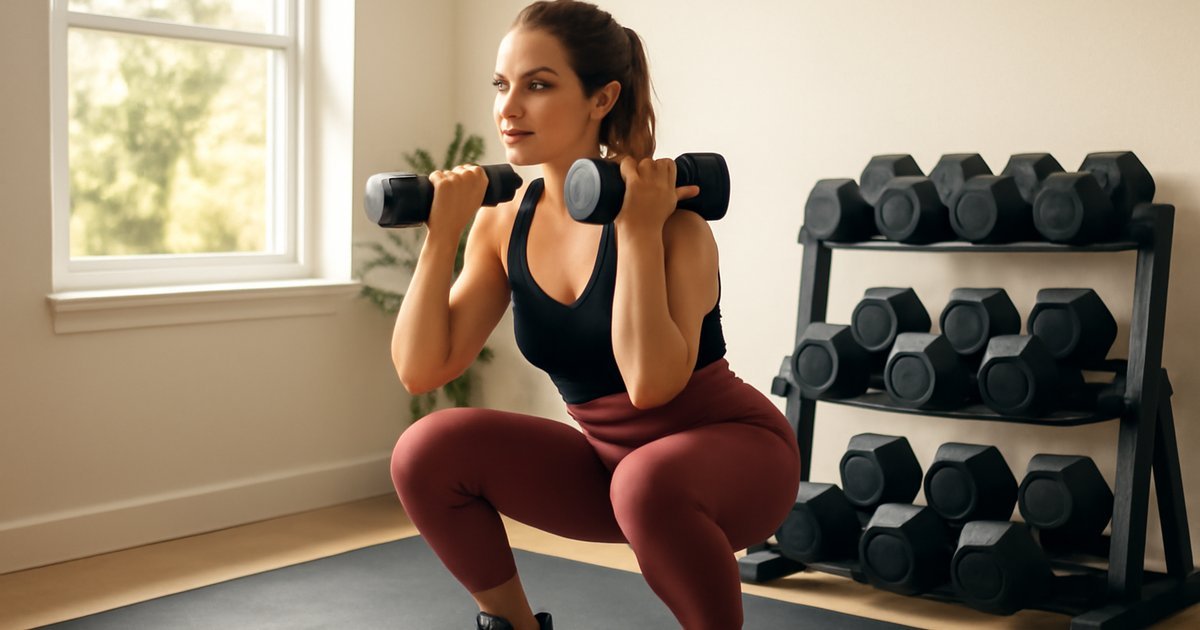
You don’t need to lift heavy or spend hours at the gym — you just need a plan that actually makes sense for where you’re starting.
Walk into any gym on a Monday afternoon and you’ll see the same thing: a handful of regulars who look like they’ve been training for years, and a few newcomers standing near the dumbbells looking unsure of where to begin. If you’ve ever been that person — or if you’re about to be — this guide is written specifically for you.
Strength training for beginners is one of the most searched, most misunderstood topics in health and fitness. People either think they need to be already fit to start, or they dive in too hard and end up sore, frustrated, or injured within the first two weeks. Neither approach sticks.
The truth is that getting started with strength training doesn’t require a perfect program, an expensive gym membership, or years of experience. What it requires is a basic understanding of how your body responds to resistance, a few key principles, and the willingness to show up consistently. This guide will give you all three — in plain language, backed by real science, and built for real life.
Why Strength Training Matters More Than You Think
Most people associate strength training with aesthetics — bigger arms, a flatter stomach, a more defined physique. And while those things can absolutely happen, they’re almost a side effect of something far more important: building a body that functions well for decades.
According to the American College of Sports Medicine (ACSM), resistance training improves muscular strength, endurance, and power — but it also enhances bone density, metabolic function, joint stability, and cardiovascular health. Adults who engage in regular strength training have a significantly lower risk of type 2 diabetes, osteoporosis, and all-cause mortality compared to those who don’t.
Here’s a number worth pausing on: adults who don’t actively train to maintain muscle mass lose approximately 3 to 5 percent of their muscle tissue per decade after age 30. That’s not a slow decline — that’s a steady erosion of functional strength, balance, and metabolic capacity that compounds over time.
For busy adults between 25 and 60, strength training isn’t a luxury — it’s one of the most time-efficient investments you can make in your long-term health. Two to three sessions per week, done consistently, can reverse years of muscle loss and set a new baseline for how you feel and move every single day.
The Science Behind How Strength Training Actually Works
Before diving into the practical side, it helps to understand what’s actually happening in your body when you lift weights — or do any form of resistance training.
When you apply mechanical stress to a muscle (by lifting, pushing, pulling, or holding resistance), you create tiny micro-tears in the muscle fibers. This sounds alarming, but it’s completely normal and necessary. During the recovery period that follows — which happens primarily during sleep and rest — your body repairs those fibers, rebuilding them slightly thicker and stronger than before. Over time, this process, called muscle protein synthesis, accumulates into visible and functional strength gains.
The critical variable in this process is progressive overload — gradually increasing the challenge to your muscles so they’re always being pushed just a little beyond what they’re already adapted to. Research published in the Journal of Strength and Conditioning Research confirms that progressive overload is the single most important training principle for continued muscle and strength development.
One common myth worth busting: lifting weights will make you "bulky." For the vast majority of adults — especially women — gaining significant muscle mass is a slow, intentional process that requires specific training volume, caloric surplus, and hormonal conditions that most people simply don’t encounter by accident. What most beginners experience instead is improved muscle tone, better posture, and a leaner appearance as muscle density increases and body fat gradually decreases.
Another thing beginners often don’t realize: the first four to six weeks of strength training produce what researchers call "neural adaptations." Your muscles don’t actually grow much at first — your nervous system is simply learning to recruit and fire muscle fibers more efficiently. This is why early strength gains can happen fast, even before visible changes in muscle size.
How to Get Started: A Practical Strength Training Plan
The best beginner strength training program is one that’s simple enough to follow consistently and structured enough to drive progress. Here’s how to approach your first 8 to 12 weeks.
Start with compound movements. These are exercises that work multiple muscle groups at the same time — and they give you the most return for your training time. The foundational compound movements every beginner should learn are: the squat, the deadlift or hip hinge, the push-up or bench press, the row, and the overhead press. These five movement patterns cover virtually every major muscle group in your body.
Frequency: 2 to 3 days per week. According to the ACSM, beginners benefit from training each major muscle group two to three times per week, with at least 48 hours of recovery between sessions targeting the same muscle groups. A full-body routine three days a week (Monday, Wednesday, Friday, for example) works extremely well for most beginners.
Sets and reps for beginners:
- Beginner level: 2 to 3 sets of 8 to 12 reps per exercise, focusing on form above all else. Use a weight that feels challenging for the last 2 to 3 reps but doesn’t cause you to compromise your technique.
- Intermediate level (after 8-12 weeks): Progress to 3 to 4 sets, introduce more variation in rep ranges (5 to 8 for strength, 12 to 15 for endurance), and begin adding weight systematically.
- Advanced within beginners: Start incorporating isolation exercises (bicep curls, tricep extensions, lateral raises) as accessory work after your compound movements are solid.
Rest periods matter. Rest 60 to 90 seconds between sets for general conditioning. If you’re focused on building strength with heavier loads, rest up to 2 to 3 minutes to allow full recovery between sets.
If you prefer to train at home without equipment, combining strength training with calisthenics training for adults is a highly effective starting point — bodyweight squats, push-ups, lunges, and planks can challenge even experienced exercisers when programmed correctly.
Common Mistakes That Sabotage Beginner Progress
Most beginners don’t fail because they lack motivation — they fail because they fall into predictable traps. Here are the most common ones and how to avoid them.
Mistake 1: Going too heavy, too soon. It’s tempting to load up the bar or grab heavier dumbbells to feel like you’re "really working." But training with weights you can’t control teaches your body bad movement patterns and dramatically increases injury risk. Start lighter than you think you need to. Nail the form. Then add weight. This isn’t a shortcut — it’s the fastest path to real progress.
Mistake 2: Skipping recovery days. More is not always better. Muscles don’t grow during your workout — they grow during rest. Many beginners train every single day thinking they’ll see faster results, but they’re actually interrupting the repair process. The ACSM recommends at least 48 hours of rest between sessions that train the same muscle groups. Honor your rest days — they’re part of the program.
Mistake 3: Neglecting the basics of nutrition. Strength training without adequate protein is like building a house without materials. The Academy of Nutrition and Dietetics recommends a protein intake of 1.2 to 2.0 grams per kilogram of body weight per day for active adults engaged in resistance training. You don’t need supplements to hit this — eggs, chicken, Greek yogurt, legumes, and fish are excellent everyday sources.
Mistake 4: Abandoning the program after two weeks. Real structural adaptations in muscle tissue take 6 to 8 weeks of consistent training to become visible. Most beginners quit just before they start seeing results. Commit to at least eight weeks on the same program before evaluating whether it’s working. Consistency beats novelty every single time.
Mistake 5: Training without a warm-up. Jumping straight into heavy lifts with cold muscles significantly increases your risk of strain and injury. Spend 5 to 10 minutes doing dynamic warm-up movements — leg swings, arm circles, bodyweight squats, and light cardio — before every session. Pairing this with a circuit training warm-up approach can also prepare your cardiovascular system at the same time.
What to Eat to Support Your Strength Training
You’ve probably heard the phrase "you can’t out-train a bad diet." For strength training specifically, nutrition isn’t just a bonus — it’s the foundation that makes your training work.
Protein is your primary building block. As noted above, aim for 1.2 to 2.0 grams per kilogram of body weight daily. For a 170-pound (77 kg) adult, that’s roughly 92 to 154 grams of protein per day. Distribute this across meals — research suggests that spreading protein intake evenly (around 20 to 40 grams per meal) maximizes muscle protein synthesis compared to eating most of your protein in one sitting.
Carbohydrates are your primary fuel source for resistance training. Don’t avoid them. Whole grains, oats, sweet potatoes, and fruit provide glycogen — the energy your muscles use during exercise. The USDA Dietary Guidelines recommend that carbohydrates make up 45 to 65 percent of total daily caloric intake for active adults.
Healthy fats support hormone production, including testosterone — a key driver of muscle growth in both men and women. Avocados, olive oil, nuts, and fatty fish (salmon, mackerel) are excellent sources. The American Heart Association recommends prioritizing unsaturated fats over saturated ones.
Timing matters — but not as much as totals. While eating protein within an hour or two of your workout can be helpful, Harvard Health Publishing notes that overall daily protein intake is far more important than precise timing. Don’t stress if you can’t eat immediately after training — focus on hitting your daily targets consistently.
Hydration is often the forgotten variable. Even mild dehydration reduces exercise performance and recovery. Aim for at least half your body weight in ounces of water per day, and add more on training days.
How Long Until You See Results — and What to Track
This is the question every beginner wants answered — and the honest answer is: it depends on your starting point, your consistency, your nutrition, and your sleep quality.
Here’s what research-based timelines typically look like:
- Weeks 1 to 4: Neural adaptations dominate. You’ll likely notice that exercises feel easier and your coordination improves, even if visible muscle changes are minimal. Strength gains during this phase can be surprisingly fast — sometimes 10 to 30 percent improvement in a single exercise within four weeks — purely due to your nervous system learning the movements.
- Weeks 4 to 8: Muscle protein synthesis begins driving visible changes for many people — slightly fuller muscles, improved posture, and better body composition. You may also notice better energy levels and improved sleep quality.
- Weeks 8 to 12 and beyond: This is where compound progress becomes clearly visible and measurable. Most beginners who train consistently for 12 weeks report noticeable changes in both appearance and performance.
What to track: Rather than obsessing over the scale (which doesn’t account for muscle gain), track how much weight you’re lifting over time, how many reps you can perform, how your clothes fit, your energy levels throughout the day, and your resting heart rate. These are all reliable indicators of genuine fitness improvement.
If you’re not seeing any progress after 8 to 12 weeks of consistent training, consider consulting a certified personal trainer (CPT) or registered dietitian to identify gaps in your program or nutrition. Results vary significantly based on individual factors including age, sleep quality, stress levels, and hormonal health.
If you’re also incorporating cardio into your routine, pairing strength work with circuit training or incline walking can complement your strength gains without overloading recovery.
Frequently Asked Questions
How many days a week should a beginner strength train?
Two to three days per week is the sweet spot for most beginners. This frequency is enough to stimulate consistent muscle adaptation while allowing adequate recovery between sessions. As your body adapts after 8 to 12 weeks, you can consider moving to a 4-day split if your schedule allows.
Should I do cardio and strength training on the same day?
You can — but the order matters. Research suggests doing strength training before cardio on the same day if building muscle is your primary goal. Doing cardio first can deplete glycogen stores and compromise your lifting performance. That said, a brief warm-up cardio session of 5 to 10 minutes before lifting is beneficial and different from a full cardio workout.
Is strength training safe if I have joint pain or a previous injury?
In many cases, yes — but only under appropriate guidance. Low-load resistance training has been shown to improve joint health in people with mild arthritis and previous injuries. However, you should always consult a healthcare provider or physical therapist before starting a strength program if you have a known condition. Never train through sharp or acute pain.
Do I need a gym to start strength training?
Absolutely not. Bodyweight exercises like push-ups, squats, lunges, and planks provide genuine resistance training stimulus — especially for beginners whose muscles haven’t yet adapted to any resistance. A pair of adjustable dumbbells and a resistance band can expand your options significantly without requiring a gym membership.
How important is sleep for strength training results?
Extremely important. The National Sleep Foundation notes that most adults need 7 to 9 hours of quality sleep per night for optimal recovery. Growth hormone — which plays a key role in muscle repair — is primarily released during deep sleep. Chronic sleep deprivation is one of the most underappreciated reasons why people struggle to see results despite consistent training.
Your Next Step Starts Today
Strength training is one of the most well-researched, highest-return health investments available to adults at any fitness level. The science is clear: consistent resistance training strengthens your muscles, protects your bones, supports your metabolic health, and improves how you feel every single day.
You don’t need to have it all figured out before you start. You don’t need the perfect program or the ideal schedule. What you need is to begin — with a simple, doable routine, proper form, and the commitment to show up at least twice a week.
Pick two or three compound movements. Do two sets of ten reps each. Rest. Repeat. Build from there. The results won’t come overnight, but they will come — and they’ll be yours to keep for as long as you keep showing up.
This article is for informational and educational purposes only. The content is not intended to replace professional medical, nutritional, or fitness advice. Always consult a qualified healthcare provider, registered dietitian, or certified fitness professional before starting a new health program or making significant changes to your lifestyle.
Content reviewed by our wellness editorial team, with references to peer-reviewed research and guidelines from leading health organizations.
Leave a Reply